Vocabulary Building Normal Weather Worksheets for Ages 5-6
3 filtered results
-
From - To
Build a strong foundation for young learners with our "Vocabulary Building Normal Weather Worksheets" for ages 5-6. These engaging worksheets help children expand their weather-related vocabulary through colorful, age-appropriate activities. They'll learn key terms like sunny, rainy, cloudy, and windy while enhancing their reading, writing, and comprehension skills. Designed by experts, these printables are perfect for both classroom and home use. Empower your child to understand and describe everyday weather phenomena with confidence. Dive into fun and educational learning today with our expertly crafted resources!
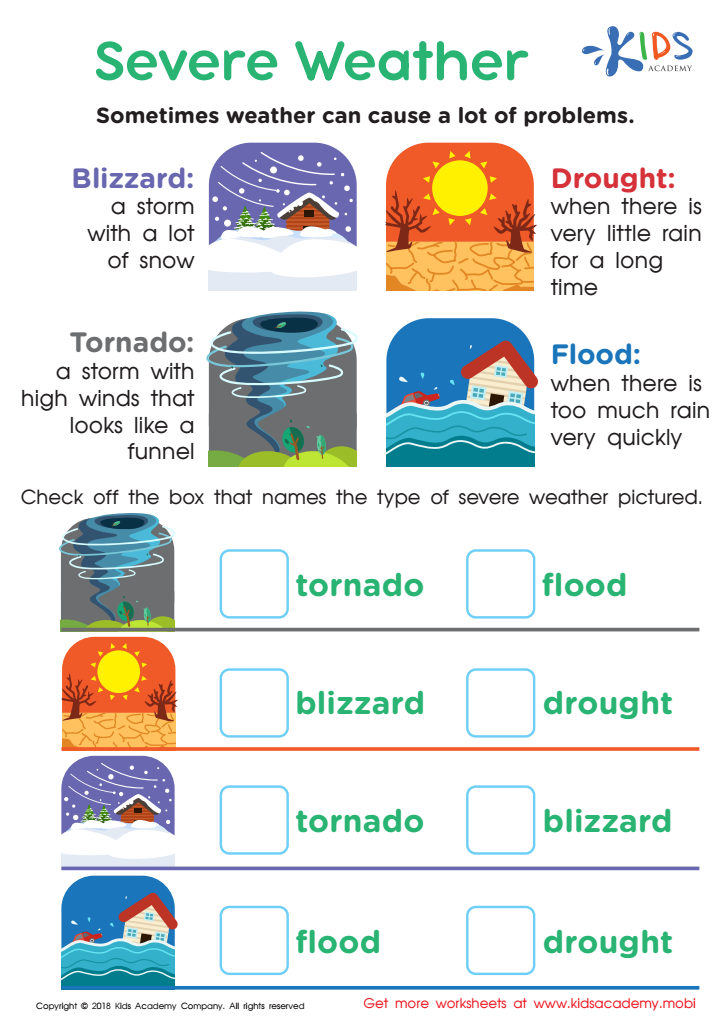
Severe Weather Worksheet
 Assign to My Students
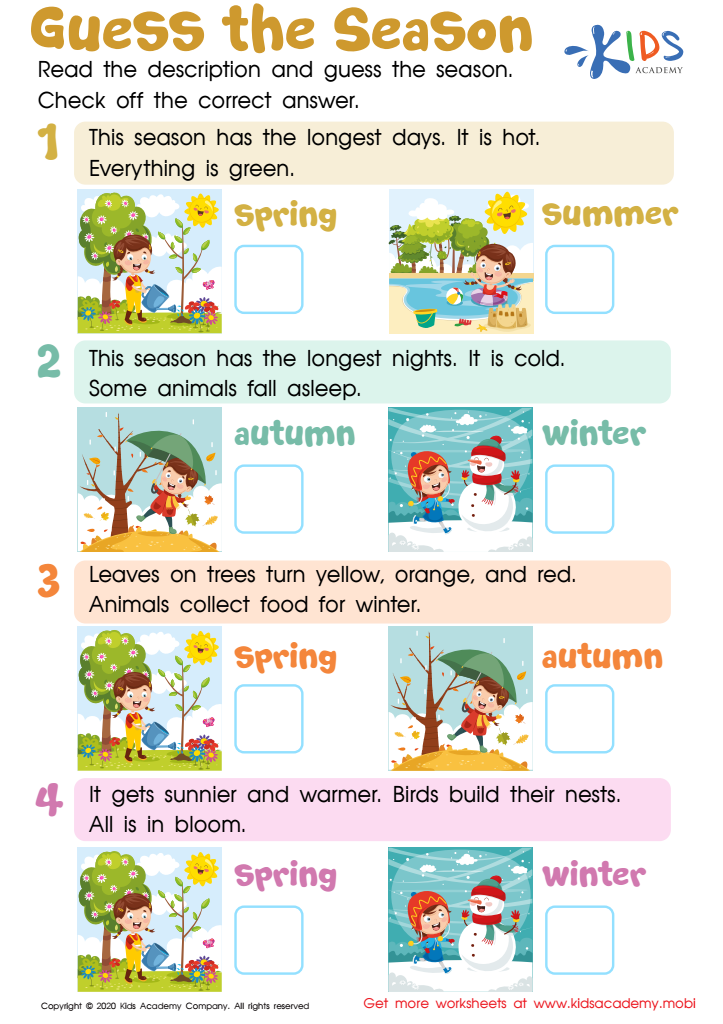
Guess the Season Worksheet
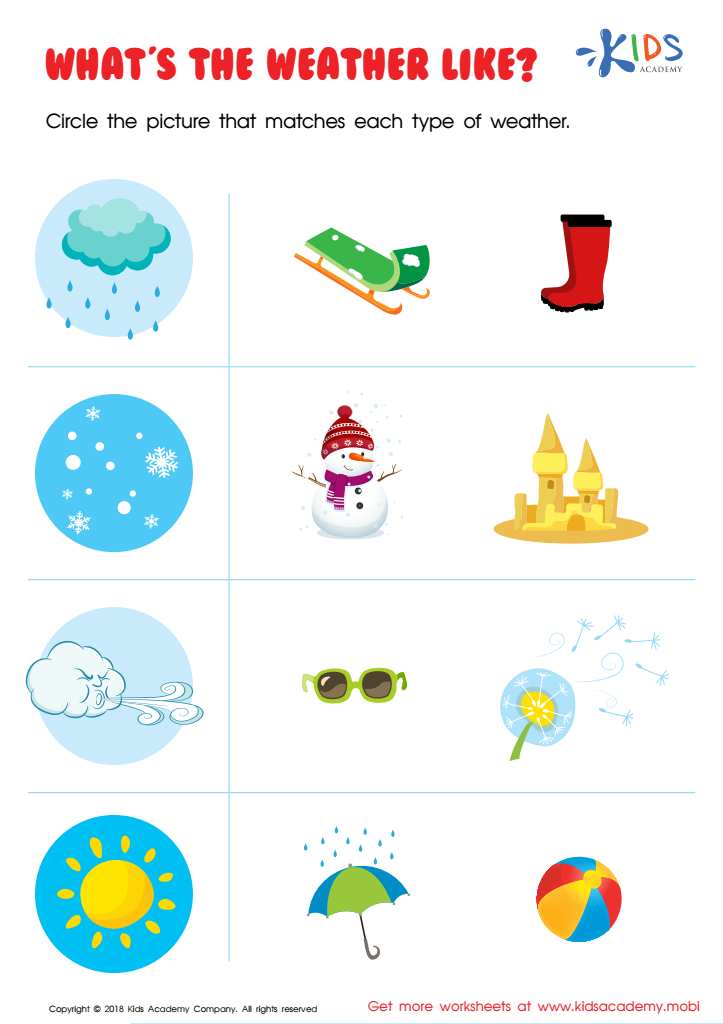
What's the Weather Like? Worksheet








Vocabulary building about normal weather for ages 5-6 is crucial for a child's early development. At this stage, youngsters are rapidly expanding their language and cognitive skills. Introducing weather-related vocabulary enhances both their speaking and understanding abilities, allowing them to express thoughts and comprehend instructions with ease.
Firstly, weather is a universal and daily phenomenon. Children encounter various weather conditions such as sunny, rainy, or windy almost every day. Learning these terms helps them articulate their experiences and observations. This connectivity to their immediate environment makes the learning process engaging and relatable.
Secondly, knowing weather vocabulary aids in safety and preparedness. When children understand terms like "stormy," "foggy," or "hot," they can better grasp weather warnings and take appropriate actions. For instance, if a child knows that "rain" means they need an umbrella, or "sunny" may require sunscreen and a hat, they become safer and more self-reliant.
Lastly, early exposure to weather vocabulary sets a foundation for future science education. It introduces basic concepts about the Earth's atmosphere and climate patterns, stimulating curiosity and a broader interest in learning.
In summary, vocabulary building about normal weather for 5-6 year olds helps with everyday communication, safety, and lays the groundwork for future scientific exploration, making it an essential aspect of early education.








