Understanding communities Normal Social Studies Worksheets for Ages 5-6
3 filtered results
-
From - To
Discover our engaging "Understanding Communities" Social Studies worksheets designed specifically for ages 5-6. This resource helps young learners explore the concept of community, including its features and the various roles individuals play. Through vibrant illustrations and interactive activities, children develop essential social skills by learning about cooperation, diversity, and the significance of community helpers. Perfect for classroom or home use, these worksheets encourage critical thinking and foster a strong sense of belonging. Dive into the world of communities with fun exercises that empower kids to understand their surroundings while building foundational knowledge about society. Start your child's social studies journey today!
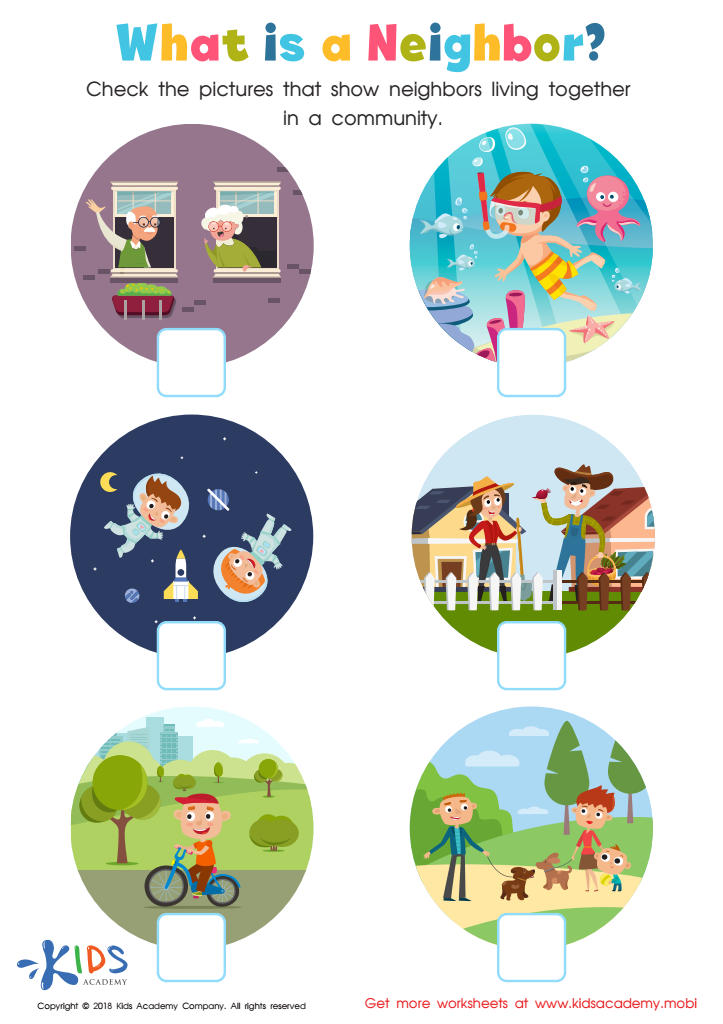
What is a neighbor Worksheet
 Assign to My Students
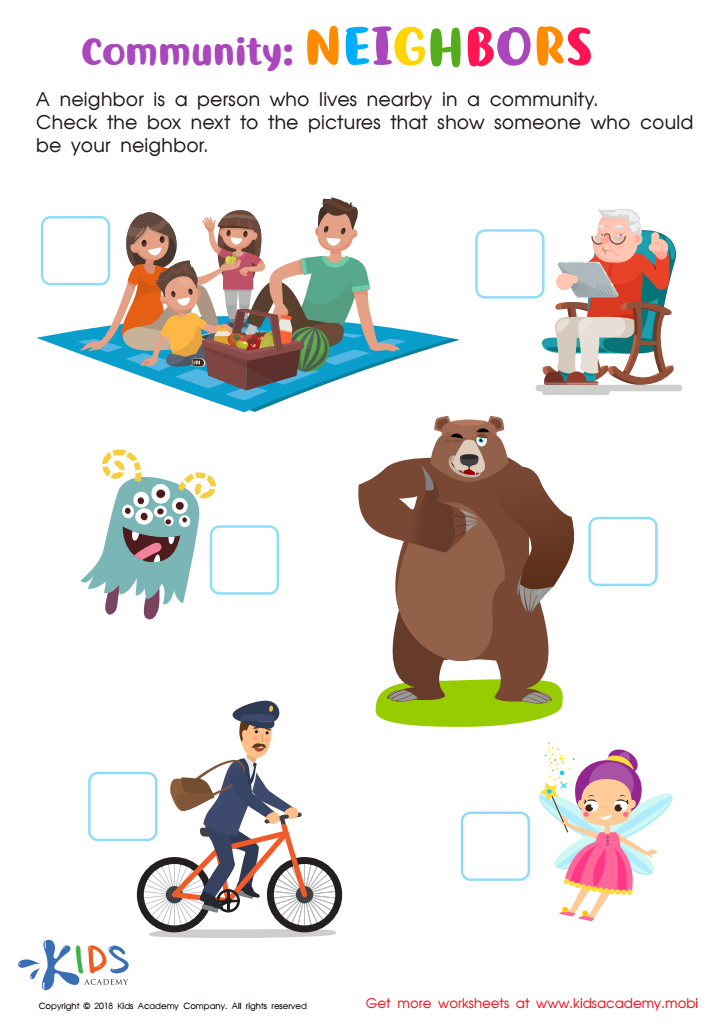
Community: Neighbors Worksheet
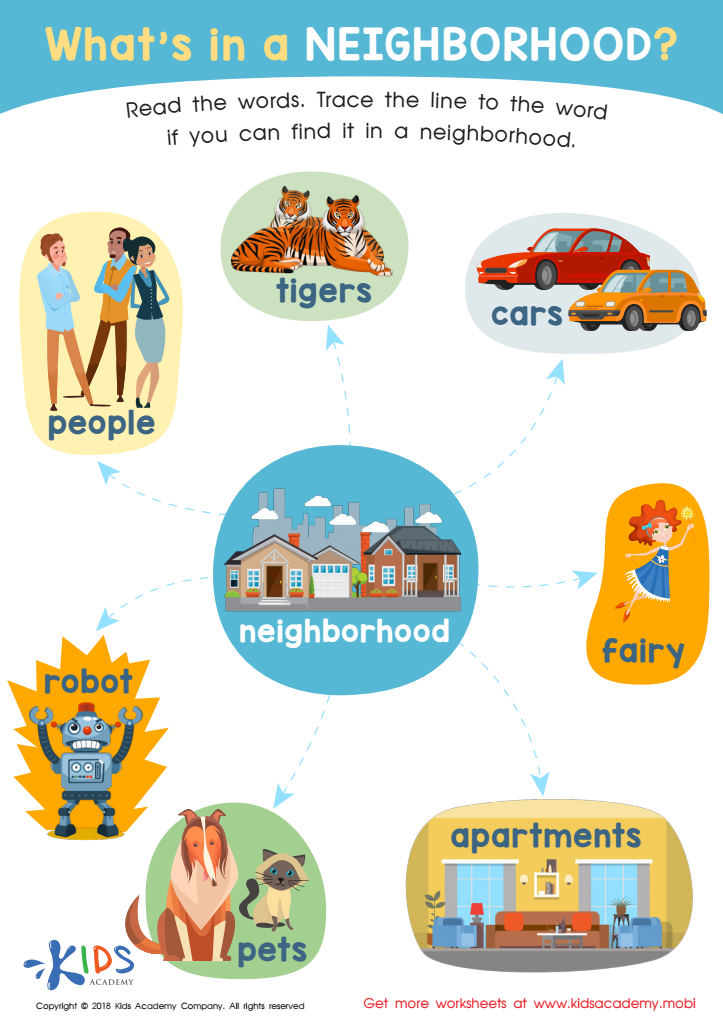
What's in a Neighborhood? Worksheet








Understanding communities is essential for young learners, especially those aged 5-6, as it lays the foundation for their social awareness and citizenship. At this developmental stage, children begin to explore their immediate surroundings and the relationships within them. By learning about communities, children can grasp the importance of belonging and the roles various people play in their lives.
Parents and teachers should care about this subject because it fosters key social skills such as empathy, cooperation, and respect for diversity. Engaging children with their community helps them recognize the different individuals who contribute to their society, including parents, teachers, doctors, and community helpers. This recognition promotes a sense of gratitude and encourages them to see the value in teamwork and collaboration.
Moreover, discussions around community can spark curiosity and critical thinking, helping children to ask questions and learn how their actions impact others around them. Creating early awareness about community issues fosters responsible future citizens who are informed and active in making positive changes. Teaching about communities is not just about understanding the present; it’s about cultivating compassionate future leaders who appreciate the interconnectedness of our society. Ultimately, this lays the groundwork for a more inclusive and supportive environment for all children.