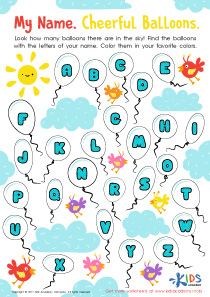
Handwriting practice Normal ABC Order Worksheets for Ages 5-7
4 filtered results
-
From - To
Unlock the joy of learning with our Handwriting Practice Normal ABC Order Worksheets designed for ages 5-7! These beautiful and engaging worksheets, available at Kids Academy, enhance your child's handwriting skills while reinforcing alphabetic order. Our expertly crafted activities use fun themes and clear instructions to make learning effortless. Perfect for young minds eager to master the basics of writing, these worksheets bring education to life, transforming practice into play. Keep your child ahead of the curve and can't wait to print these free resources today and take the first step toward exceptional literacy and fine motor skills!
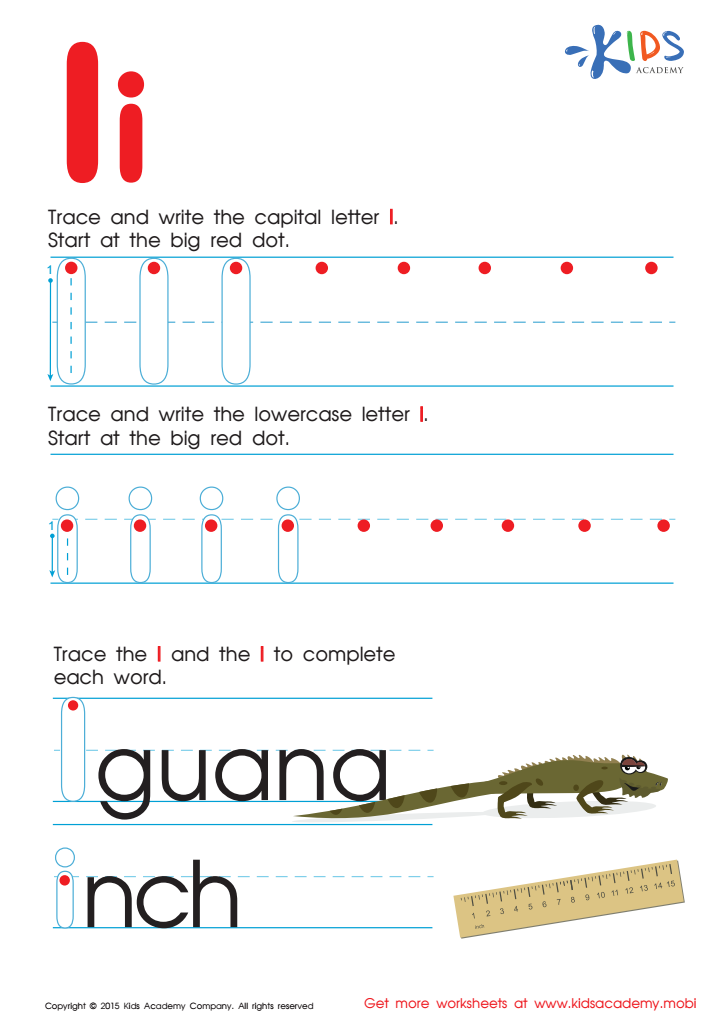
Letter I Tracing Page
 Assign to My Students







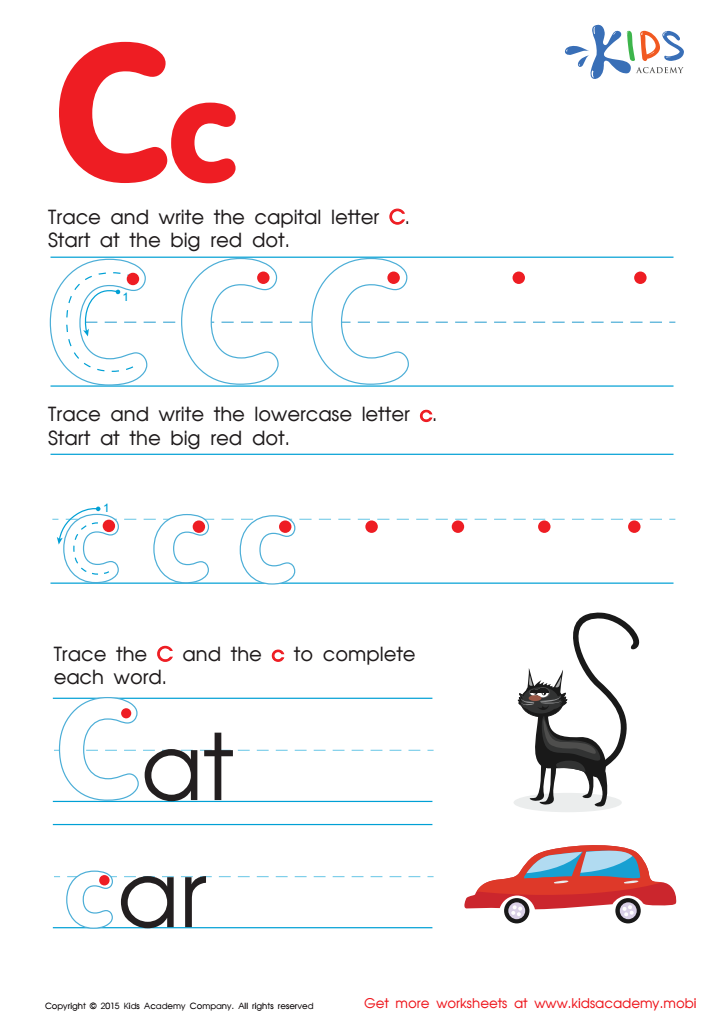
Letter C Tracing Page

Letter G Tracing Page
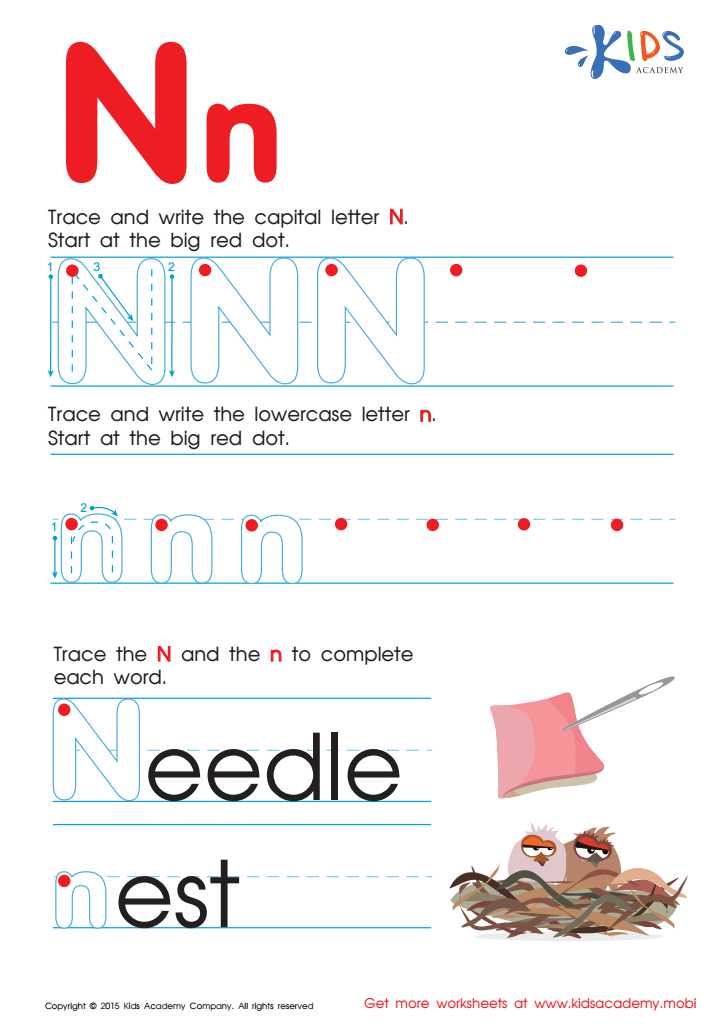
Letter N Tracing Page








Handwriting practice in normal ABC order for ages 5-7 is crucial for early childhood development for several reasons. Firstly, learning the alphabet in its correct order helps children lay the foundation for language and literacy. It augments their ability to recognize, differentiate, and correctly reproduce letters, aiding in reading and writing skills that are vital in educational settings.
Establishing good handwriting habits at this age enhances fine motor skills and hand-eye coordination, fundamental for other life tasks like tying shoelaces or using utensils. A structured approach ensures consistent learning and reinforces memory through repetition, making letter recognition more intuitive and less laborious.
Moreover, the sense of achievement from mastering handwriting builds self-confidence, which can lead onto greater educational enthusiasm and engagement. In classrooms, legible handwriting allows teachers to better understand students’ work, thereby facilitating accurate learning assessment.
For parents, becoming involved in handwriting practice can strengthen parent-child bonds, offering collaborative learning moments. It also sets the stage for a disciplined work ethic and personal organization from an early age.
In summary, mastering handwriting in normal ABC order ensures foundational literacy skills, promotes fine motor development, instills confidence, and builds crucial parent-teacher-student interactive frameworks, all imperative for future academic and personal success.