
Letter-sound recognition Normal Alphabet Worksheets for Ages 5-7
4 filtered results
Difficulty Level
Grade
Age
-
From - To
Subject
Activity
Standards
Discover our engaging Letter-Sound Recognition Normal Alphabet Worksheets, designed specifically for children ages 5-7! These worksheets promote foundational literacy skills by helping young learners connect letters with their corresponding sounds through fun, interactive activities. Each worksheet features colorful illustrations and easy-to-follow exercises that encourage children to practice sound identification, enhancing their phonemic awareness in a playful way. Ideal for classroom use or at-home learning, our resources support early reading development and build confidence in emerging readers. Perfect for teachers and parents, these worksheets make learning the alphabet both enjoyable and effective! Download today and watch your child's literacy skills flourish!
Favorites
With answer key
Interactive
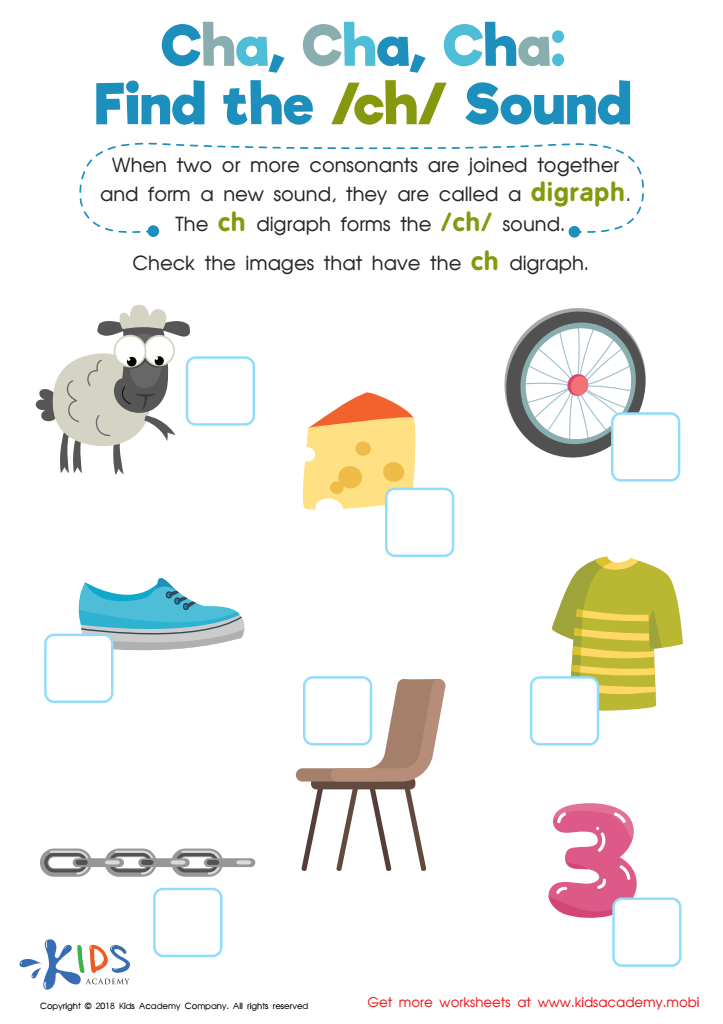
Cha, Cha, Cha: Find the /Ch/ Sound Worksheet
Have your students identify the objects in the images and if they struggle, help them check for the /ch/ digraph. This digraph forms a new sound when two or more consonants are combined, so it can be helpful to point it out to them in the colourful printout.
 Assign to My Students
Cha, Cha, Cha: Find the /Ch/ Sound Worksheet
Worksheet
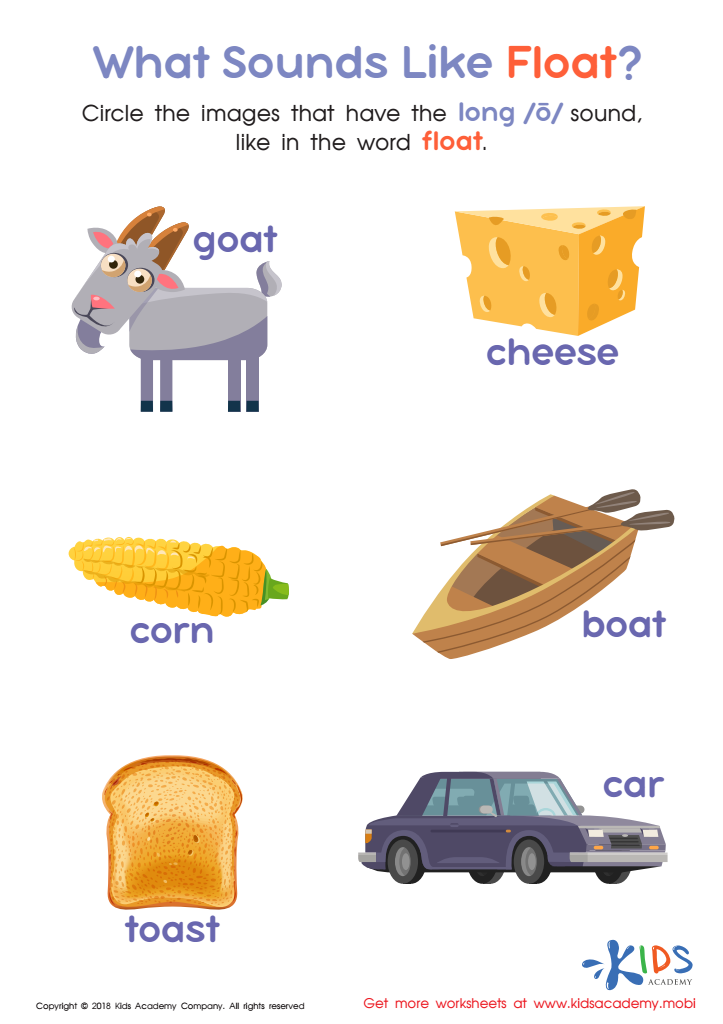
What Sounds Like Float? Worksheet
Help your kids practice the long /o/ sound with words such as 'boat', 'goat' and 'float'. Ask them to identify and circle the images in the worksheet that have the same sound. Award bonus points if they come up with more words with 'oa' spelling!
What Sounds Like Float? Worksheet
Worksheet
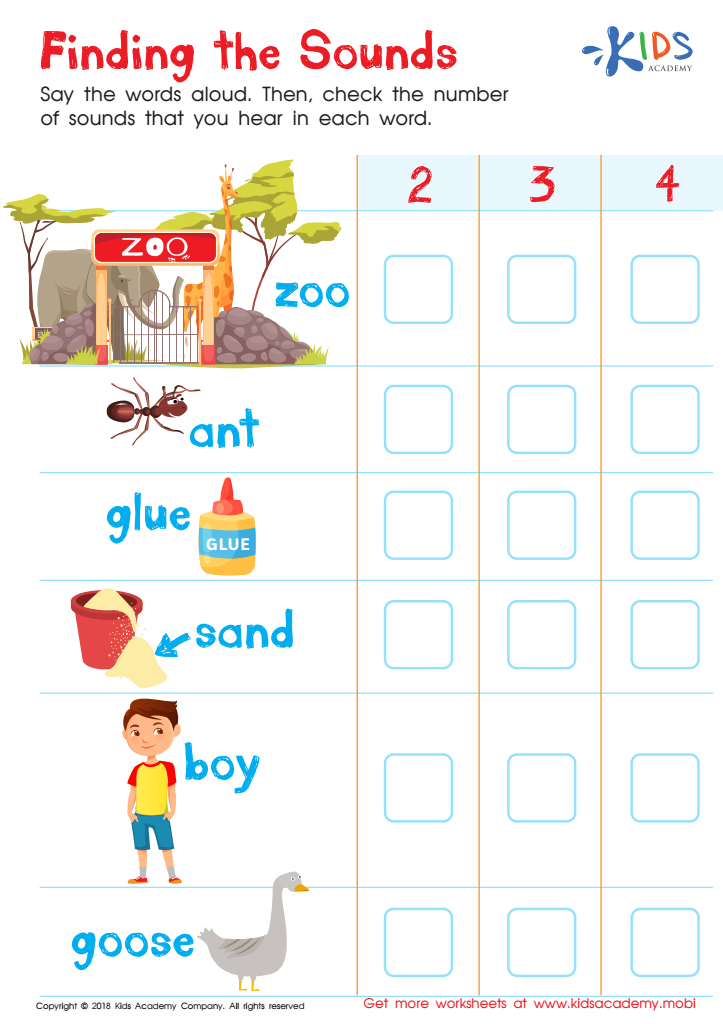
Finding the Sounds Worksheet
This free colorful worksheet assists children in learning words and breaking them down into sounds. It boosts auditory discrimination, phonological awareness and fine motor skills. Picture clues help them read confidently, and they can check the appropriate boxes to practice their reading skills.
Finding the Sounds Worksheet
Worksheet
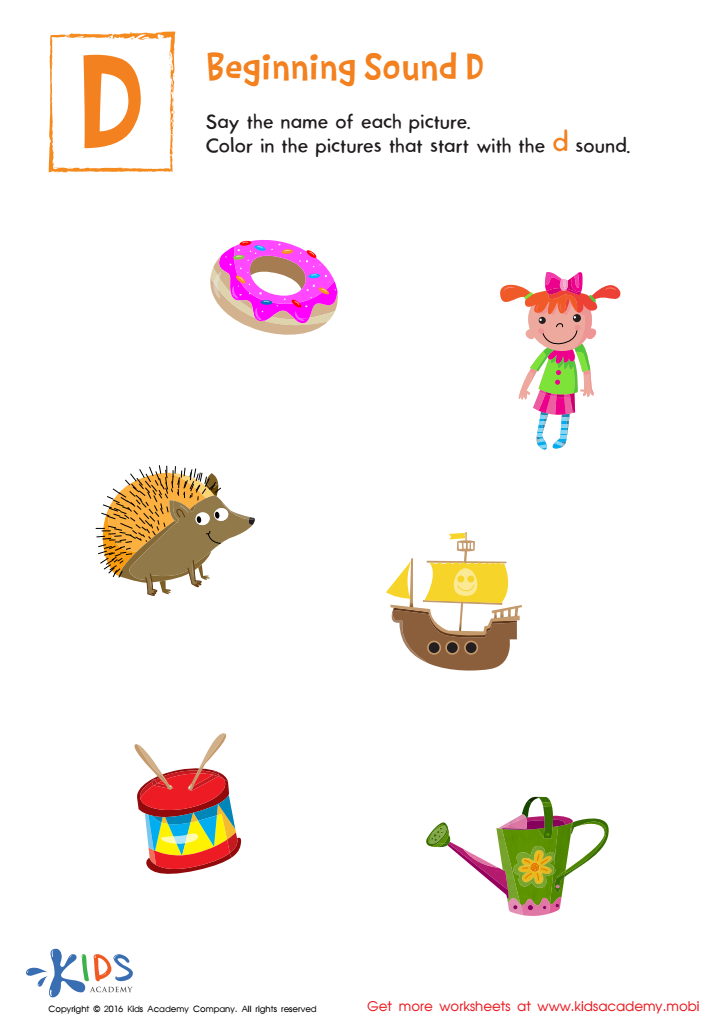
Beginning Sound D Worksheet
Reinforce phonics with this vibrant beginning sound d worksheet! Pictures help kids identify words beginning with 'd' and develop early reading skills. Sounding out each word increases literacy!
Beginning Sound D Worksheet
Worksheet
Join Kids Academy for Free
Who is primarily going to use this learning content?







Letter-sound recognition is crucial for children aged 5-7, as it's the foundation for their literacy development. At this stage, children begin to link letters and their corresponding sounds, which significantly impacts their reading and writing skills. Parents and teachers should care about this skill for several reasons.
Firstly, strong letter-sound recognition contributes to phonemic awareness, a critical component in reading fluency. Children who can identify and manipulate sounds in words more easily transition to reading whole texts. Furthermore, letter-sound recognition supports decoding skills—enabling children to sound out unfamiliar words, effectively reducing frustration and fostering a love for reading.
Additionally, understanding letter sounds enhances vocabulary development. As children encounter new words, they'll be more equipped to decipher meanings and context around them. Parents and teachers play an integral role in cultivating this skill through engaging activities and phonics instruction, including songs, games, and storytelling.
Lastly, developing letter-sound recognition at an early age fosters confidence in children. As they become adept readers, their sense of accomplishment encourages a lifelong love for learning and exploration. Consequently, nurturing this vital skill is essential for both academic success and overall personal growth.







