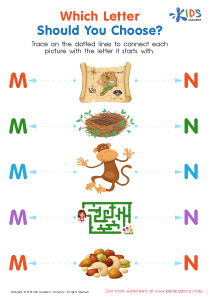
Lowercase identification Normal Lowercase/Small Letters Worksheets for Ages 5-7
4 filtered results
-
From - To
Discover engaging Lowercase Identification Worksheets designed for children ages 5-7! Our printable resources help young learners master normal lowercase letters through fun and interactive activities. Each worksheet focuses on identifying, tracing, and writing small letters, encouraging children to boost their literacy skills in a playful manner. With vibrant illustrations and age-appropriate challenges, these worksheets make learning enjoyable while building a strong foundation in reading and writing. Perfect for classroom use or home practice, our materials are tailored to ignite a child’s curiosity and confidence in language. Start your child’s journey to lowercase letter mastery today!
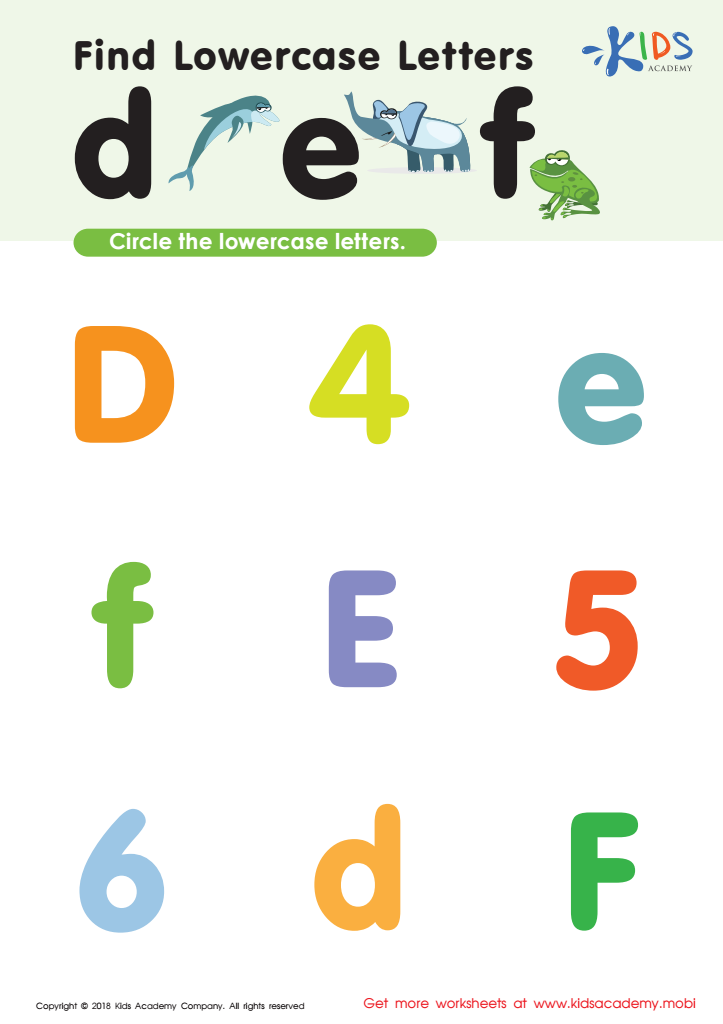
Find Lowercase Letters d e f Worksheet
 Assign to My Students
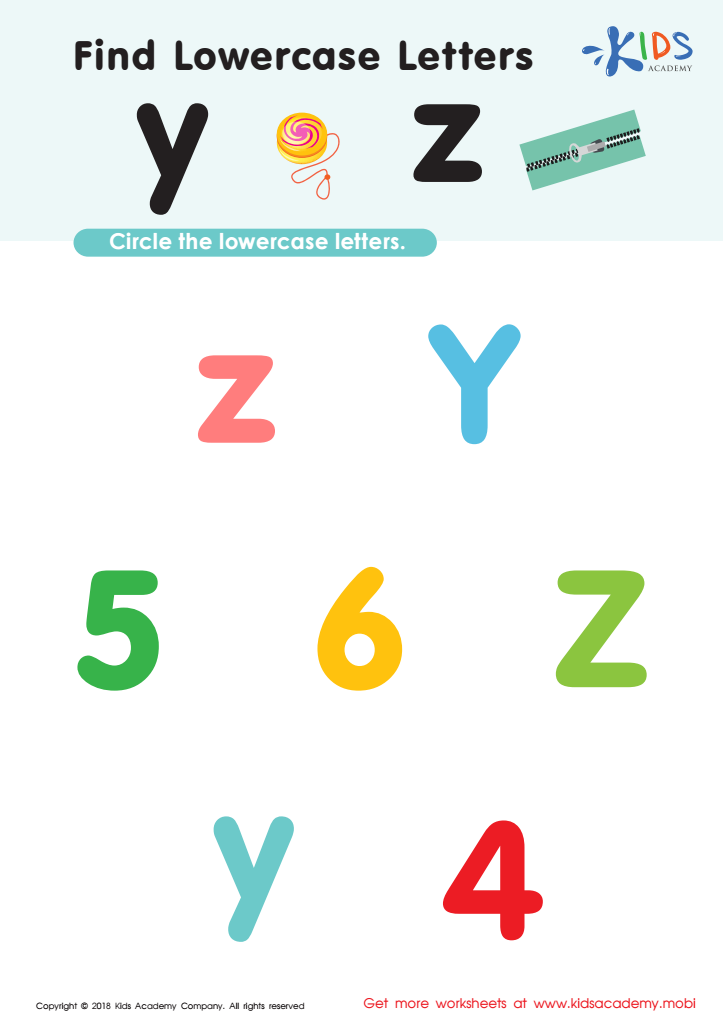
Find Lowercase Letters y z Worksheet
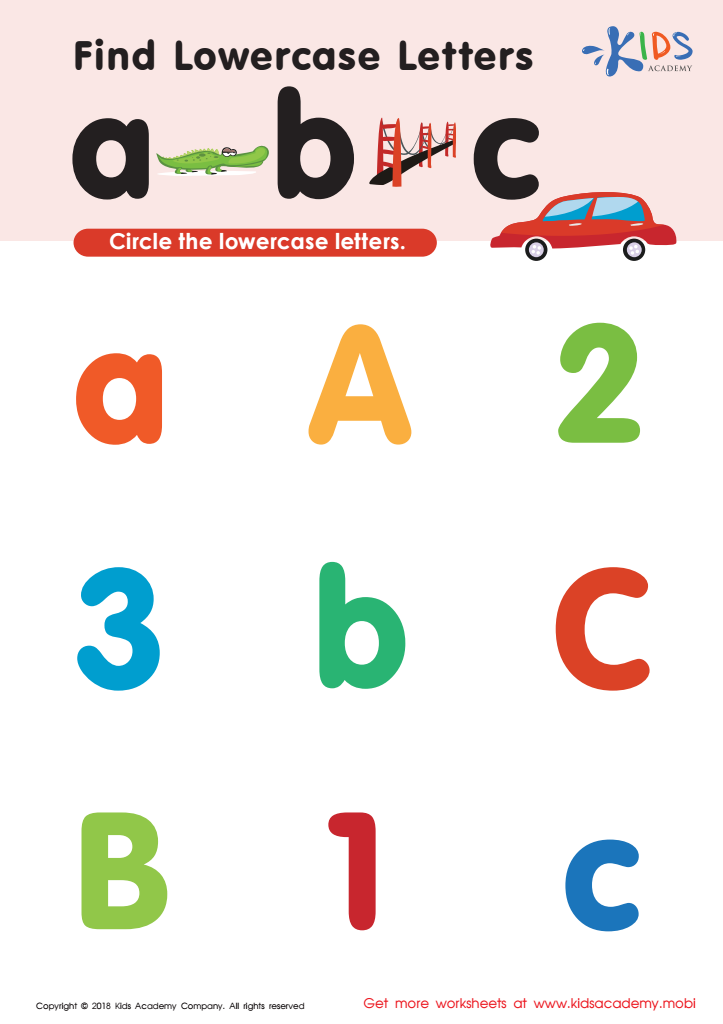
Find lowercase letters a b c Worksheet
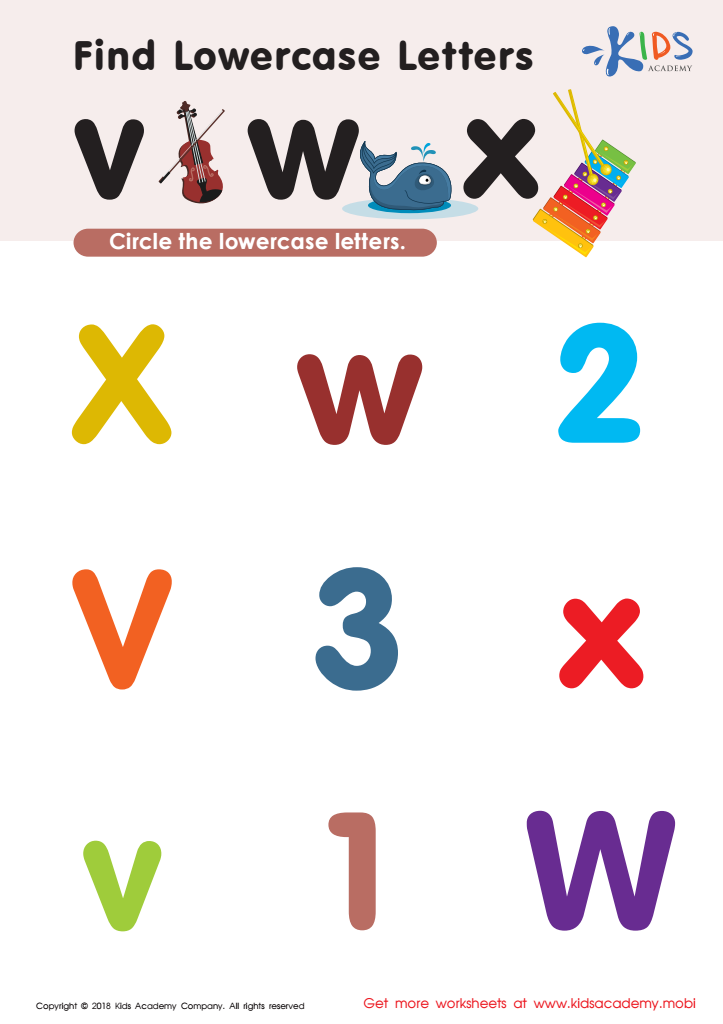
Find Lowercase Letters v w x Worksheet


Lowercase identification is a fundamental skill that plays a crucial role in literacy development for children aged 5-7. Understanding and recognizing lowercase letters forms the foundation for reading and writing. As students transition from learning the alphabet to constructing words and sentences, they predominantly encounter lowercase letters in texts, making this knowledge essential.
Parents and teachers should care about lowercase identification because it enhances children's decoding skills, enabling them to read fluently and comprehend texts with ease. Familiarity with lowercase letters also supports writing development, as children learn to form letters correctly and develop their personal writing styles. Additionally, lowercase letters are frequently used in digital communication and everyday contexts, emphasizing the importance of this skill in real-life applications.
Moreover, early mastery of lowercase identification fosters confidence and motivation in young learners. When children can easily read and write using lowercase letters, they become more engaged and willing to participate in literacy-related activities. This engagement lays the groundwork for a lifelong love of reading and writing, crucial for academic success and personal growth. Thus, prioritizing lowercase letter identification not only aids immediate learning but also shapes positive attitudes toward education in the long run.