
Letter-sound recognition Normal Phonics Worksheets for Ages 5-7
4 filtered results
Difficulty Level
Grade
Age
-
From - To
Subject
Activity
Standards
Enhance your child’s reading journey with our Letter-Sound Recognition Normal Phonics Worksheets, designed specifically for ages 5-7. These engaging, printable worksheets help young learners grasp fundamental phonics skills through fun activities focused on recognizing and connecting letters to their corresponding sounds. By combining visual aids and interactive exercises, children will develop confidence in their reading abilities while building a strong phonetic foundation. Ideal for home or classroom use, our worksheets are tailored to meet the diverse learning needs of early readers. Join us in fostering a love for reading and phonics mastery with our thoughtfully crafted resources!
Favorites
With answer key
Interactive
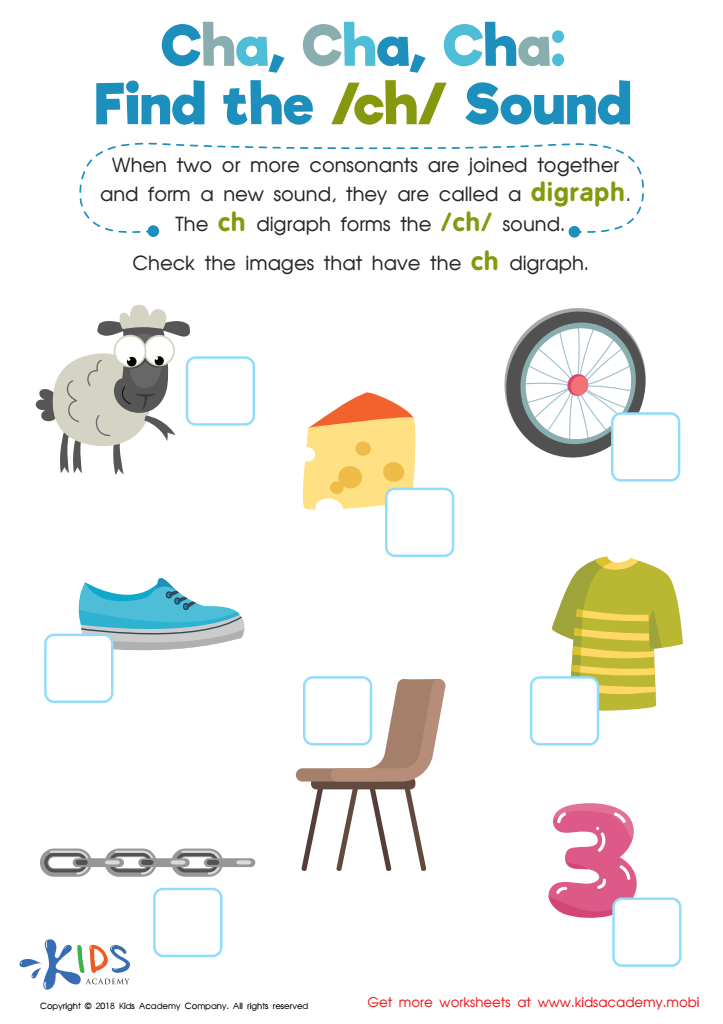
Cha, Cha, Cha: Find the /Ch/ Sound Worksheet
Have your students identify the objects in the images and if they struggle, help them check for the /ch/ digraph. This digraph forms a new sound when two or more consonants are combined, so it can be helpful to point it out to them in the colourful printout.
 Assign to My Students
Cha, Cha, Cha: Find the /Ch/ Sound Worksheet
Worksheet
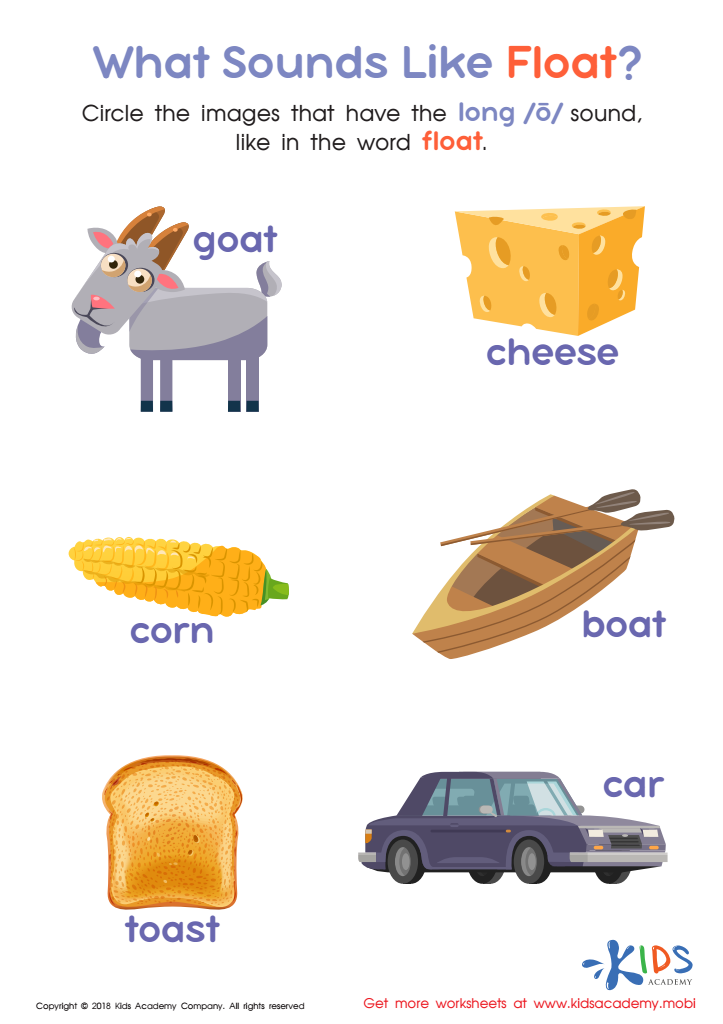
What Sounds Like Float? Worksheet
Help your kids practice the long /o/ sound with words such as 'boat', 'goat' and 'float'. Ask them to identify and circle the images in the worksheet that have the same sound. Award bonus points if they come up with more words with 'oa' spelling!
What Sounds Like Float? Worksheet
Worksheet
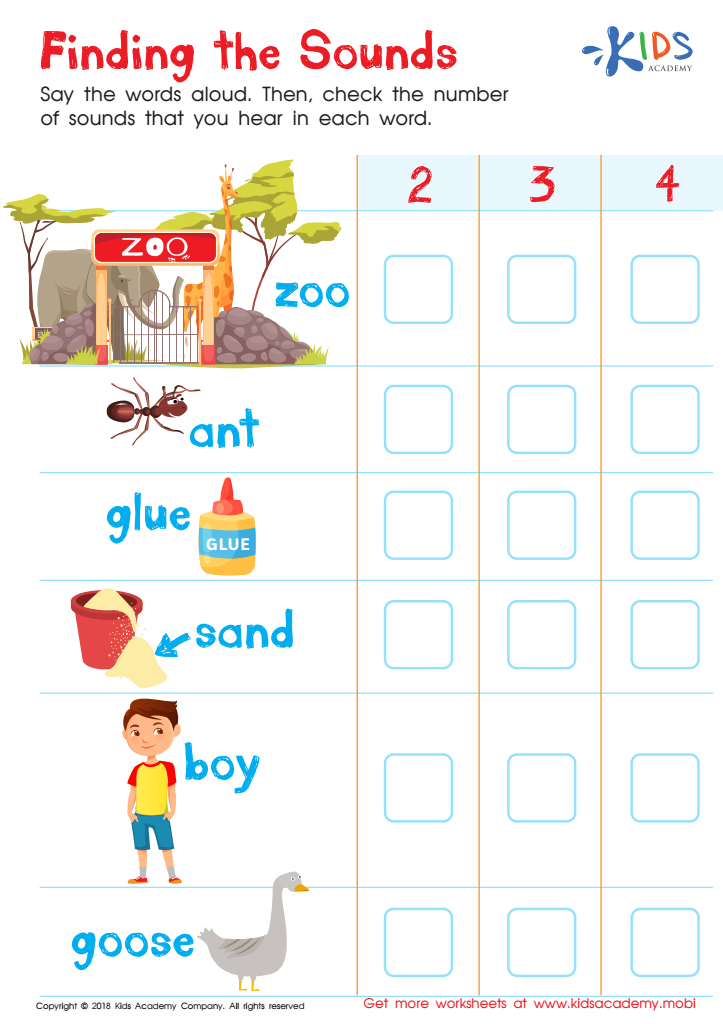
Finding the Sounds Worksheet
This free colorful worksheet assists children in learning words and breaking them down into sounds. It boosts auditory discrimination, phonological awareness and fine motor skills. Picture clues help them read confidently, and they can check the appropriate boxes to practice their reading skills.
Finding the Sounds Worksheet
Worksheet
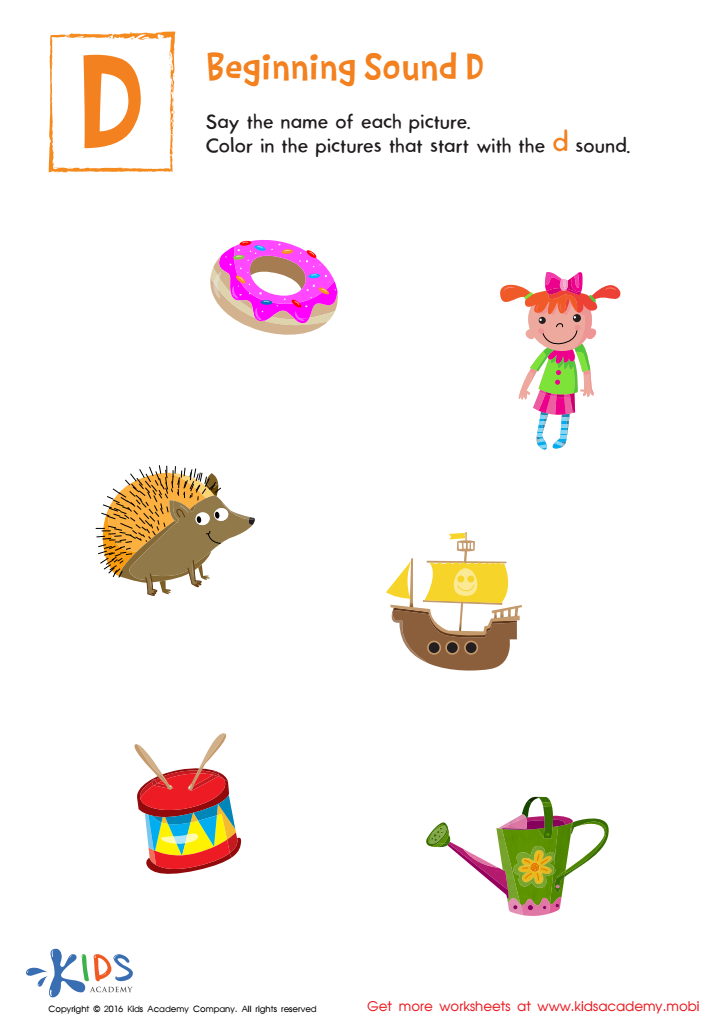
Beginning Sound D Worksheet
Reinforce phonics with this vibrant beginning sound d worksheet! Pictures help kids identify words beginning with 'd' and develop early reading skills. Sounding out each word increases literacy!
Beginning Sound D Worksheet
Worksheet
Join Kids Academy for Free
Who is primarily going to use this learning content?








Letter-sound recognition is a fundamental skill for children aged 5-7, laying the groundwork for literacy development. Parents and teachers should prioritize this skill because it is integral to reading fluency, comprehension, and overall academic success. When children recognize the sounds associated with letters, they can decode words, enabling them to move from simple reading to more complex texts.
Phonics instruction supports children in understanding the relationship between letters and their corresponding sounds, enhancing their ability to sound out unfamiliar words. This skill is not just about reading; it contributes to writing proficiency as well, allowing children to spell words phonetically.
Additionally, strong letter-sound recognition promotes confidence in young learners. When children possess the ability to decode words, they are more likely to engage with texts, participate in discussions, and develop a love for reading. This enthusiasm for literacy fosters lifelong learning habits.
By focusing on letter-sound recognition through normal phonics, parents and teachers equip children with the essential tools for academic achievement and critical thinking skills, ultimately contributing to their personal growth and success in various aspects of life. Thus, investing time in phonics education is a worthwhile endeavor for children's future learning opportunities.







