Phonics Skills Normal Vowel Blends Worksheets for Ages 5-7
5 filtered results
Difficulty Level
Grade
Age
-
From - To
Subject
Activity
Standards
Enhance your child’s phonics skills with our Phonics Skills Normal Vowel Blends Worksheets, perfect for ages 5-7. Designed to build a strong foundation in reading, these engaging worksheets focus on common vowel blends, helping young learners recognize and pronounce different sounds. Through a variety of fun activities, children will practice blending vowels, boosting their abilities in decoding and word recognition. Ideal for early readers, these high-quality printable worksheets make learning enjoyable and effective, paving the way for academic success. Visit Kids Academy for more resources and support your child’s literacy journey today!
Favorites
With answer key
Interactive
Reading: OA or OW Worksheet
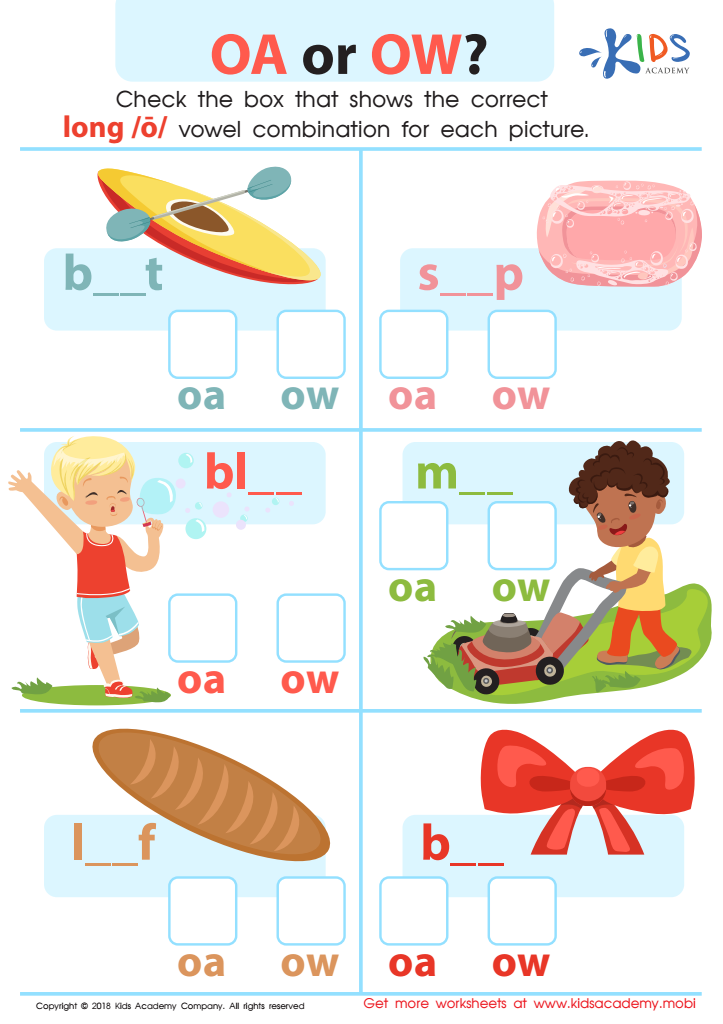
This printable worksheet helps young and emergent readers with decoding words and understanding digraphs (two letters with one sound). It requires students to complete the spelling for each word based on the picture, focusing on /oa/ and /ow/ spellings. It's ideal for a reading classroom and for spelling practice.
Reading: OA or OW Worksheet
Worksheet
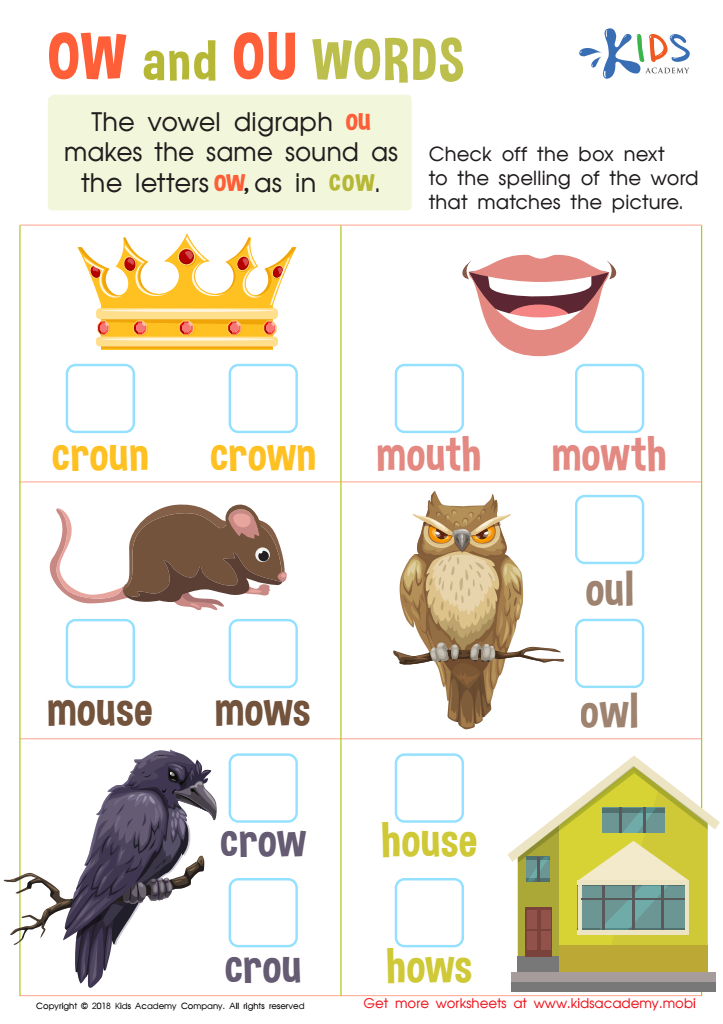
Reading: OW and OU Words Worksheet
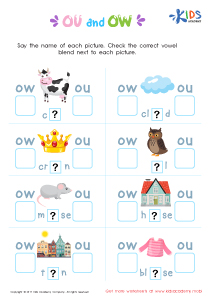
Help your kids learn phonetics! Explain the different sounds and long/short variations. Emphasize that some vowel sounds are the same, e.g. ou = ow in cow. For practice, have them read aloud the words in the worksheet and check the box next to the spelling that matches the picture.
Reading: OW and OU Words Worksheet
Worksheet
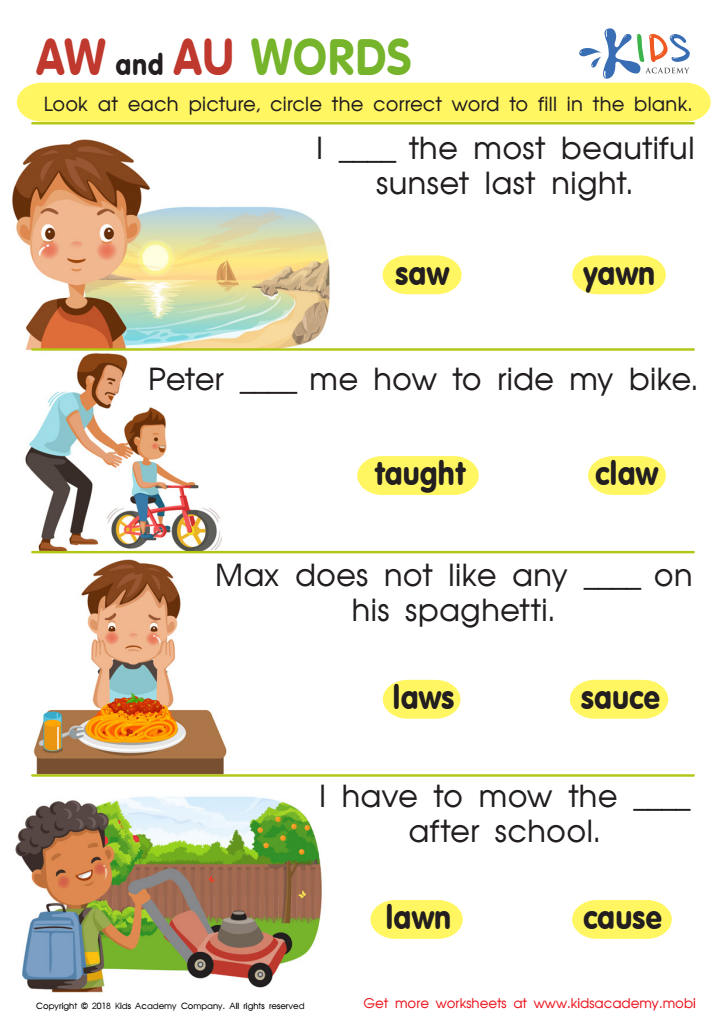
Reading: AW and AU Words Worksheet
This worksheet helps kids recognize that /au/ and /aw/ can make the same sound. Students read sentences and pick the correct word with one of the digraphs. Understanding digraphs improves decoding and reading fluency. Perfect for reading and phonics classes.
Reading: AW and AU Words Worksheet
Worksheet
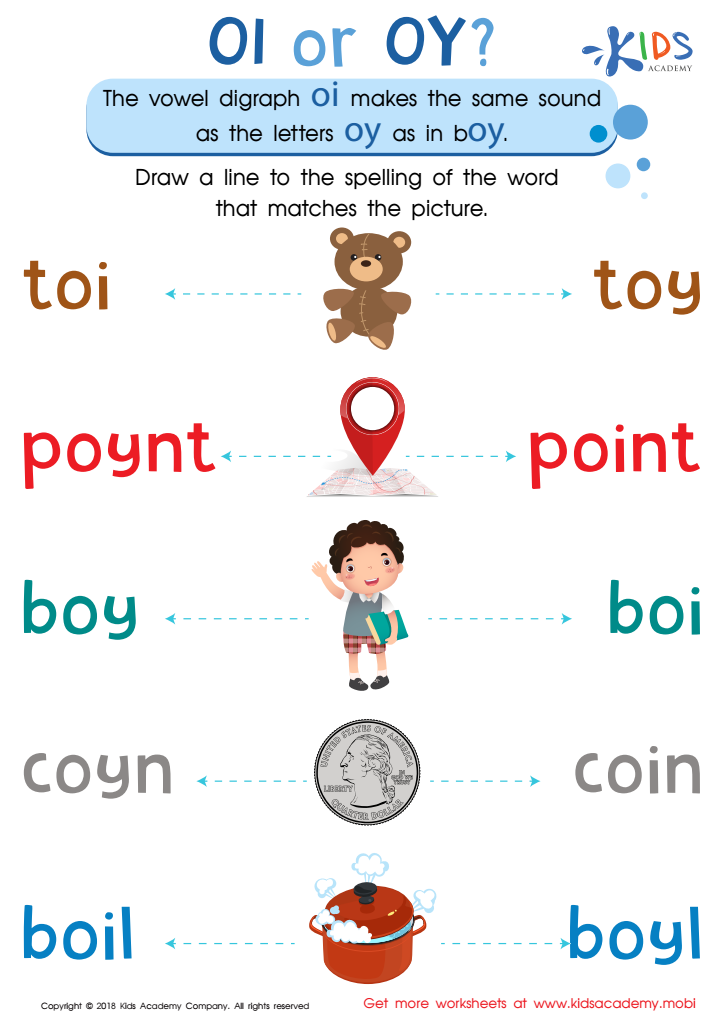
Reading: OI and OY Worksheet
Ask your students if they know the rule for words with /oi/ or /oy/ sound. If not, it's easy to learn! Rule: If /oy/ at end of word, spell with 'oy'; if /oi/ in middle of word, spell with 'oi'. Use this worksheet to help them master these digraphs and improve their ability to decode.
Reading: OI and OY Worksheet
Worksheet

Long and Short E Worksheet
This fun printout makes learning phonics enjoyable for Grade 3 students. Get them to read the words “tree” and “bed” to recognize the different sounds of the letter “E”. After hearing the words they can color the words and the pictures to understand differences between long and short vowels.
Download (PDF)
 Assign to My Students
Assign to My Students
Long and Short E Worksheet
Worksheet
Join Kids Academy for Free
Who is primarily going to use this learning content?





Phonics skills, specifically normal vowel blends, are vital for young children ages 5-7 as they form the foundation for effective reading and writing. At this critical stage, children are transitioning from recognizing letters and sounds to blending them into coherent words. Vowel blends, such as "ea," "oa," and "ai," are common in the English language and mastering them aids in smoother decoding of words and enhances reading fluency. When children understand these blends, they can piece together sounds to form words more confidently, leading to better comprehension skills.
For parents and teachers, supporting the development of these phonics skills translates to improved academic success and a love for reading. Children who struggle with vowel blends may find reading laborious, which can dampen their interest in books and negatively impact their learning experience across all subjects. Conversely, children who are proficient in vowel blends can access a richer vocabulary and perform better in their literacy tasks.
Strengthening phonics skills during the formative years cultivates a strong linguistic foundation, encourages lifelong learning, and equips children with critical thinking skills. Thus, investing time and resources to ensure children master vowel blends pays dividends in their overall literacy and educational development.