Filters

6 filtered results

Clear all filters
Favorites
With answer key
Interactive

6 filtered results

Difficulty Level

Grade


Enhance your child's reading skills with our engaging Word Recognition Normal Vowels Worksheets designed for ages 5-7. These worksheets focus on helping young learners identify and recognize vowels, essential for building foundational literacy skills. With a variety of fun activities, your child will practice vowel sounds and improve their word recognition in an enjoyable way. Each worksheet is tailored to make learning interactive and effective, ensuring that your child gains confidence in reading. Perfect for at-home practice or in the classroom, our resources will support your child's early literacy journey, laying the groundwork for future reading success. Start exploring today!

Check out this FREE Trial Lesson on Vowels for age 5-7!

Digraphs

Favorites
With answer key
Interactive
  • 5-7
  • Word Recognition
  • Vowels
  • Normal
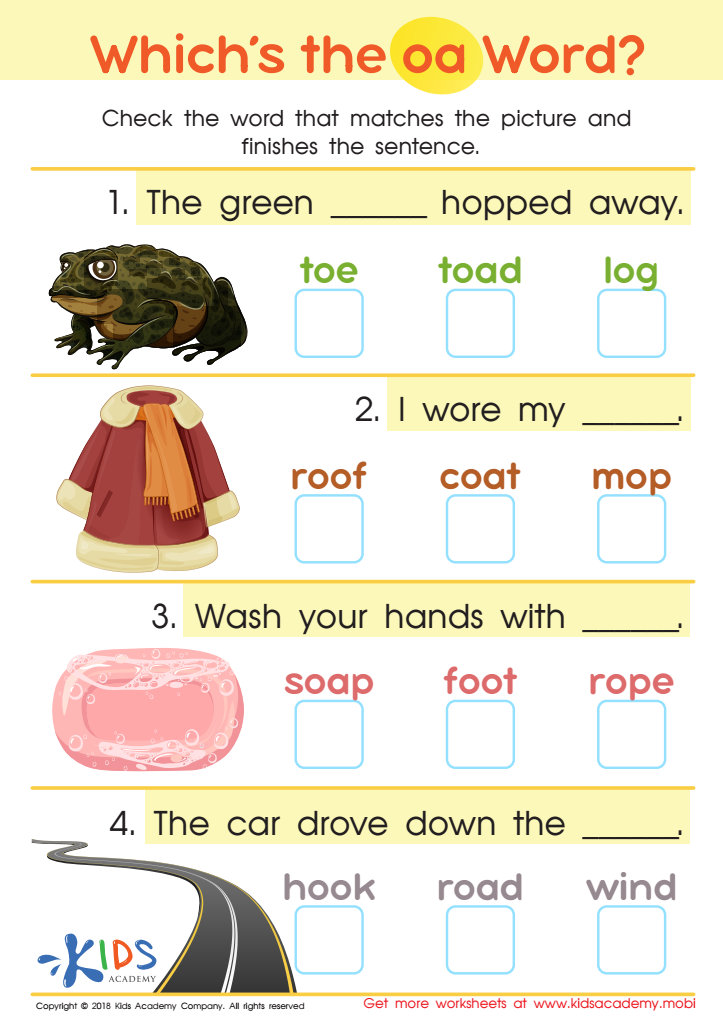
Which's the OA Word? Worksheet

Which's the OA Word? Worksheet

Encourage your kids to complete this fun worksheet. Ask them to identify the animals and objects in the pictures. Read the incomplete sentences aloud, and then find the correct word to finish the sentence. Check their work.
Which's the OA Word? Worksheet
Worksheet
Reading: OW and OU Words Worksheet

Reading: OW and OU Words Worksheet

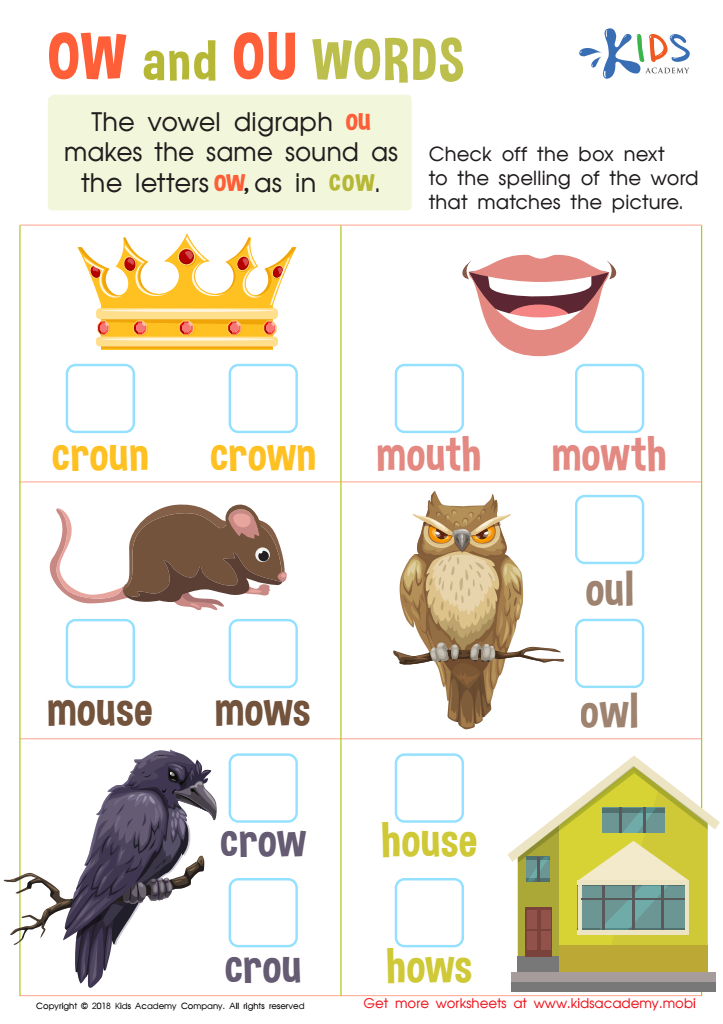
Help your kids learn phonetics! Explain the different sounds and long/short variations. Emphasize that some vowel sounds are the same, e.g. ou = ow in cow. For practice, have them read aloud the words in the worksheet and check the box next to the spelling that matches the picture.
Reading: OW and OU Words Worksheet
Worksheet
Words with ea Worksheet

Words with ea Worksheet

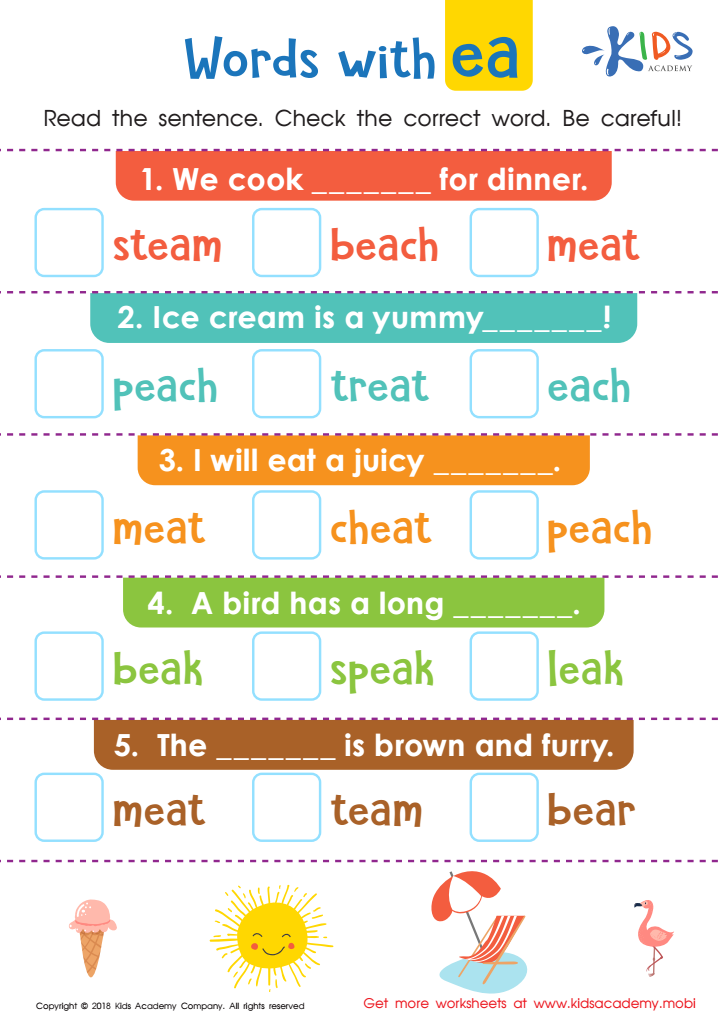
Beginning readers may struggle with -ea vowel digraphs, which can have multiple sounds and be tricky to decode. This cheerful worksheet helps kids practice reading sentences with missing -ea words, using context clues to fill in the blanks. They'll also be exposed to various -ea sound examples, and build their sight word knowledge.
Words with ea Worksheet
Worksheet
Is It Silent? Worksheet

Is It Silent? Worksheet

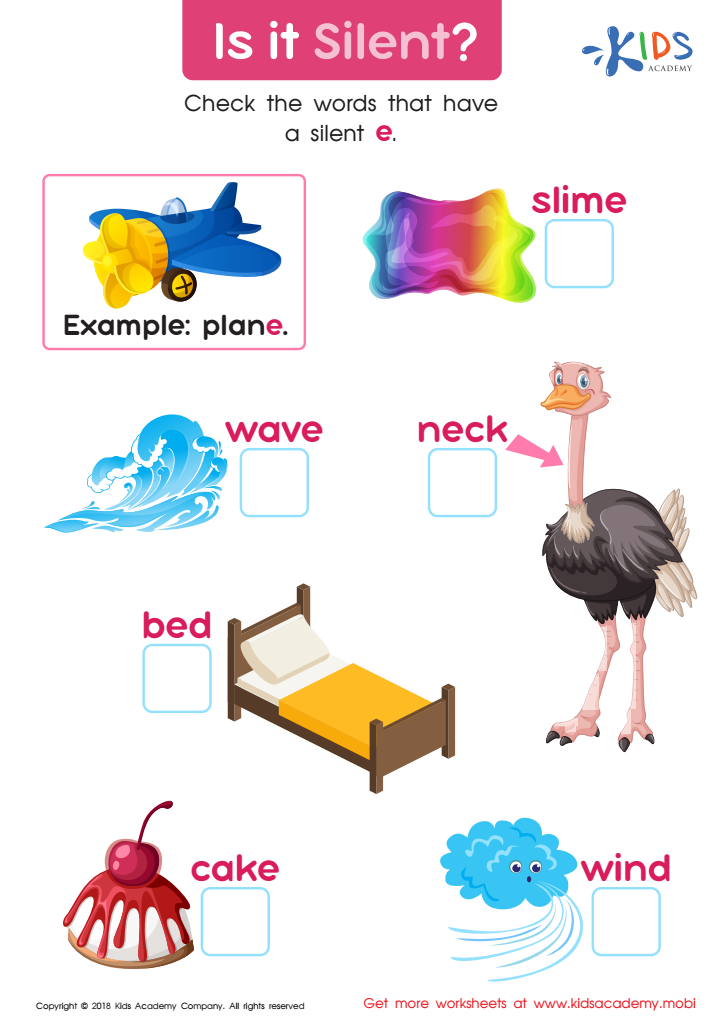
Phonetics can be tricky, like the sound of /e/ in 'egg' vs. the silent /e/ at the end of 'slime'. Ask your students to give more examples. Read out the words in this worksheet with your kids and ask them to identify the silent /e/ ones.
Is It Silent? Worksheet
Worksheet
Phonics for Kids | Long Vowel Sound E | PDF Worksheet 1

Long Vowel Sound E Worksheet

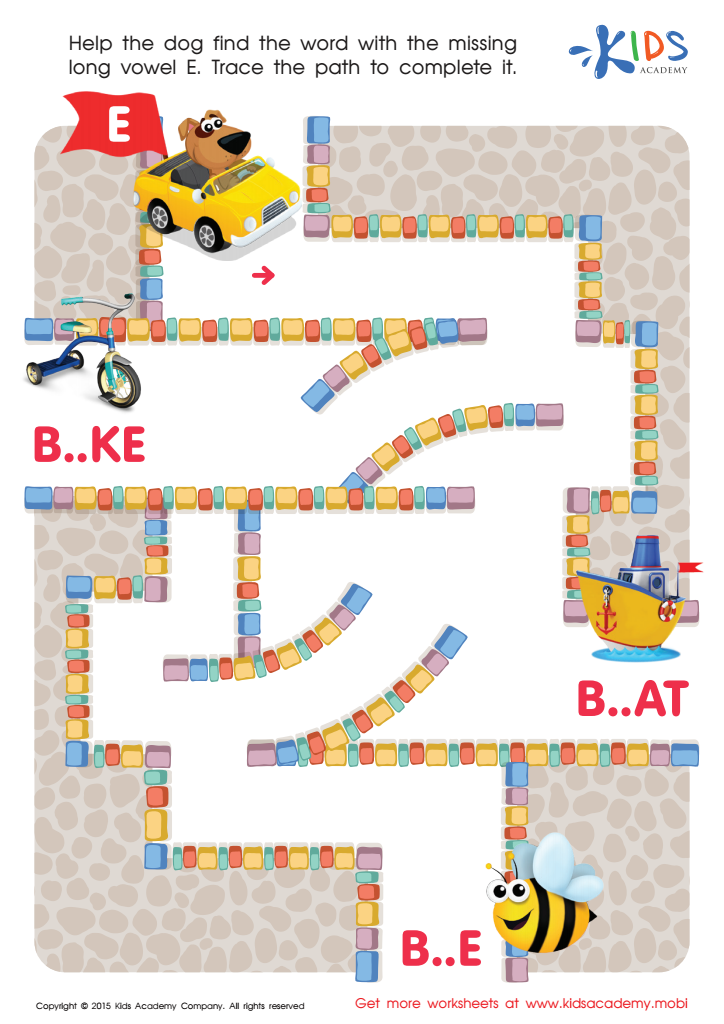
Practice distinguishing long and short vowel sound E with this free printable! Kids must complete the word “bee” by tracing the maze and adding the missing letter E. Remind them to say the word aloud to help sharpen their phonics ear. Get more phonics fun with the vowel sound E here.
Long Vowel Sound E Worksheet
Worksheet
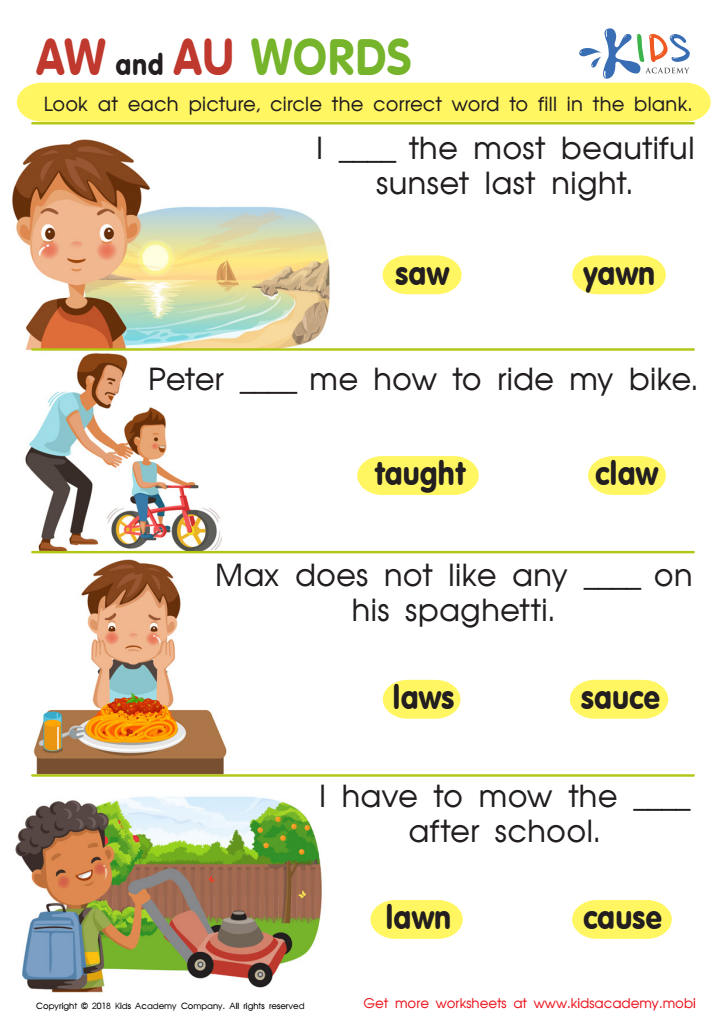
Reading: AW and AU Words Worksheet


Reading: AW and AU Words Worksheet

This worksheet helps kids recognize that /au/ and /aw/ can make the same sound. Students read sentences and pick the correct word with one of the digraphs. Understanding digraphs improves decoding and reading fluency. Perfect for reading and phonics classes.
Reading: AW and AU Words Worksheet

Worksheet


Word recognition is a fundamental skill that young children aged 5-7 must develop for successful reading and literacy. Understanding normal vowels is essential in this process as vowels serve as a building block for constructing words. When children recognize and can articulate the sounds of normal vowels, they can decode and blend words more effectively.

Parents and teachers should prioritize this skill because strong vowel recognition leads to greater word-reading proficiency, boosting children’s confidence and willingness to read more complex texts. At this age, a solid foundation in word recognition can spark a lifelong love for reading, which is integral for academic success across all subjects.

Additionally, mastering vowels helps children improve their spelling and vocabulary. It enhances their comprehension skills, enabling them to absorb information better and engage with a broader range of literature. Early intervention in this area can address potential reading challenges before they escalate, fostering an environment of support and growth.

By focusing on normal vowels and word recognition during the formative years, parents and educators are equipped to build critical literacy skills that propel children into proficient readers and enthusiastic learners. Ultimately, strong readers foster strong thinkers, setting the stage for future learning and personal development.