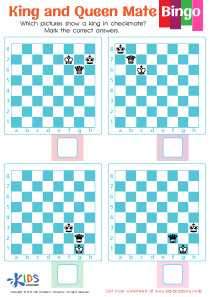
Chess strategy understanding Normal Chess Worksheets for Ages 5-7
3 filtered results
-
From - To
Discover the foundation of chess strategy for young learners with our engaging Normal Chess Worksheets tailored for ages 5-7. These thoughtfully designed resources introduce essential concepts of chess strategy in a fun and accessible way. Children will explore vital skills such as piece movement, tactical thinking, and positional awareness through interactive exercises and colorful visuals. Our worksheets promote critical thinking and problem-solving abilities while keeping kids entertained. Ideal for classroom use or at-home practice, these chess activities foster a love for the game and enhance cognitive development. Equip your child with strategic thinking skills through our exciting chess strategy worksheets today!
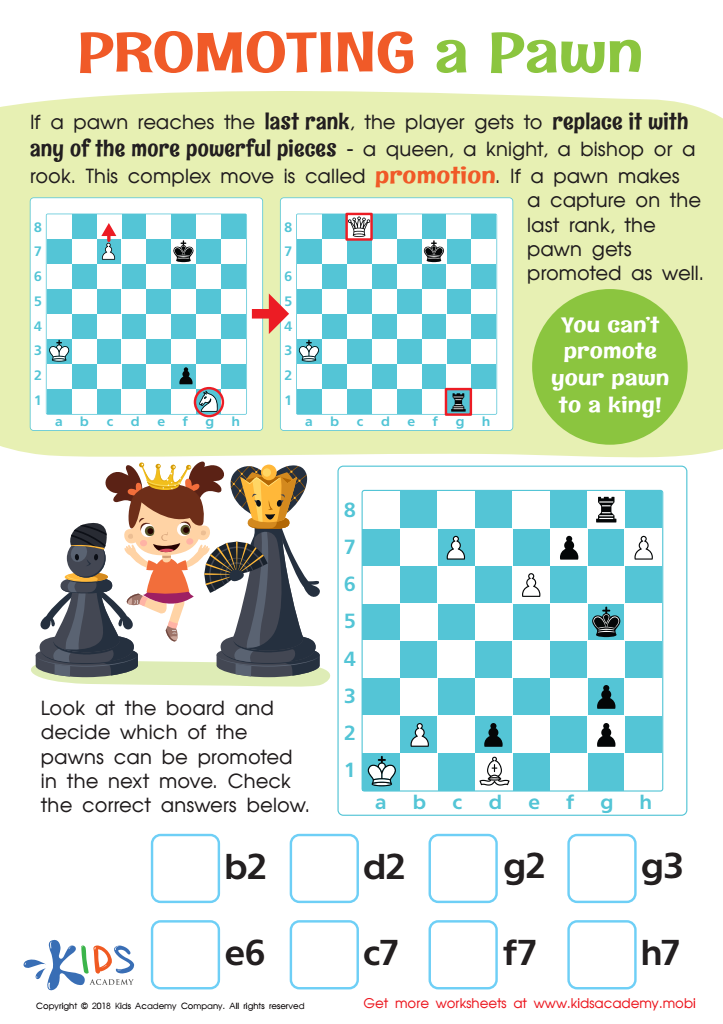
Promoting a Pawn Worksheet
 Assign to My Students
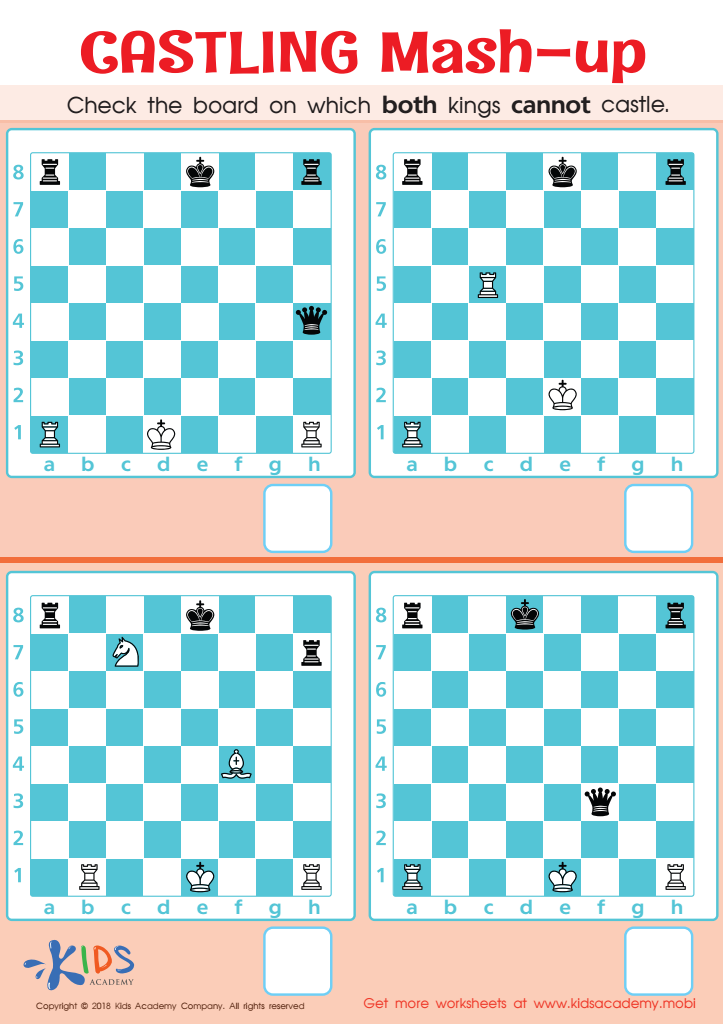
Castling Mash–up Worksheet
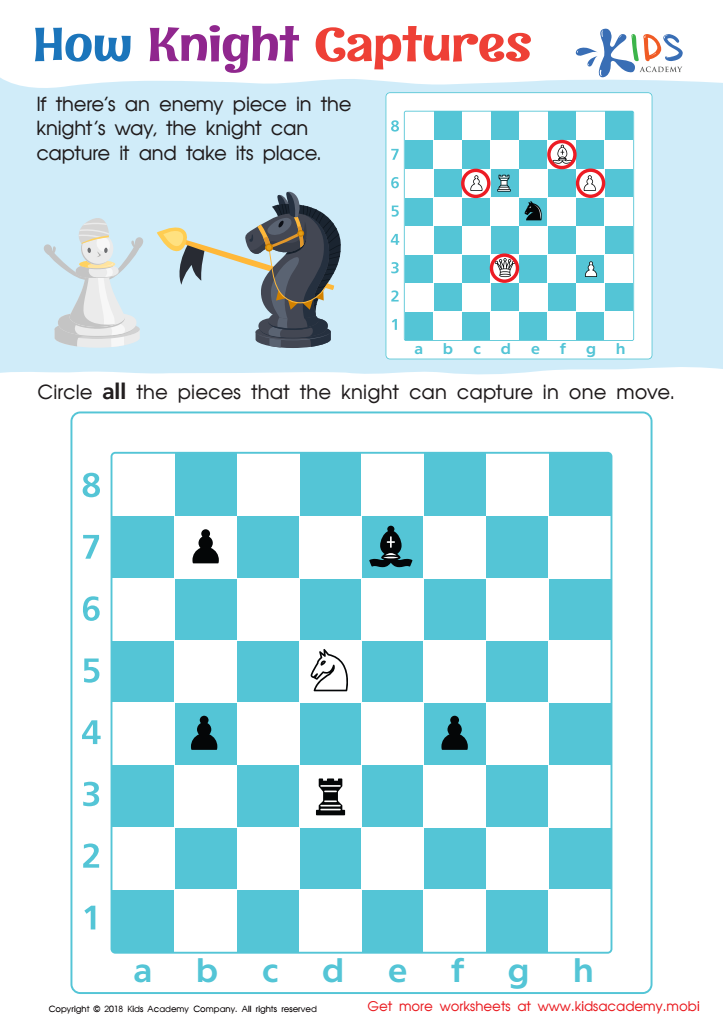
How Knight Captures Worksheet






Understanding chess strategy is essential for both parents and teachers of children aged 5-7 as it contributes significantly to the cognitive, social, and emotional development of young learners. Chess helps develop critical thinking and problem-solving skills by encouraging children to anticipate opponents' moves and evaluate potential outcomes. Learning to strategize fosters patience, discipline, and resilience, as players must learn to accept defeat while continuously improving their skills.
Moreover, chess introduces basic mathematical concepts such as counting, patterns, and spatial awareness, laying a solid foundation for future academic success. It also enhances communication and social interaction by providing children with a shared activity that promotes collaboration and sportsmanship. This can build confidence and encourage positive relationships among peers.
For parents and teachers, promoting chess can create a stimulating environment that values intellectual engagement. It challenges children in a fun and interactive way, keeping them engaged and focused. Additionally, incorporating chess into educational activities can make learning enjoyable and accessible, teaching essential life skills in an enjoyable setting. Ultimately, understanding chess strategy empowers children to develop essential skills early on, influencing their educational journey and personal growth.