Basic astronomy knowledge Normal Worksheets for Ages 5-7
3 filtered results
-
From - To
Explore the wonders of the universe with our "Basic Astronomy Knowledge Normal Worksheets" designed for children aged 5-7! These fun and engaging worksheets introduce young learners to fundamental astronomy concepts, helping them discover the solar system, planets, stars, and more. Instill a love for space science through colorful illustrations and interactive activities that promote critical thinking and creativity. Perfect for classroom use or home learning, these resources cater to diverse learning styles and encourage curiosity about the night sky. Spark your child's imagination and help them reach for the stars with our comprehensive worksheets, making learning about astronomy an exciting adventure!
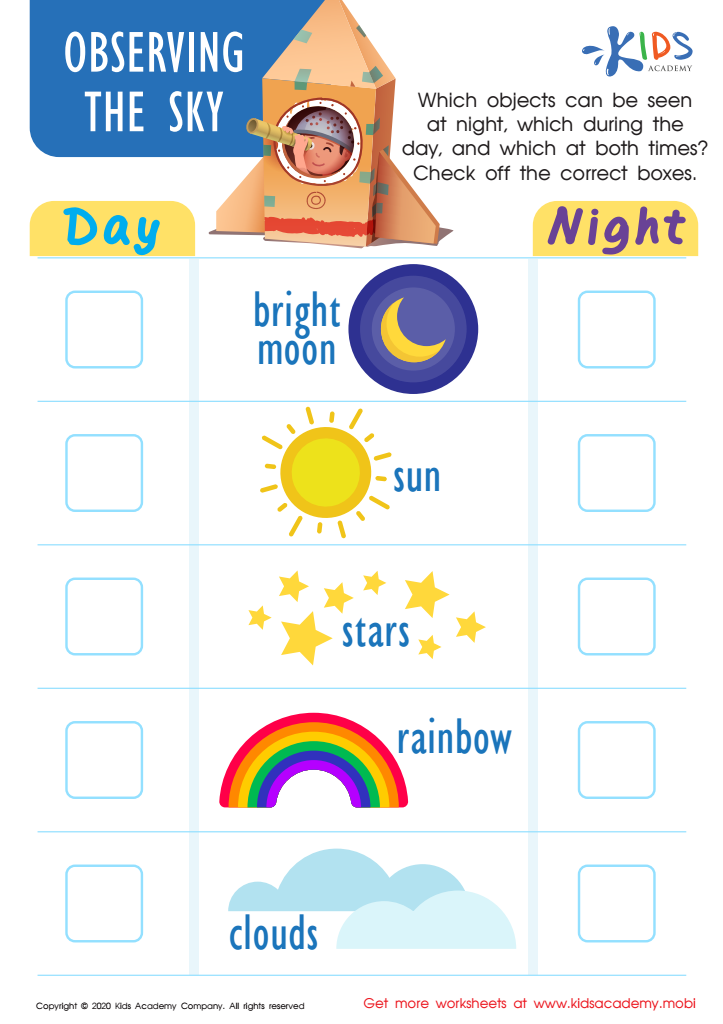
Observing the Sky Worksheet
 Assign to My Students
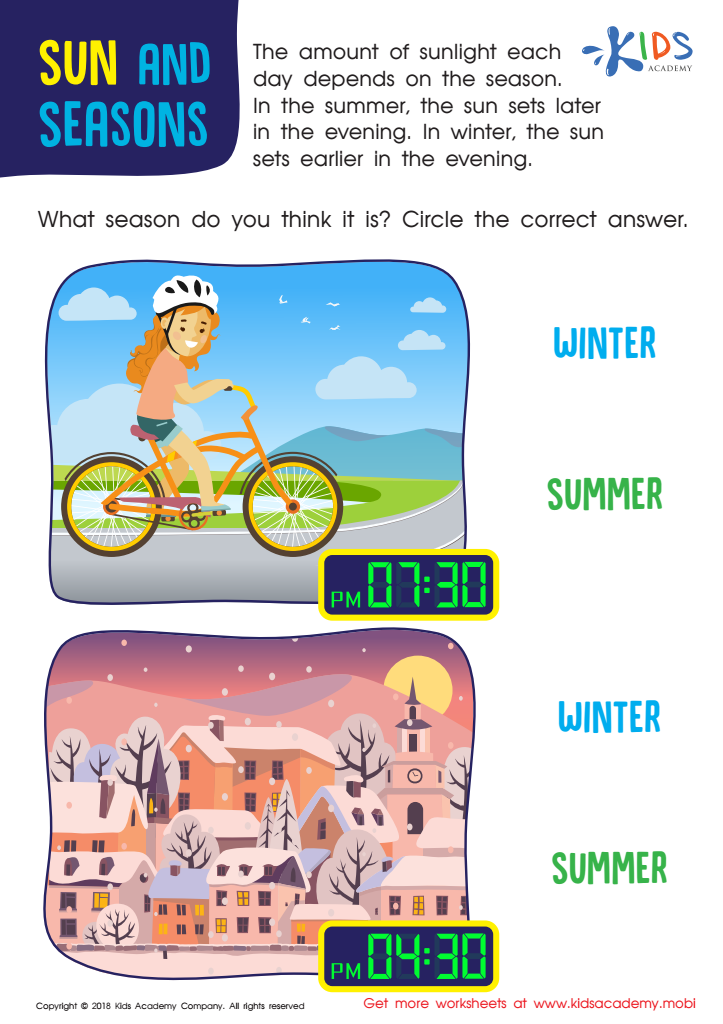
Sun and Seasons Worksheet
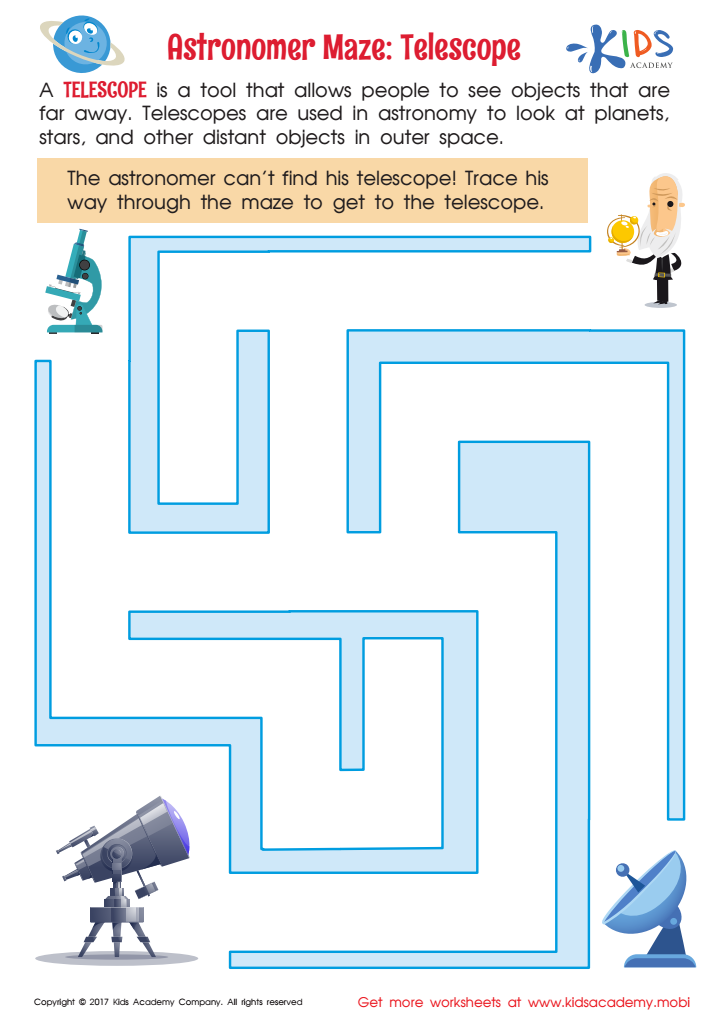
Astronomer Maze: Telescope Worksheet







Introducing basic astronomy knowledge to children aged 5-7 is crucial for several reasons. First, it stimulates curiosity and wonder about the universe, encouraging them to ask questions and seek answers. This age group is naturally inquisitive, and astronomy provides an excellent platform for fostering exploration and critical thinking skills.
Second, understanding basic astronomical concepts—like the difference between stars and planets or the concept of day and night—helps children grasp fundamental scientific principles. This foundation can spark an interest in science and math, essential subjects for future academic success.
Furthermore, astronomy can promote discussions about the environment and our planet, cultivating a sense of responsibility and stewardship towards Earth. Through stories and visuals of the cosmos, children develop imagination and creativity, key skills for personal and emotional development.
Lastly, celebrating events like the moon phases or planetary alignments creates opportunities for bonding moments between parents, teachers, and children. Engaging in these shared experiences helps build relationships and strengthens community ties. In summary, basic astronomy knowledge enriches children’s cognitive growth, inspires a passion for learning, and fosters meaningful connections among families and educators.








