Categorizing objects Normal Worksheets for Ages 5-7
4 filtered results
-
From - To
Explore our "Categorizing Objects Normal Worksheets" tailored for children ages 5-7! These engaging worksheets are designed to enhance young learners' classification skills by encouraging them to sort and identify various items based on shared characteristics. Through colorful visuals and age-appropriate activities, children will develop critical thinking and problem-solving abilities while having fun. Our resources promote cognitive development by fostering an understanding of similarities and differences among objects. Ideal for classroom use or at-home learning, these worksheets offer a foundation for essential skills in math, science, and language arts. Start your child's journey in categorization today with our delightful worksheets!
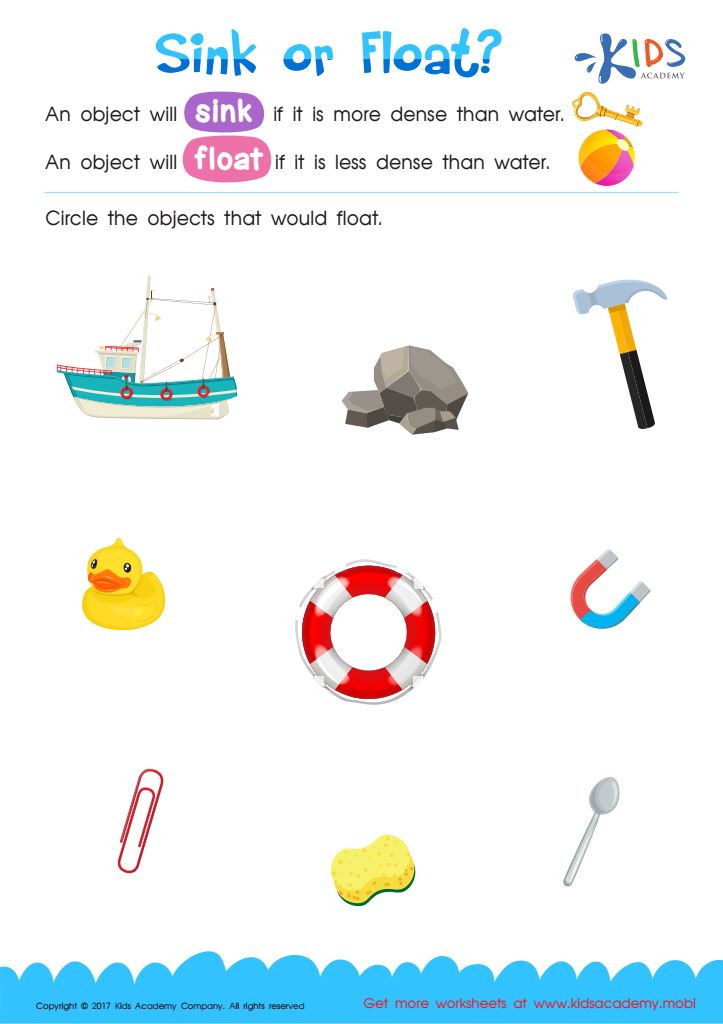
Sink or Float Printable
 Assign to My Students
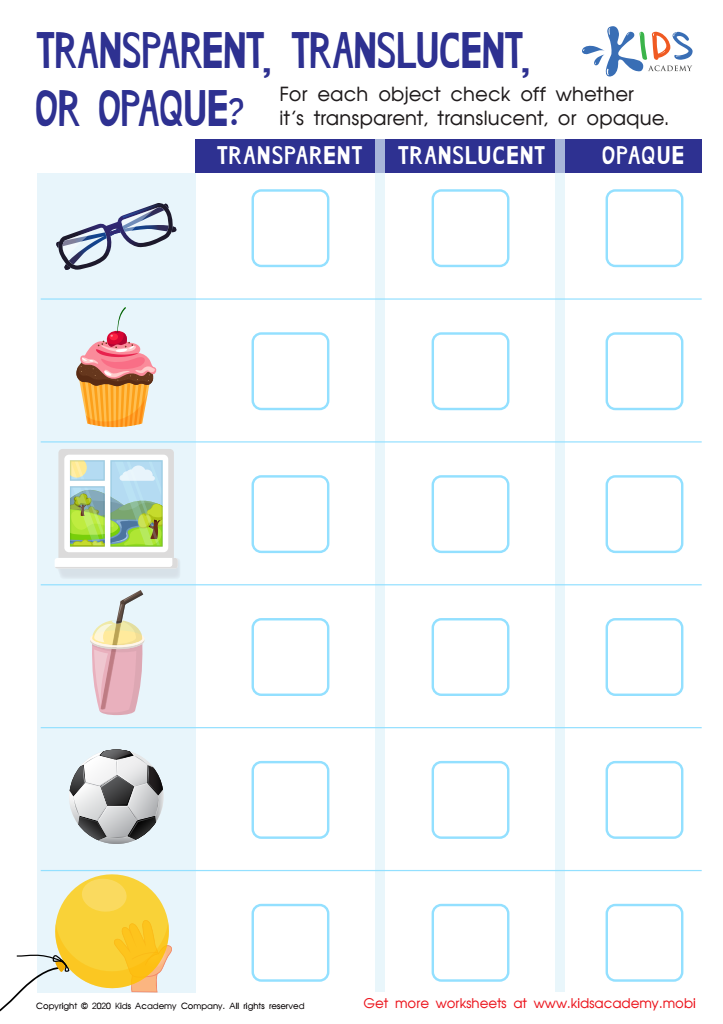
Transparent, Translucent, or Opaque Worksheet
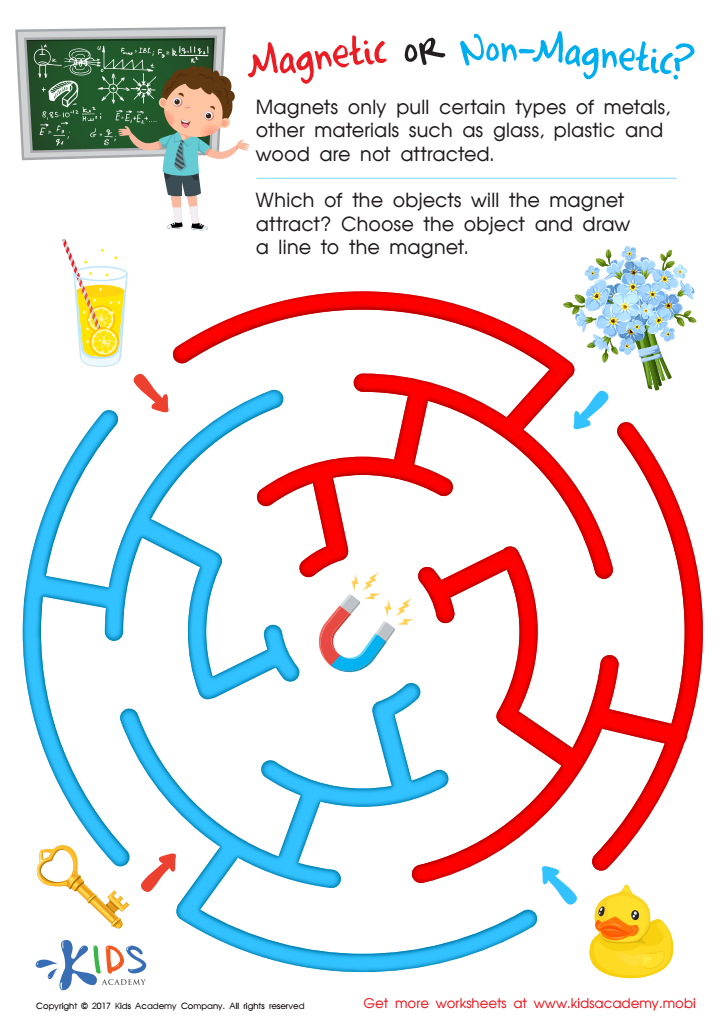
Magnetic or Non–Magnetic Worksheet
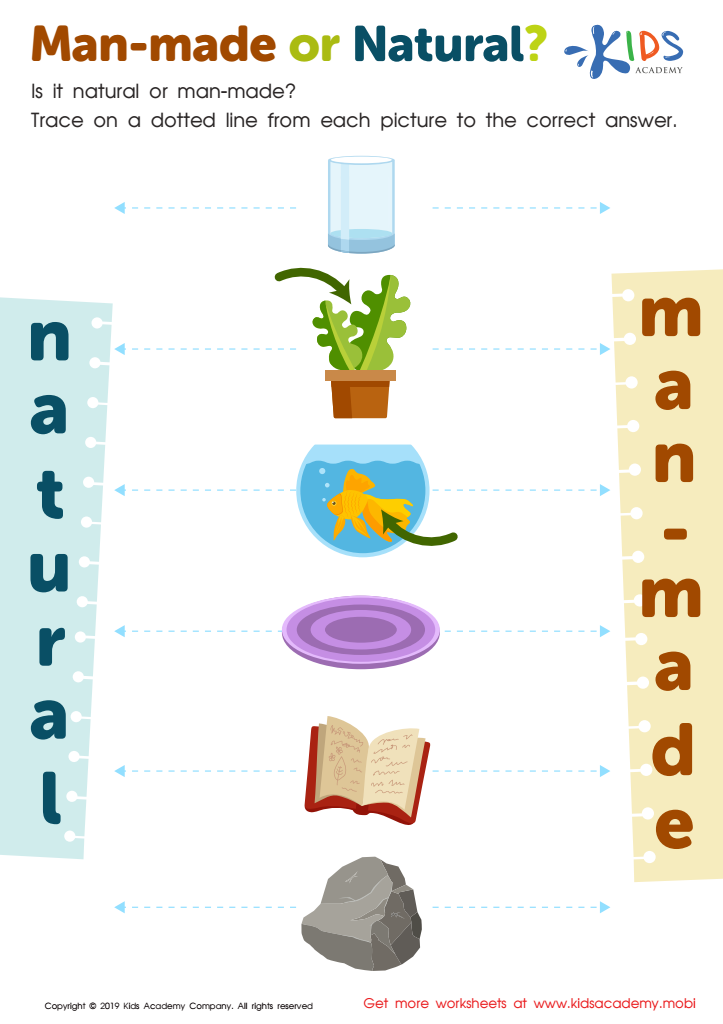
Man-Made or Natural? Worksheet




Categorizing objects is a crucial developmental skill for children aged 5-7, making it important for both parents and teachers to emphasize. At this stage, children are refining their cognitive skills, and learning to categorize helps them make sense of the world. It encourages critical thinking by requiring them to analyze similarities and differences among objects, fostering logical reasoning.
When children categorize, they not only improve their problem-solving abilities but also enhance their communication skills. For instance, discussing the characteristics of grouped objects leads to vocabulary expansion and more complex language use. Moreover, recognizes patterns is foundational for later mathematical understanding, making categorization practice essential.
Additionally, categorizing instills organizational skills in children, preparing them for more complex tasks as they continue their education. It promotes creativity, allowing children to play and explore with items in ways that encourage imaginative thinking.
For parents and teachers, supporting this skill can involve fun activities, games, and discussions that reinforce concepts of classification in everyday life. Ultimately, nurturing the ability to categorize objects prepares children for future academic success while building a deeper understanding of their environment. This foundational skill is integral to well-rounded cognitive and social development in early childhood.








