Improving categorization skills Normal Worksheets for Ages 5-7
3 filtered results
-
From - To
Enhance your child’s ability to categorize with our engaging Normal Worksheets designed for ages 5-7. These worksheets help young learners develop essential categorization skills through fun and colorful activities. Children will explore various themes, sorting objects and images based on different characteristics like color, size, and type. The interactive nature of the worksheets encourages critical thinking and helps improve cognitive flexibility. Perfect for both classroom and home use, these activities support early childhood learning objectives while keeping kids entertained. Download now and foster your child's ability to group and classify items, laying the groundwork for future academic success!
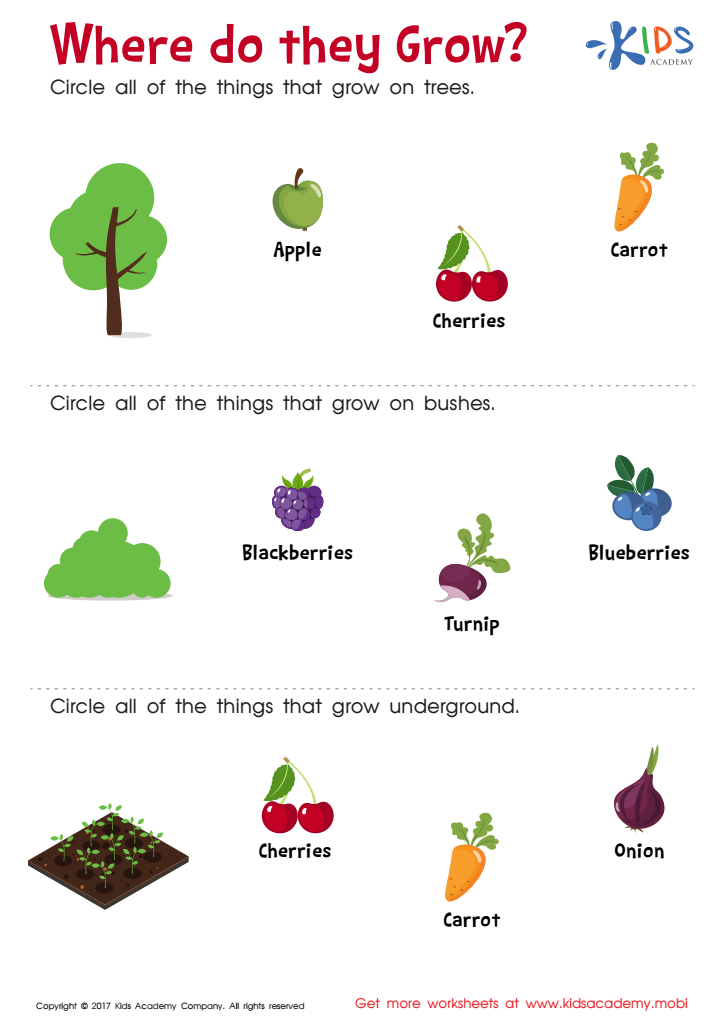
Where Do They Grow Worksheet
 Assign to My Students
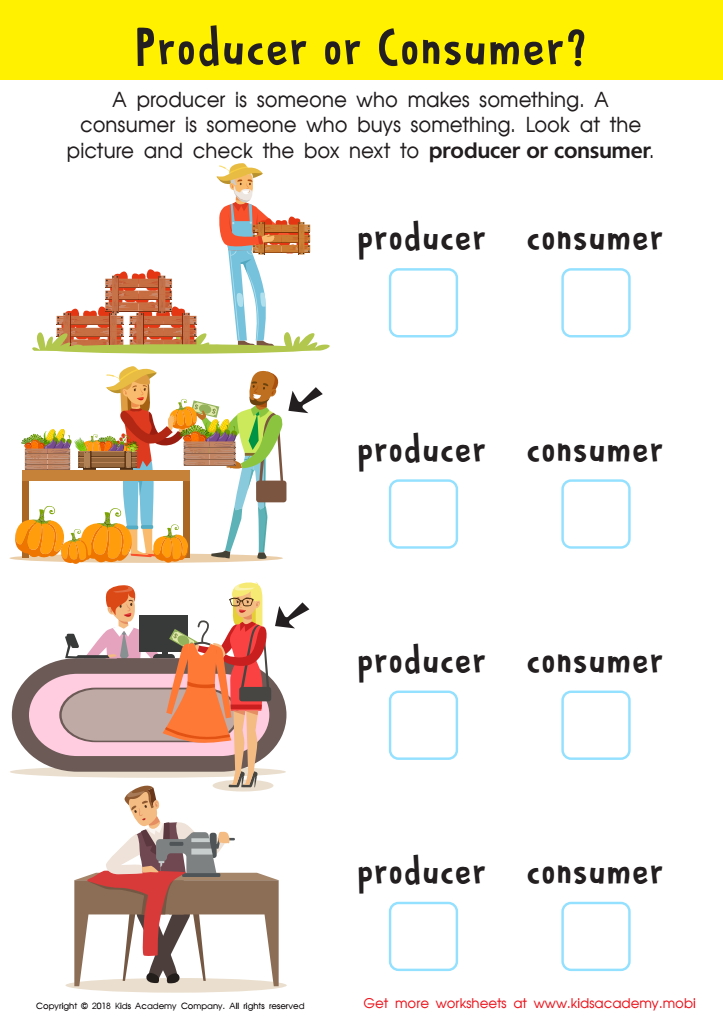
Producer or Consumer? Worksheet
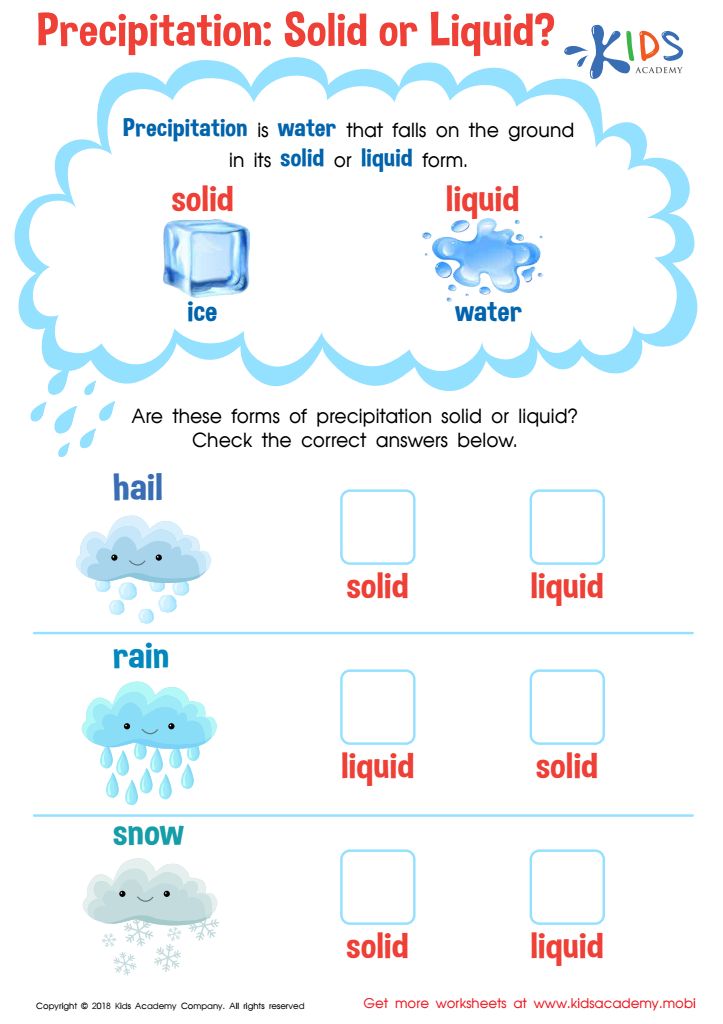
Precipitation: Solid or Liquid? Worksheet






Improving categorization skills in children aged 5-7 is crucial for their cognitive development and overall learning. Parents and teachers should prioritize these skills because categorization is foundational for critical thinking, problem-solving, and literacy. When children learn to group objects or concepts based on shared characteristics, they enhance their ability to recognize patterns and make connections, which are essential skills for tackling complex ideas later in life.
Furthermore, categorization supports language development. As children classify items, they expand their vocabulary by identifying and verbalizing the features of each category, which boosts their communication skills. This skill also aids in reading comprehension; children who understand how to categorize information can better organize and synthesize facts, making it easier to grasp narratives and details in stories.
Additionally, fostering categorization skills encourages independence and confidence in children. They learn to observe their environment critically and use reasoning to make decisions.
Overall, investing in the development of categorization skills equips children with tools for academic success, enhances their social skills by promoting understanding of relationships, and prepares them for a lifelong journey of discovery. Supporting these initiatives helps nurture well-rounded, capable learners.








