Map reading skills Normal Worksheets for Ages 5-7
9 filtered results
-
From - To
Introduce your young explorers to the fascinating world of maps with our engaging Map Reading Skills Normal Worksheets designed for ages 5-7. These carefully crafted activities help budding adventurers understand key concepts such as directions, symbols, and simple routes. Perfect for early learners, our worksheets make map reading fun and accessible, fostering critical thinking and spatial awareness. Ideal for both classroom and home use, these printables ensure children develop essential geographic skills through interactive practice. Encourage your little ones to navigate their way through the basics of map reading, equipping them with tools for future exploration and discovery!
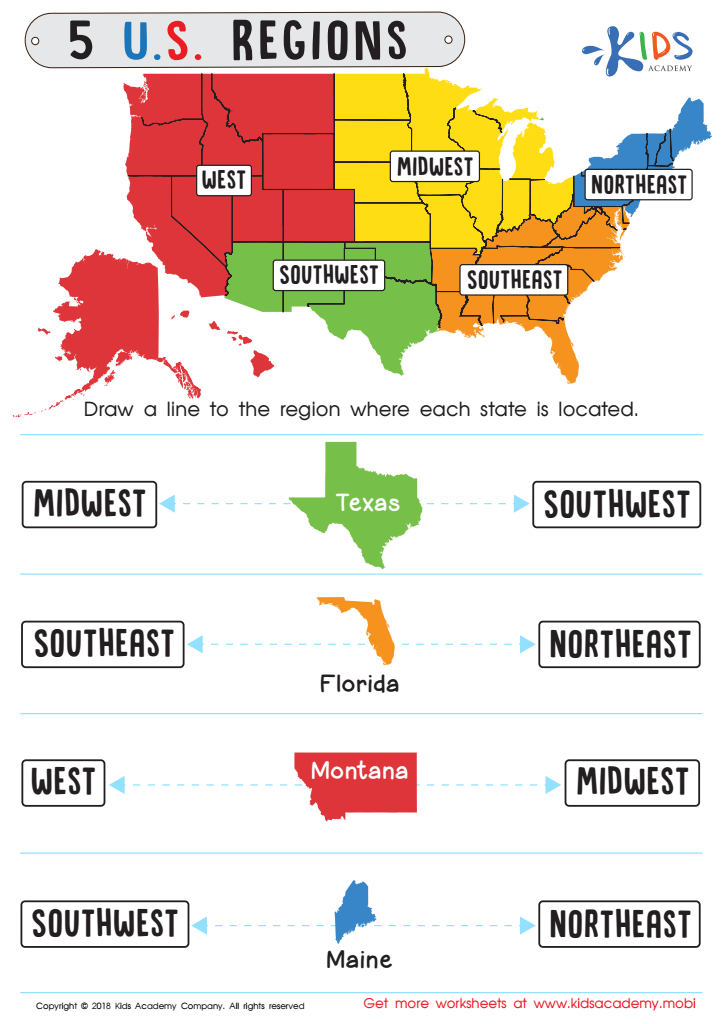
5 U.S. Regions Worksheet
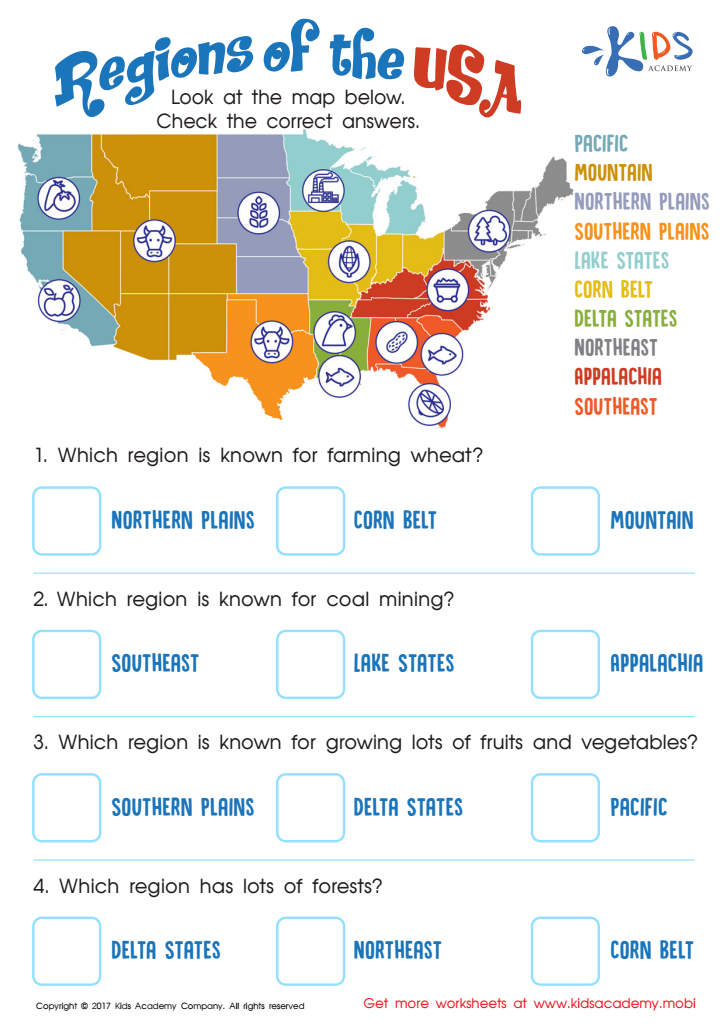
Regions of the USA Worksheet
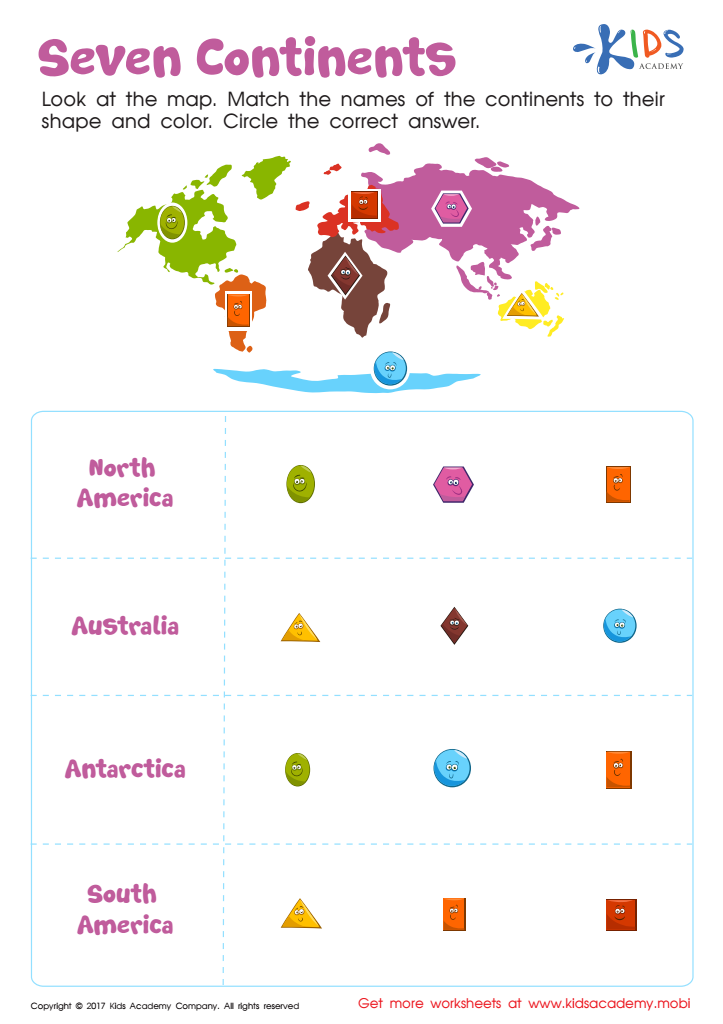
Seven Continents Worksheet
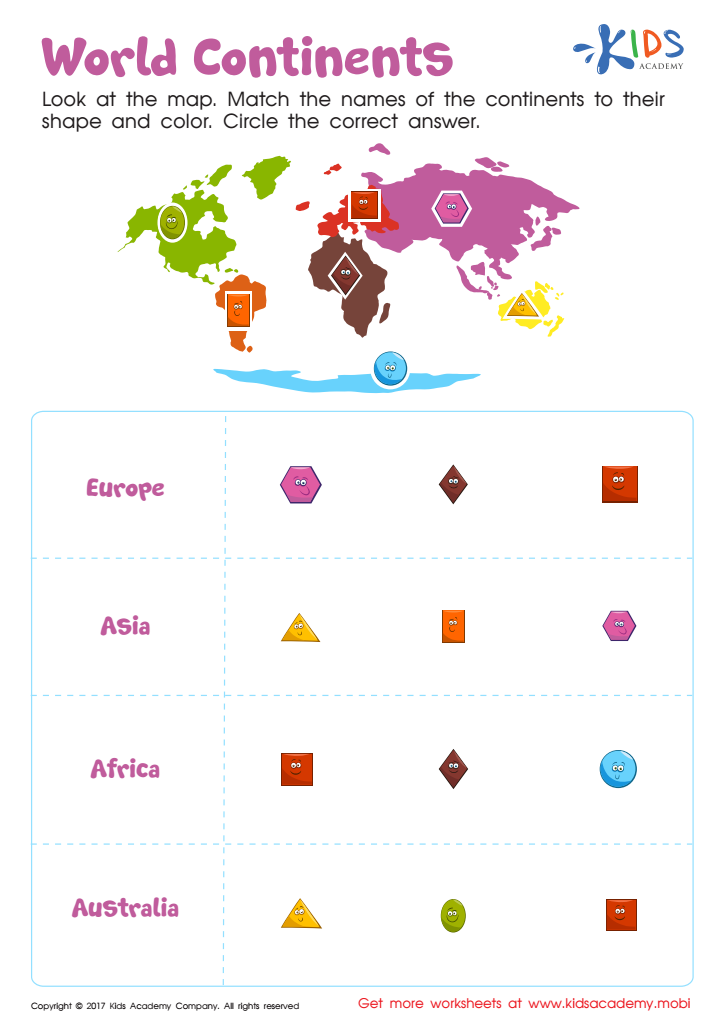
World Continents Worksheet
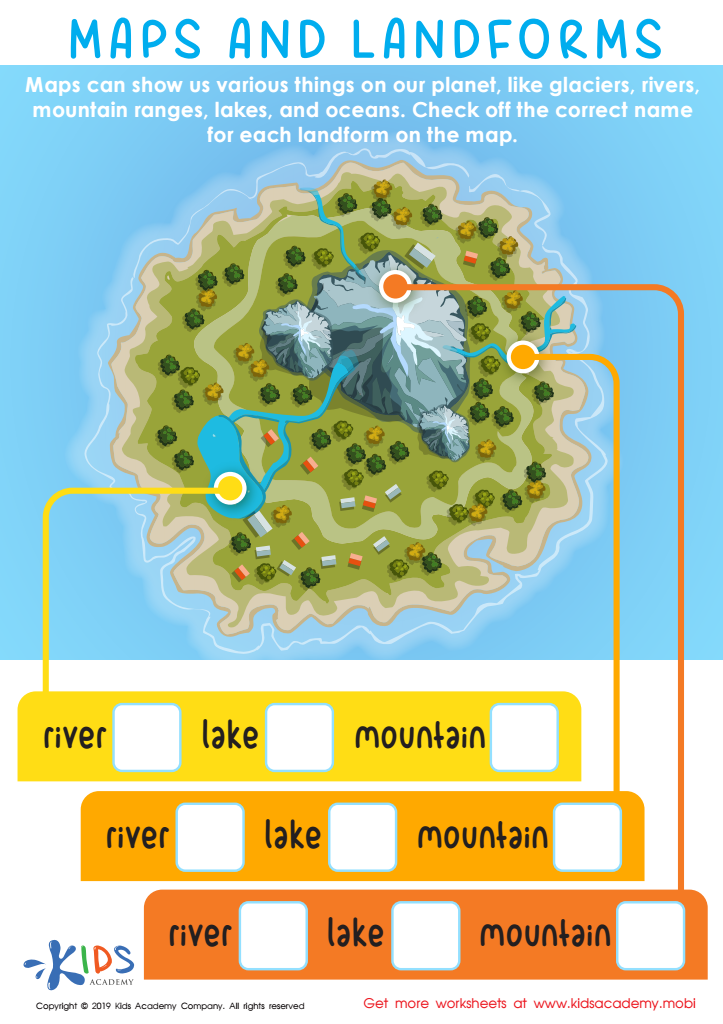
Maps and Landforms Worksheet
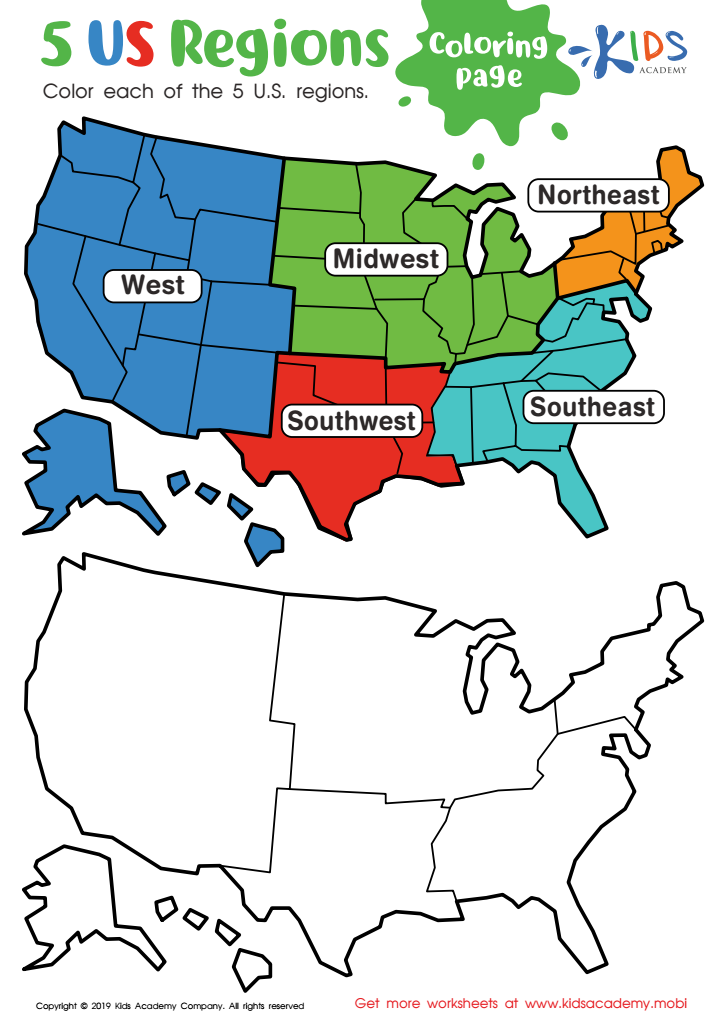
US Regions Coloring Page Worksheet
 Assign to My Students
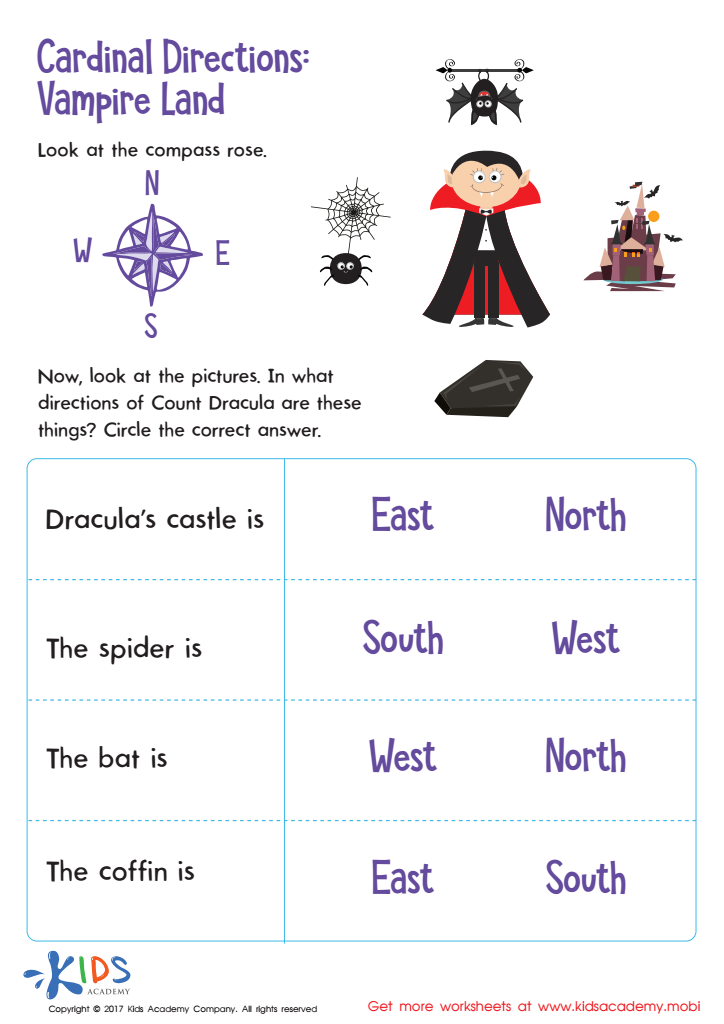
Cardinal Directions Printable
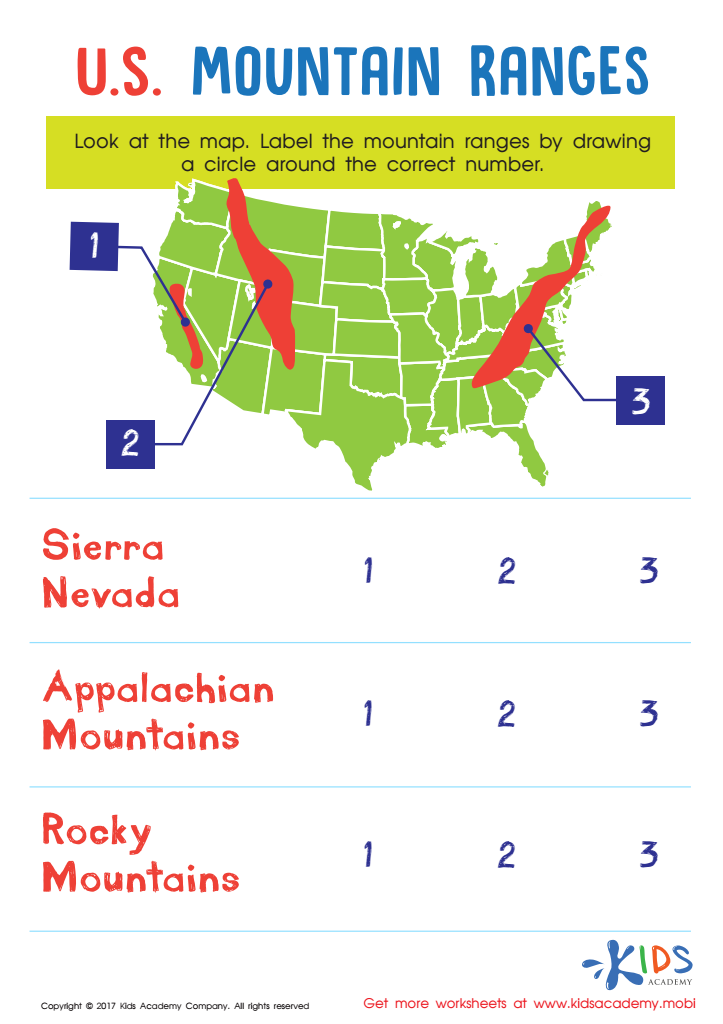
US Mountain Ranges Worksheet

Towns Worksheet







Map reading skills are crucial for young children, ages 5-7, as they lay the foundation for a multitude of essential cognitive and social abilities. At this developmental stage, kids are naturally curious and eager to explore their surroundings. Introducing map reading not only satisfies this curiosity but also promotes spatial thinking, an important cognitive skill that helps children understand and organize the world around them.
Mastering basic concepts like symbols, legends, and directions fosters critical thinking. It encourages kids to make connections and understand relationships between different objects and places. These skills are transferable, aiding in subjects such as mathematics and science. When a child understands that a symbol on a map represents a real object or place, they are learning fundamental skills in abstraction and representation.
Moreover, map reading enhances problem-solving abilities. As children navigate a map, they make decisions, plan routes, and find solutions, thereby promoting logical reasoning. Socially, engaging with map reading activities can be a collaborative experience. Group projects involving maps teach teamwork, communication, and sharing.
Additionally, early map-reading lays the groundwork for good citizenship. Understanding geography fosters a sense of place and belonging, which is crucial for personal identity. It also piques interest in diverse cultures and global issues. Ultimately, these skills encourage lifelong curiosity and learning.








