Moral understanding Normal Worksheets for Ages 5-7
4 filtered results
-
From - To
Explore our engaging "Moral Understanding Normal Worksheets" designed for children ages 5-7. These worksheets help young learners develop empathy, kindness, and ethical decision-making skills through fun activities and relatable scenarios. Each worksheet encourages critical thinking and discussions about right and wrong, fostering social awareness in a playful environment. Great for home or classroom use, our resources support the growth of moral values, enhance emotional intelligence, and promote respectful interactions among peers. Download now to support your child's journey towards becoming a thoughtful and compassionate individual!
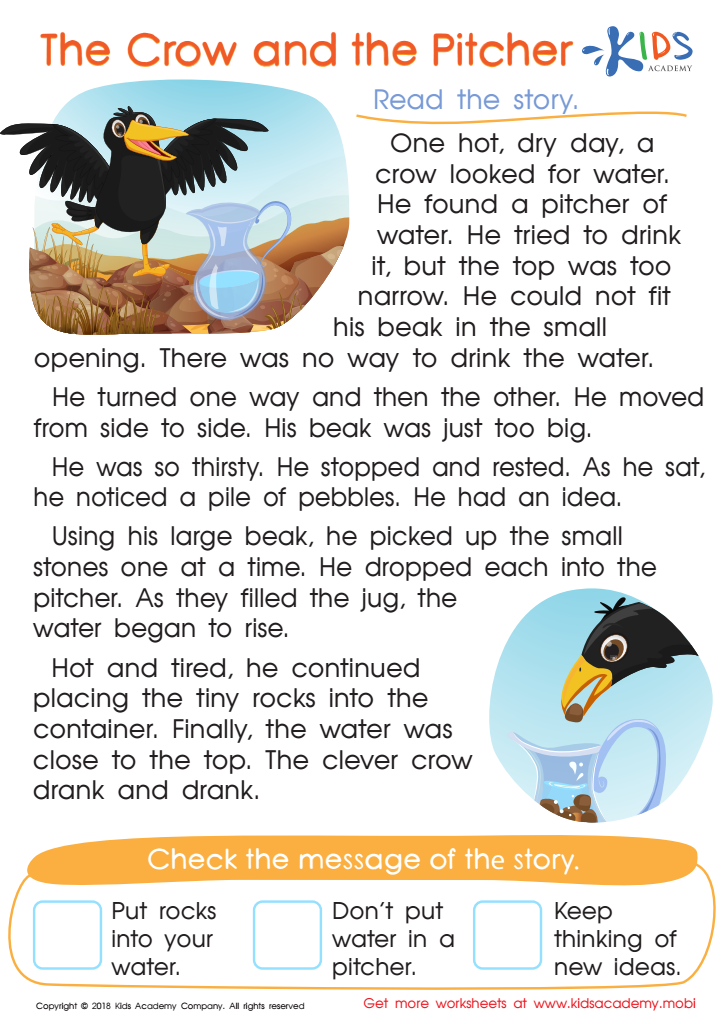
The Crow and the Pitcher Worksheet
 Assign to My Students
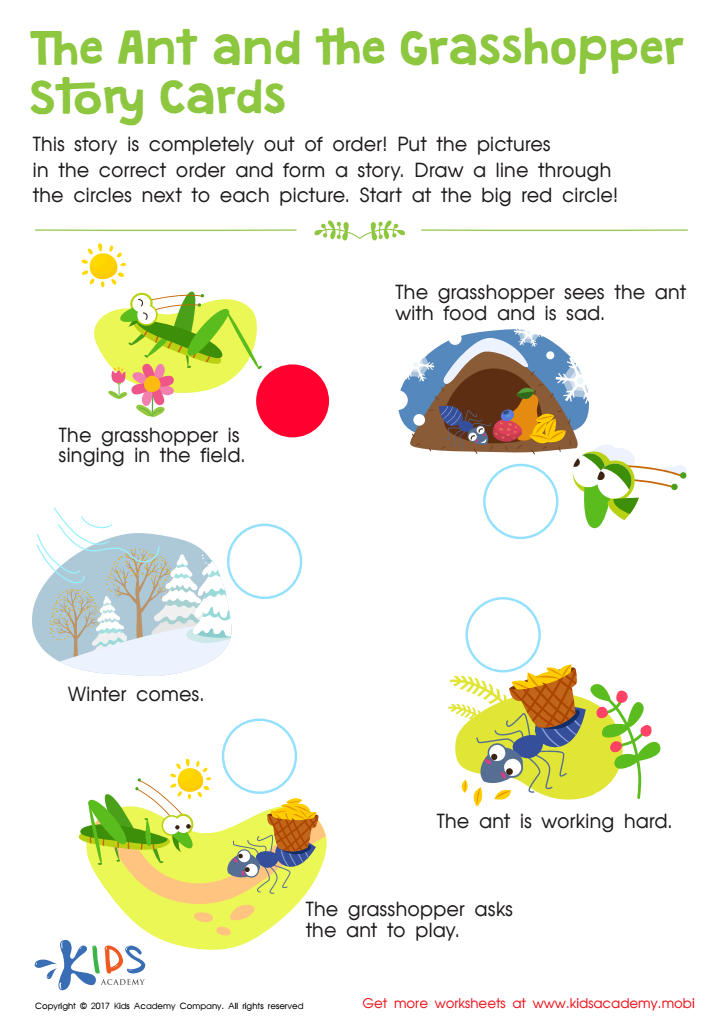
The Ant and The Grasshopper Worksheet
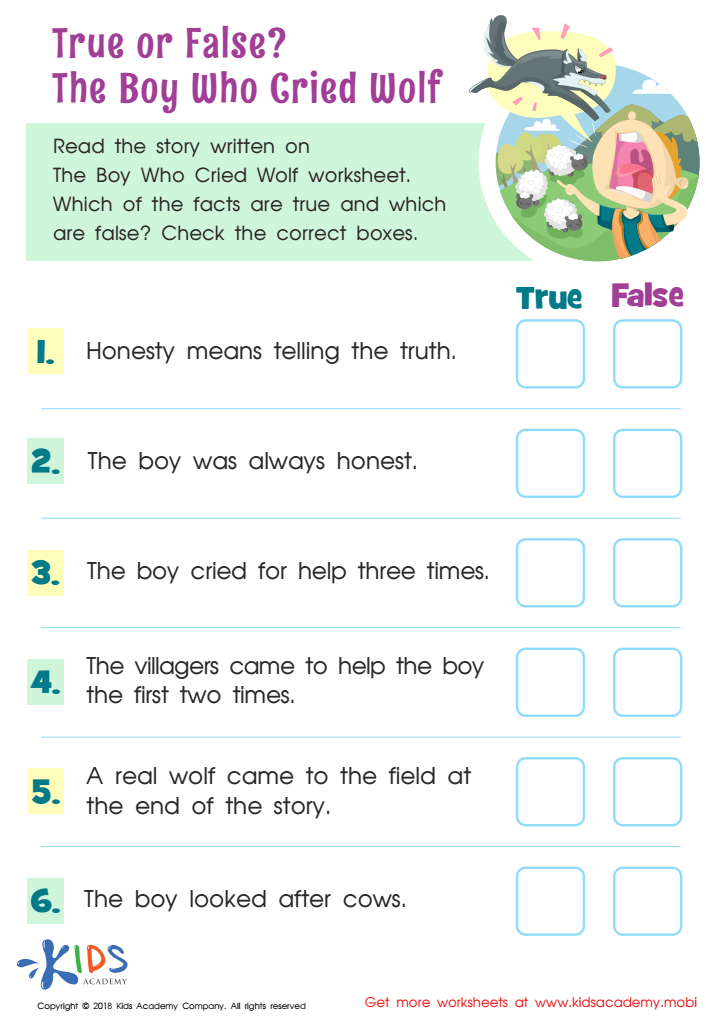
True or False? The Boy Who Cried Wolf Worksheet
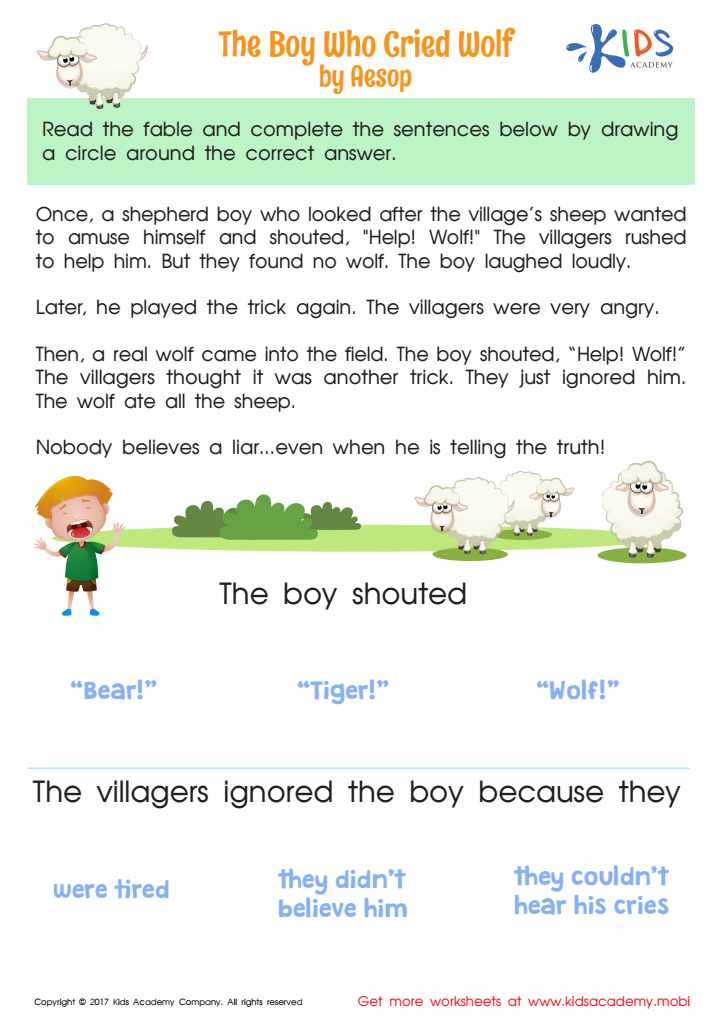
The Boy Who Cried Wolf Worksheet



.jpg)



Moral understanding in ages 5-7 is crucial for children's development, as this period lays the foundation for their ethical beliefs and social behaviors. At this stage, children begin to differentiate between right and wrong and understand concepts like fairness, kindness, and empathy. Parents and teachers play a vital role in fostering this moral growth, as their influence shapes how children perceive and interact with the world around them.
By nurturing moral understanding, parents and teachers help children develop critical skills such as cooperation, conflict resolution, and respect for others. These formative experiences enhance children's ability to make decisions based on empathy rather than just rules or self-interest. Furthermore, engaging in discussions about morals and ethics fosters an environment where children feel safe to express their feelings and dilemmas, promoting emotional intelligence.
Additionally, children with a strong moral compass tend to exhibit pro-social behaviors, reducing instances of bullying and exclusion. By emphasizing the importance of moral understanding, parents and teachers can help cultivate compassionate, responsible individuals who not only contribute positively to their communities but also develop a lifelong commitment to ethical values. Ultimately, investing in moral education creates a brighter future for both the children and society as a whole.








