
Phonics development Normal Worksheets for Ages 5-7
3 filtered results
Difficulty Level
Grade
Age
-
From - To
Subject
Activity
Standards
Explore our engaging Phonics Development Worksheets tailored for children aged 5 to 7! These resources are designed to enhance early literacy skills through fun and interactive activities. Our worksheets focus on essential phonetic concepts, including letter sounds, blending, and word recognition. Perfect for at-home practice or classroom use, these printables foster a love for reading while building foundational skills. Easy to download and integrate into daily learning, our phonics worksheets help young learners master the building blocks of language in a delightful way. Get started today and support your child's reading journey with our thoughtfully crafted activities!
Favorites
With answer key
Interactive
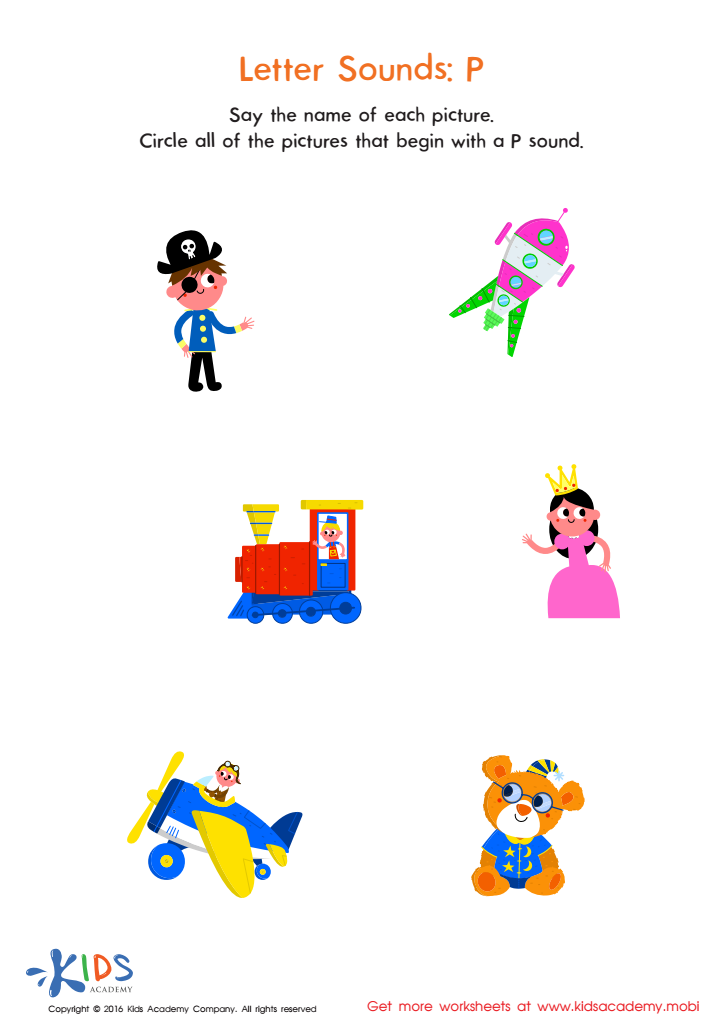
Letter P Sound Worksheet
Think P! Kids practice phonics with this fun letter P worksheet. With delightful illustrations, they'll sound out simple words and get closer to reading.
 Assign to My Students
Letter P Sound Worksheet
Worksheet
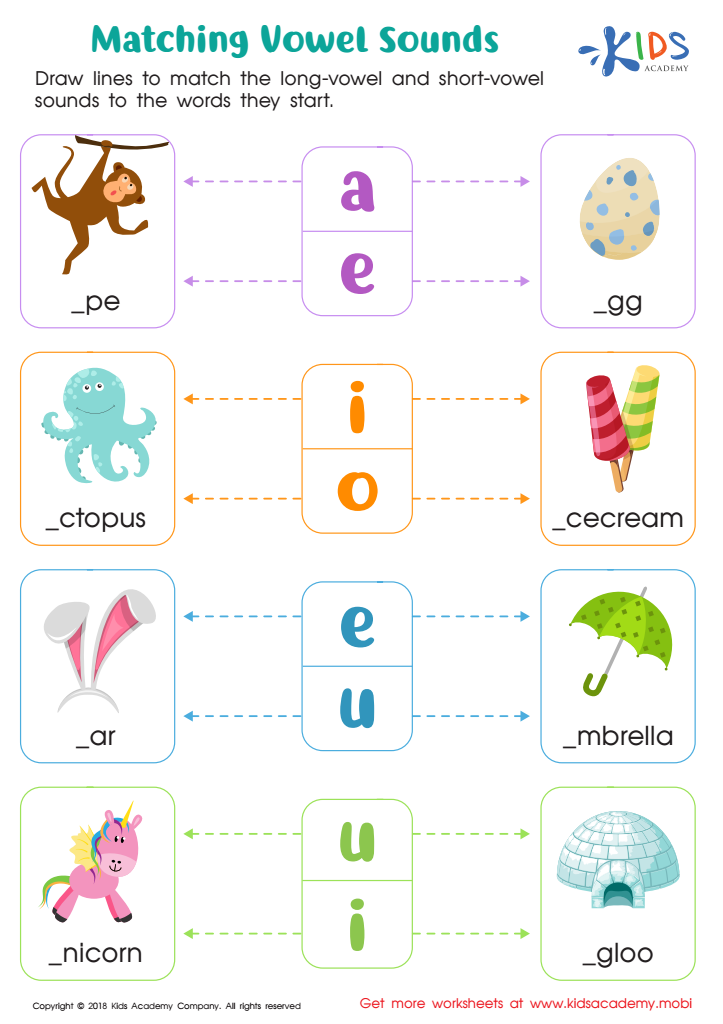
Matching Vowel Sounds Worksheet
Teach your child phonics with a fun worksheet! Ask your child to name a vowel sound and listen if it's long or short. Differentiating between long and short vowel sounds can be tricky, but this matching worksheet makes it easy for kids to understand. Have fun and master phonics - the worksheet will help them understand the difference between long and short vowel sounds!
Matching Vowel Sounds Worksheet
Worksheet
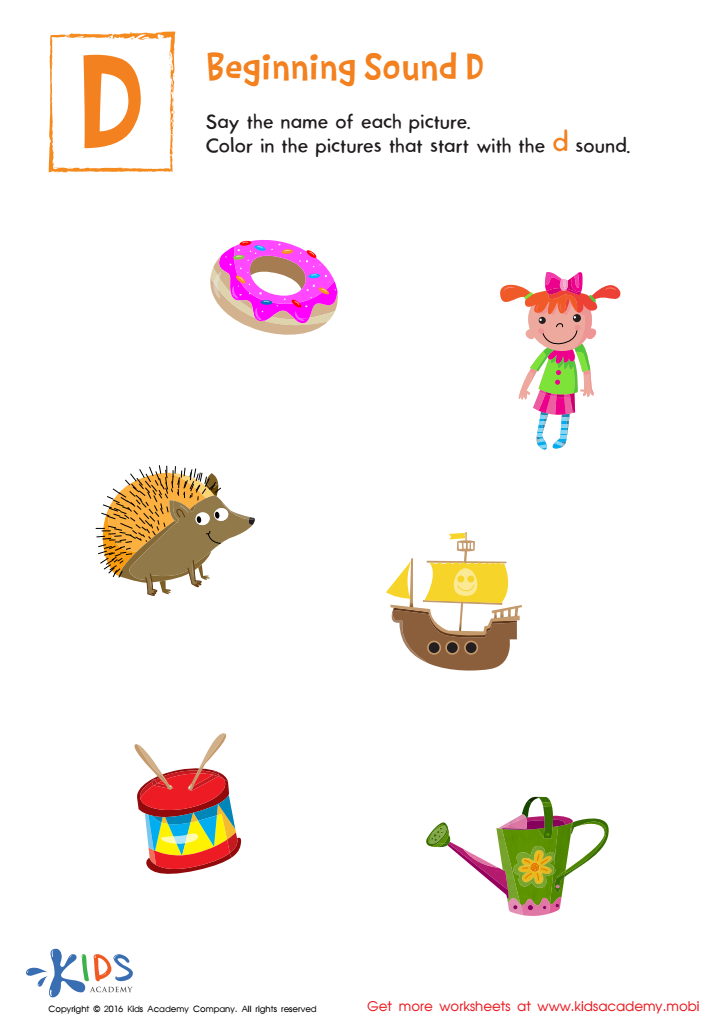
Beginning Sound D Worksheet
Reinforce phonics with this vibrant beginning sound d worksheet! Pictures help kids identify words beginning with 'd' and develop early reading skills. Sounding out each word increases literacy!
Beginning Sound D Worksheet
Worksheet
Join Kids Academy for Free
Who is primarily going to use this learning content?







Phonics development is crucial for children ages 5-7 as it lays the foundation for their reading and writing skills. During this critical stage, children learn the relationship between letters and sounds, enabling them to decode words and comprehend written language. This skill is essential for literacy development, which is directly tied to academic success across all subjects.
Parents and teachers should care about phonics development because it enhances children’s confidence and independence in reading. Mastering phonics allows young learners to approach unfamiliar words with the ability to sound them out rather than relying solely on memorization. This promotes a love for reading, encouraging children to explore literature and improve their vocabulary.
Moreover, strong phonics skills contribute to better spelling and writing abilities. When children understand how to break down words phonetically, they become adept at constructing sentences and conveying their thoughts clearly.
In addition, research shows that phonics instruction can significantly reduce the risk of reading difficulties in later years. Supporting phonics development during early education ultimately creates a solid literacy foundation, ensuring that children are equipped with the skills they need to thrive academically and become confident readers for life.








