Phonological awareness Normal Worksheets for Ages 5-7
4 filtered results
-
From - To
Enhance early reading skills in children aged 5-7 with our Phonological Awareness Normal Worksheets. Our expertly designed printable activities focus on essential phonological skills such as rhyming, syllable splitting, and beginning sound identification. By engaging in these playful exercises, kids naturally develop the crucial foundational understanding needed for effective reading. Each worksheet is carefully created to be age-appropriate, educationally enriching, and entertaining. Perfect for classroom use or home practice, these resources provide a structured approach to learning while fostering a love for reading. Start your child's literacy journey with our phonological awareness worksheets today!
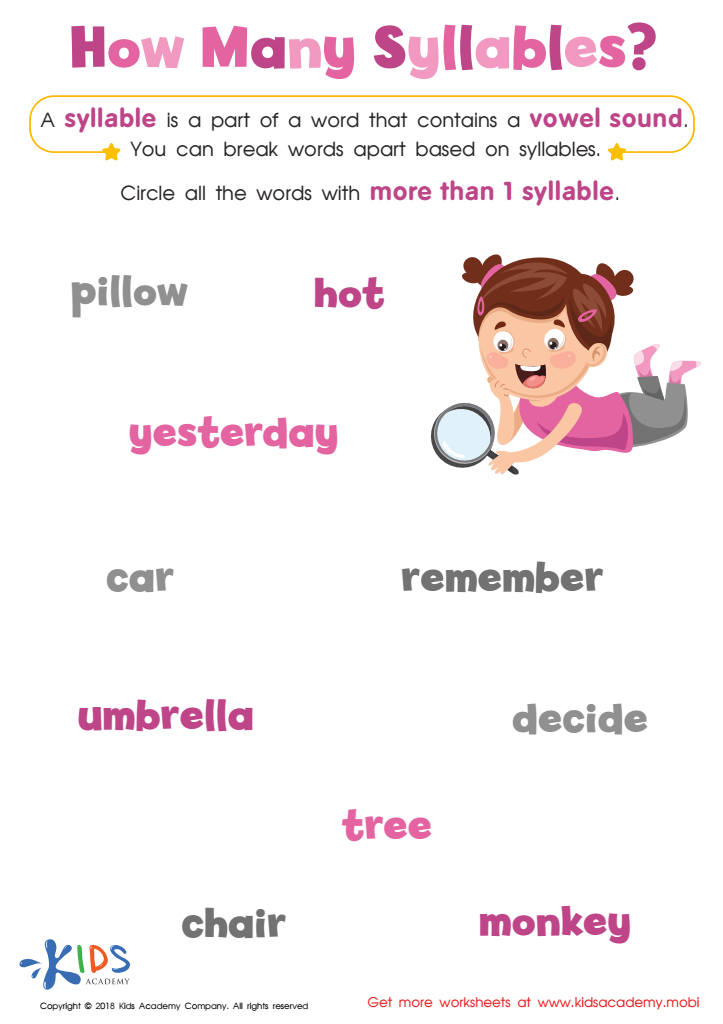
Reading: How Many Syllables Worksheet
 Assign to My Students
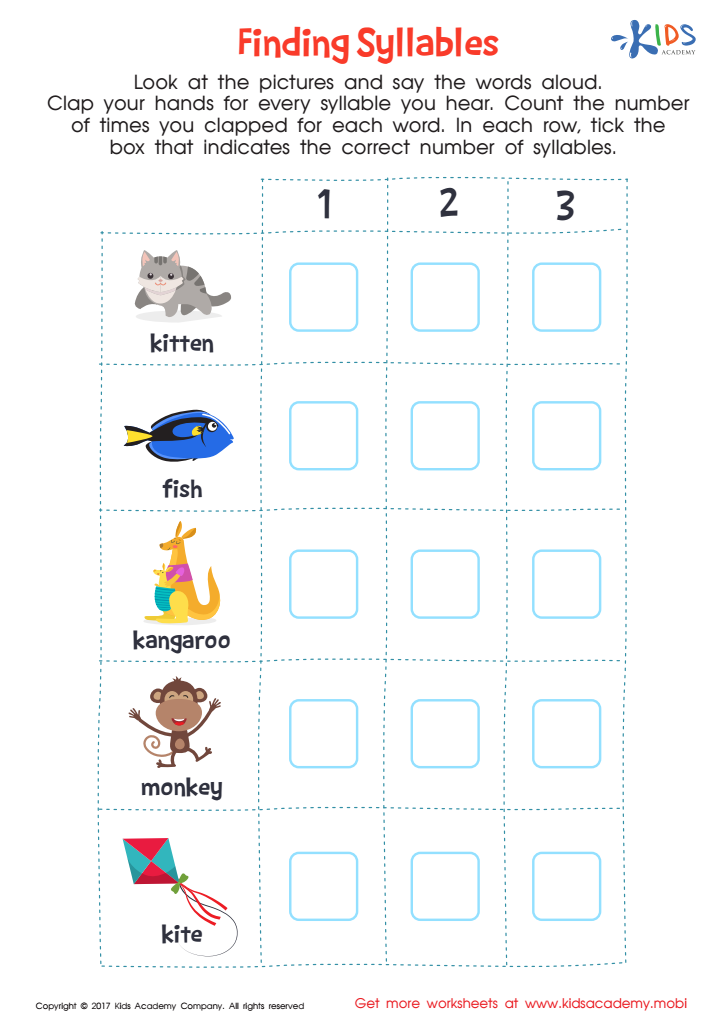
Finding Syllables Word Structure Worksheet
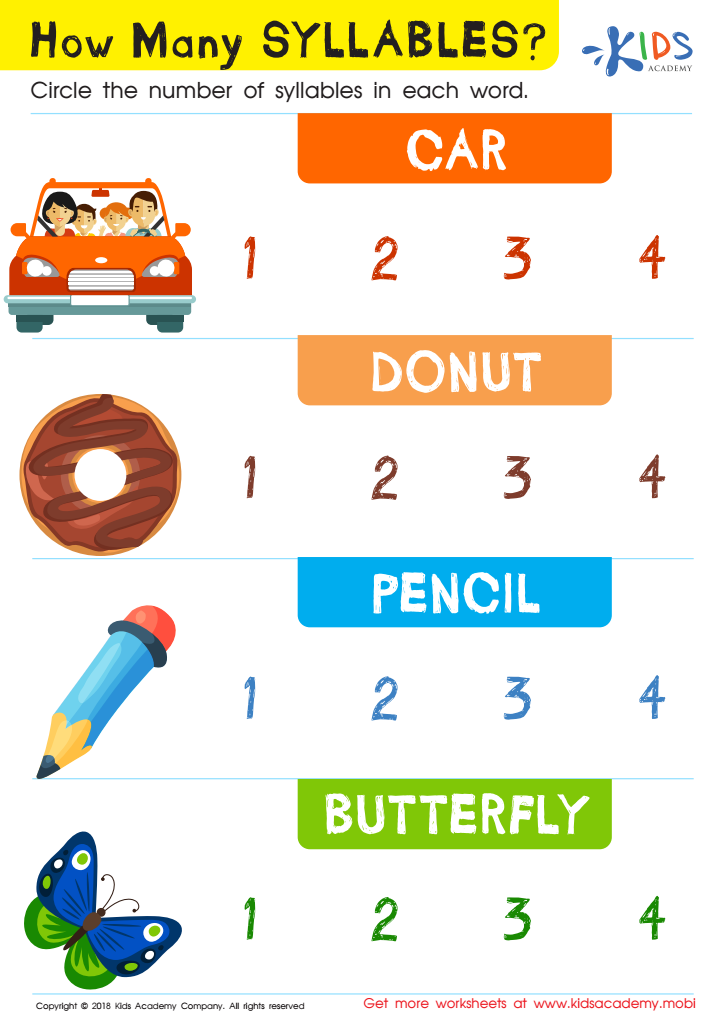
How Many Syllables? Worksheet
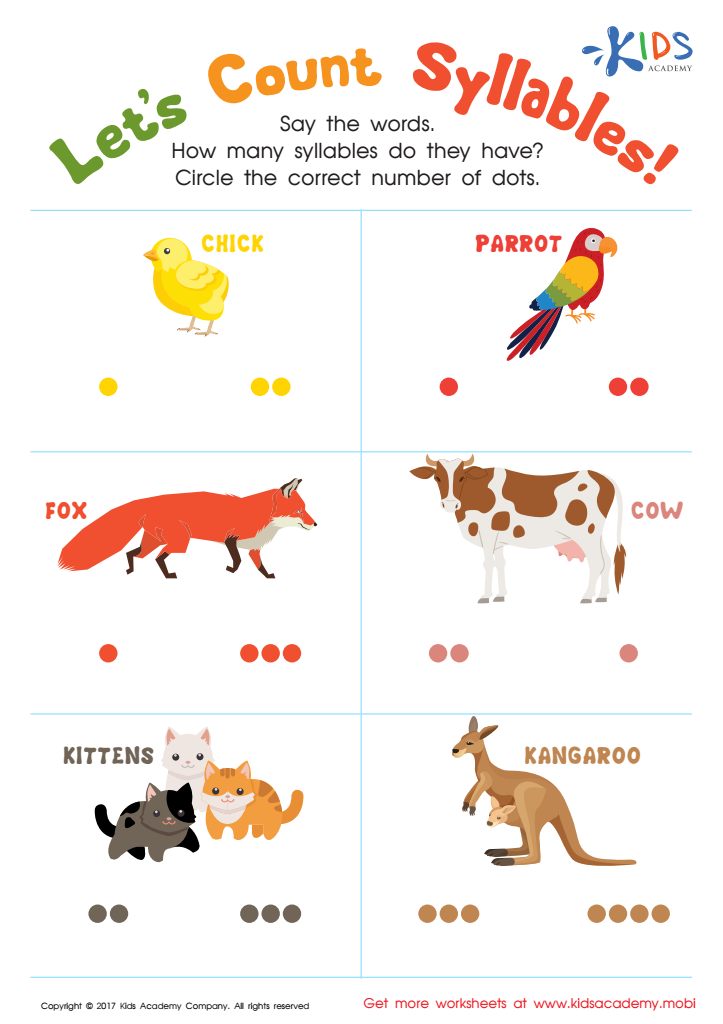
Lets Count Syllables Worksheet







Phonological awareness is a foundational skill crucial to early literacy and language development in children aged 5-7. It involves the ability to recognize and manipulate the sound structures of language, such as rhymes, syllables, and phonemes (the smallest units of sound). This skill is paramount for several reasons.
First, phonological awareness is closely linked to the ability to decode words, a direct predictor of reading success. When children can identify and manipulate sounds, they can better understand the relationship between letters and sounds, paving the way for fluent reading and spelling. Struggles in phonological awareness can lead to difficulties in learning to read, making it essential for parents and teachers to nurture this skill early on.
Second, strong phonological awareness contributes to better language acquisition and verbal skills. It helps children discern differences in word meaning and pronunciation, aiding overall communication abilities and academic success.
Moreover, detecting early difficulties in phonological awareness can help parents and teachers intervene promptly, providing targeted support to address potential reading disabilities or language delays.
By prioritizing phonological awareness, parents and teachers set a solid groundwork for essential literacy skills, fostering confident, capable young readers. This not only enhances their academic achievements but also instills a lifelong love for reading and learning.








