Sound Association Normal Worksheets for Ages 5-7 - Page 2
27 filtered results
-
From - To
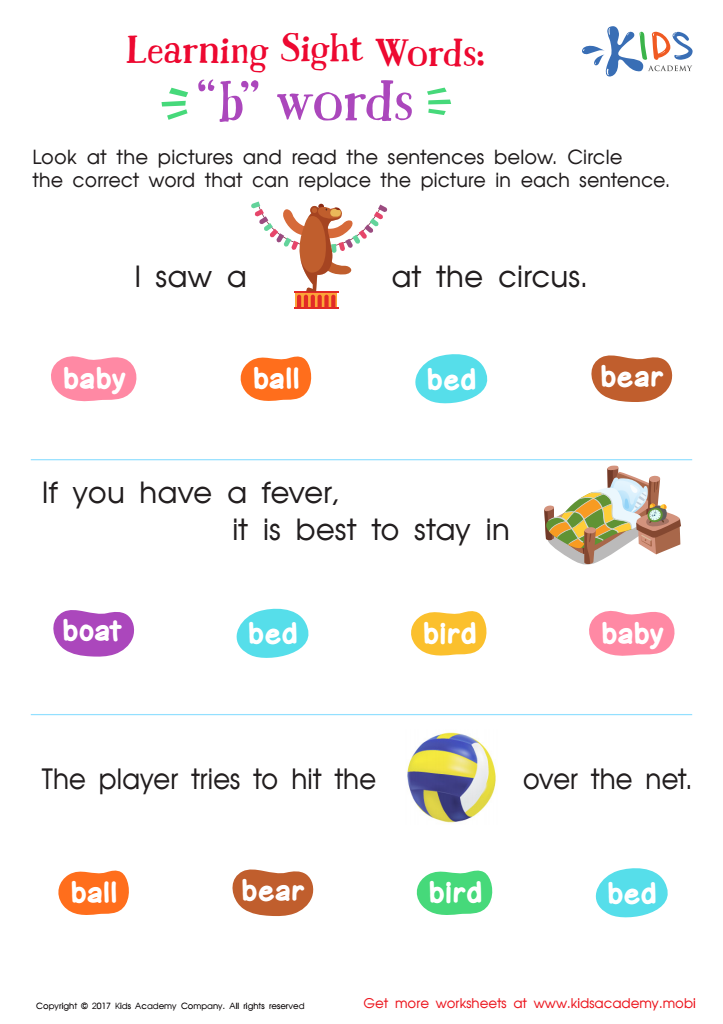
"B" Words Printable Sight Words Worksheet
 Assign to My Students
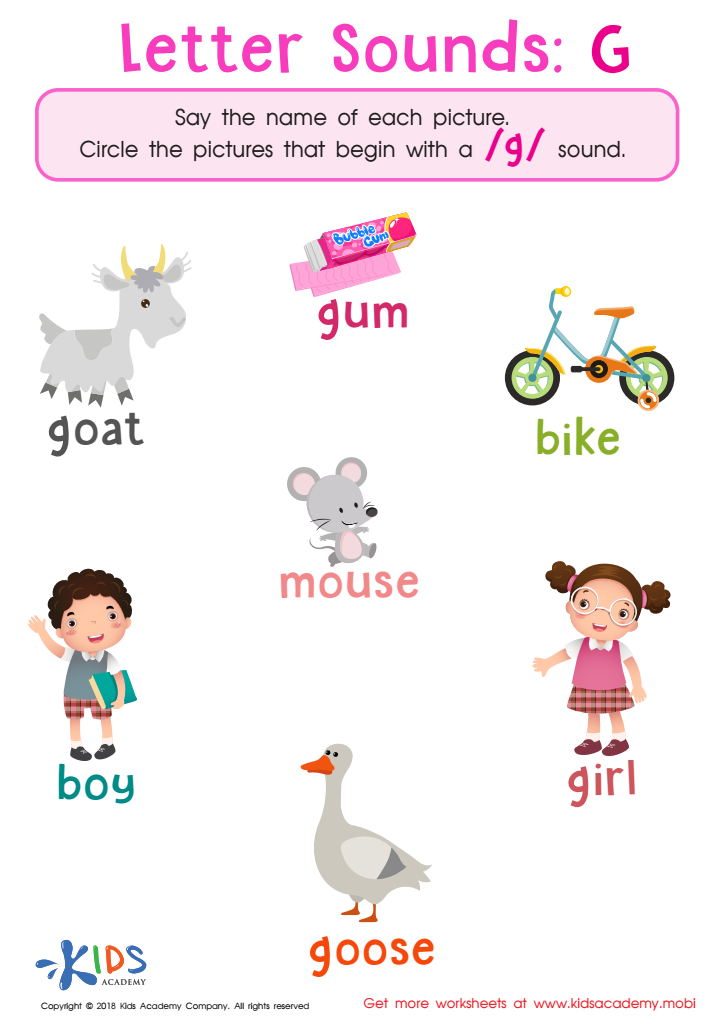
Letter G Sounds Worksheet
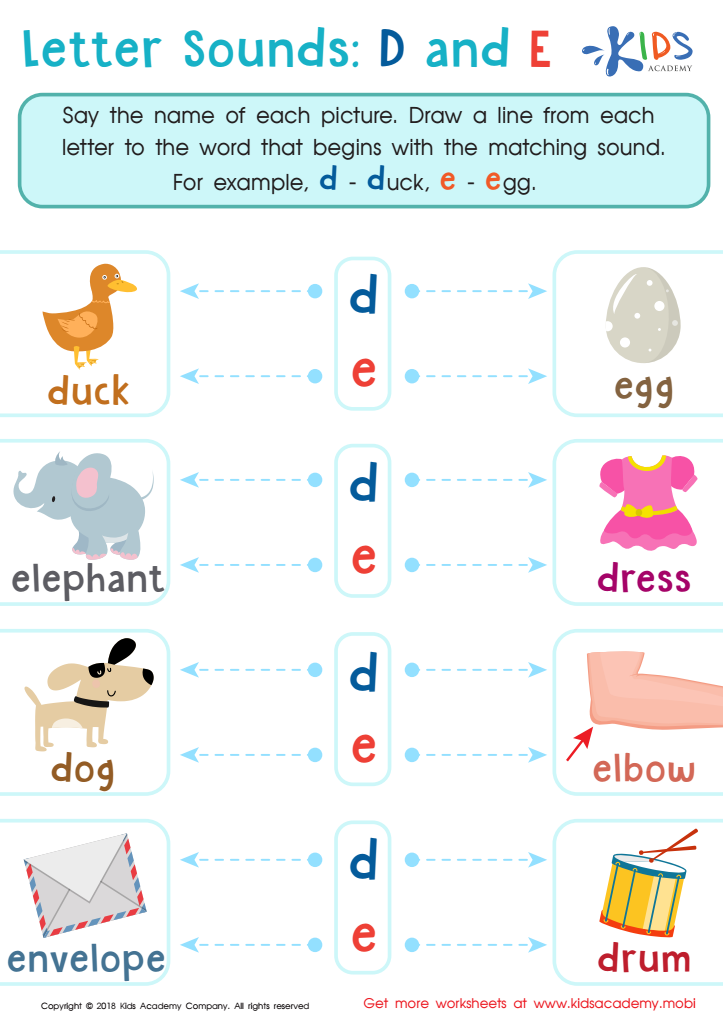
Letter D and E Sounds Worksheet







Sound association, where children link letters to their corresponding phonetic sounds, is crucial for the literacy development of ages 5-7. This is a foundational stage in a child’s educational journey and significantly influences their ability to read, write, and communicate effectively in the future.
First, understanding sound association helps children decode new words. By associating sounds with letters, they can sound out unfamiliar words rather than guess them, which builds confidence and reading fluency. This skill is essential for tackling more complex texts later in their academic careers.
Second, sound association supports spelling and writing. When children understand that words are made up of individual sounds mapped to letters, they can start constructing words themselves. This gives them a strong foundation for spelling and boosts their writing abilities. Writing, in return, enhances their comprehension and ability to express thoughts clearly.
Moreover, sound association nurtures cognitive development. The process of linking sounds to symbols helps develop critical thinking and memory, contributing to overall brain development.
Parents and teachers, by emphasizing sound association, not only set children on the path to academic success but also instill a lifelong love for reading and learning. Therefore, dedicating time to phonemic awareness in these formative years is essential for children's future educational achievements.








