Sound discrimination Normal Worksheets for Ages 5-7
3 filtered results
-
From - To
Enhance your child's auditory skills with our "Sound Discrimination Normal Worksheets" designed specifically for ages 5-7. These engaging worksheets help young learners develop the ability to distinguish between similar sounds, an essential skill in early reading and language development. Featuring a variety of fun activities, including listening exercises, matching games, and sound identification tasks, these resources cater to diverse learning styles and keep children motivated. Perfect for classroom use or at-home practice, our worksheets aim to build confidence while fostering critical auditory skills. Unlock your child's potential and pave the way for successful communication and literacy with our thoughtfully crafted exercises!
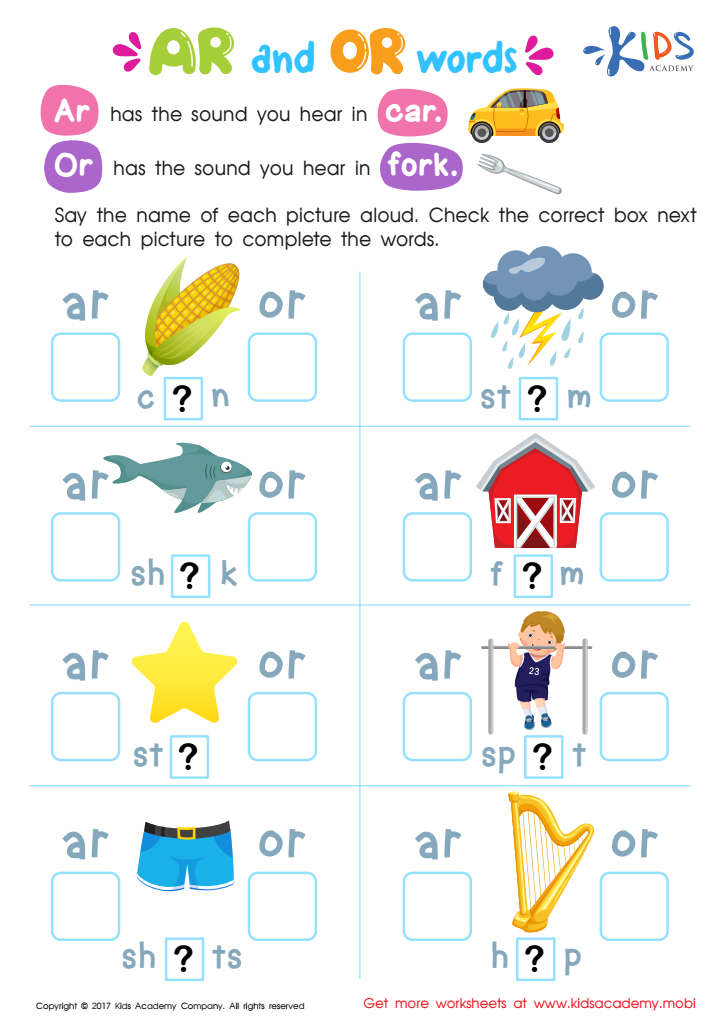
Ar and Or Words Phonics Worksheet
 Assign to My Students
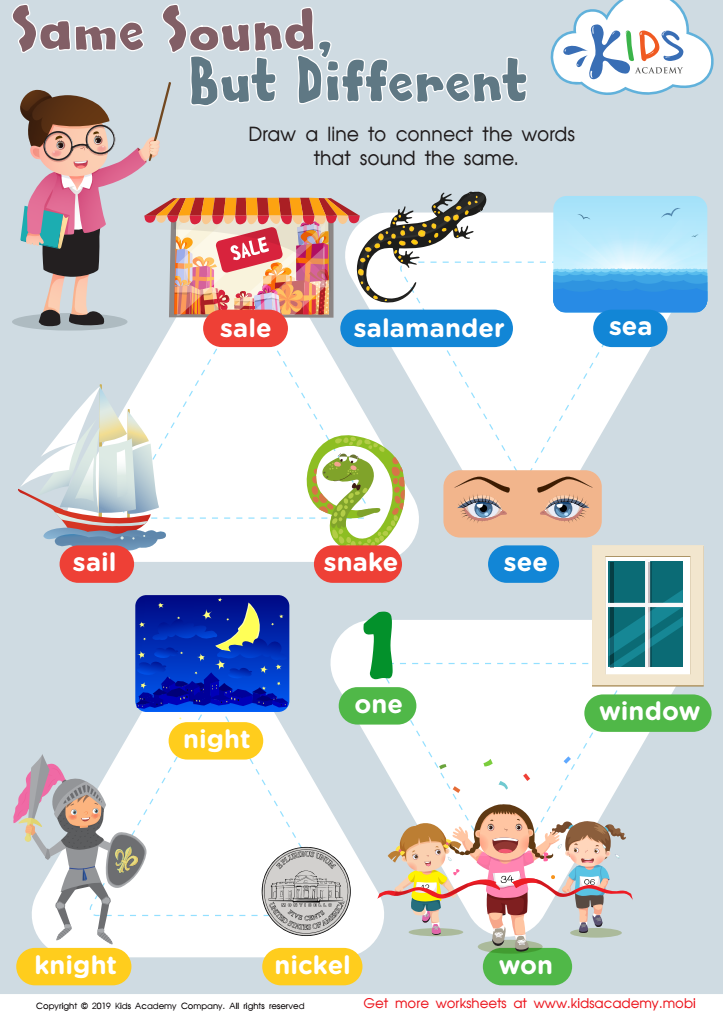
Sound Different Worksheet
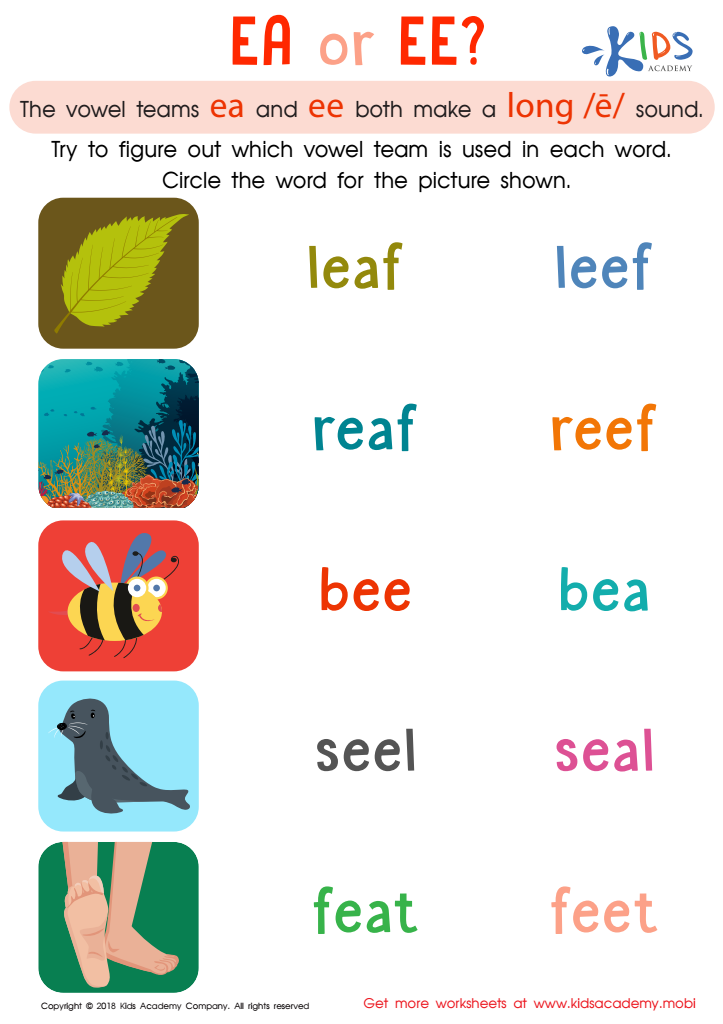
Reading: EA and EE Worksheet






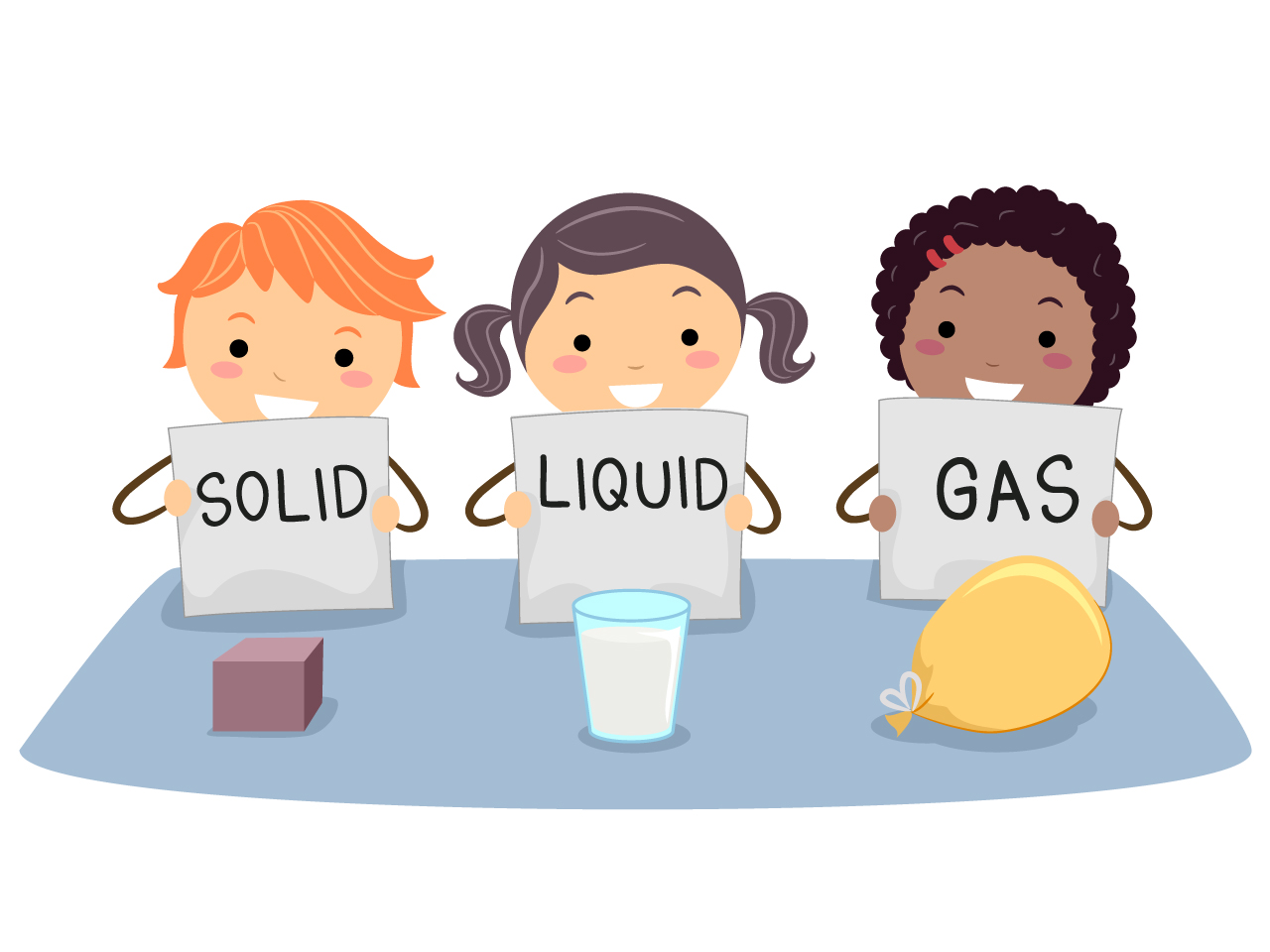

Sound discrimination is a crucial aspect of early language development, particularly for children aged 5-7. During this stage, children are honing their phonemic awareness, which is essential for reading and literacy skills. When parents and teachers understand the normal range of sound discrimination abilities, they can better support children in recognizing and processing different sounds, syllables, and words.
Sound discrimination helps children detect variations in sounds, enabling them to distinguish between similar sounds such as "bat" and "cat." This skill is foundational for developing effective reading strategies, spelling accuracy, and overall communication skills. Children who struggle with sound discrimination may face challenges in phonics instruction, which can lead to difficulties in reading and writing.
Additionally, fostering sound discrimination skills can enhance children's listening abilities, enriching their understanding of language as they engage in conversations and narratives. For these reasons, it’s vital for educators and parents to monitor children's progress and engage in activities that promote auditory skills, such as rhyming games, singing, and reading aloud. Support at home and in the classroom can ensure children develop these essential skills, laying the groundwork for their future academic success and communication proficiency.








