Spatial Orientation Normal Worksheets for Ages 5-7
3 filtered results
-
From - To
Discover our engaging "Spatial Orientation Normal Worksheets for Ages 5-7," designed to enhance young learners' spatial awareness skills! These worksheets provide a fun and interactive way for children to recognize and understand patterns, directions, and locations. Through a variety of activities, including matching images, following paths, and completing puzzles, kids will improve their cognitive abilities while enjoying the learning process. Perfect for at-home learning or classroom use, these worksheets cater to the developmental needs of early learners. Download and print them today to give your child the tools they need to excel in spatial reasoning and set the foundation for future learning success!
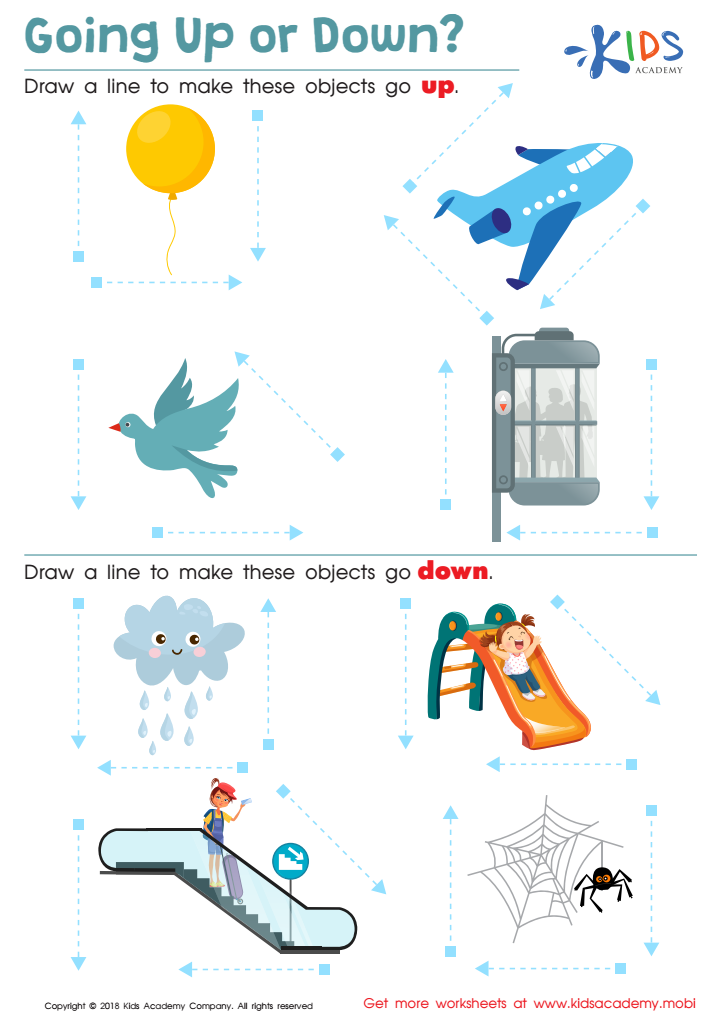
Going up or Down? Worksheet
 Assign to My Students
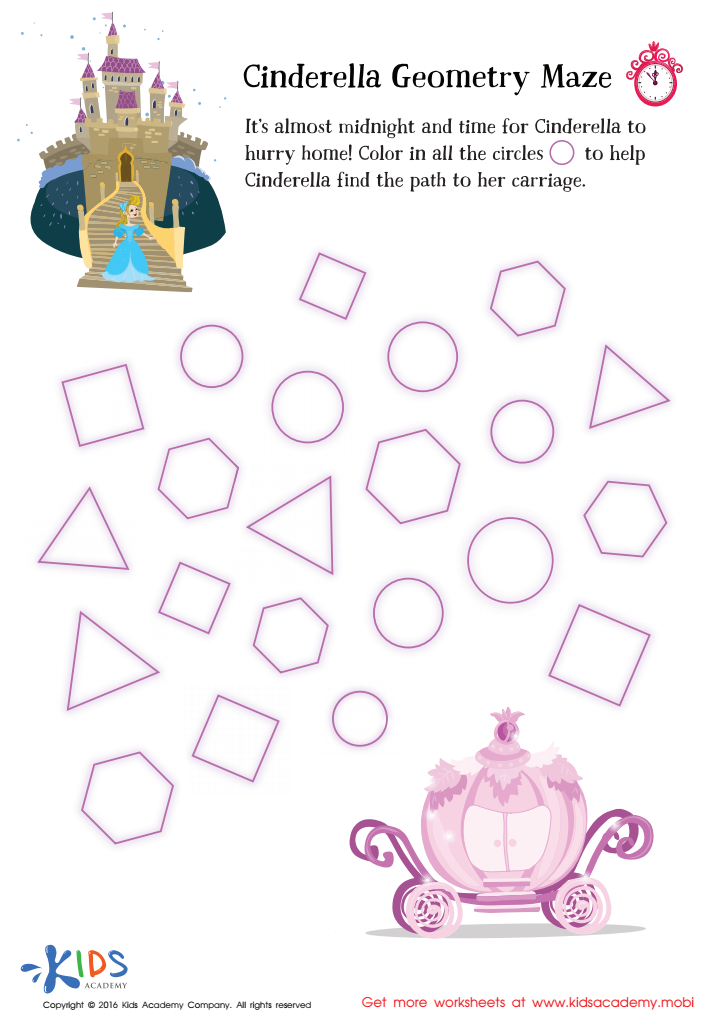
Cinderella Geometry Maze Worksheet
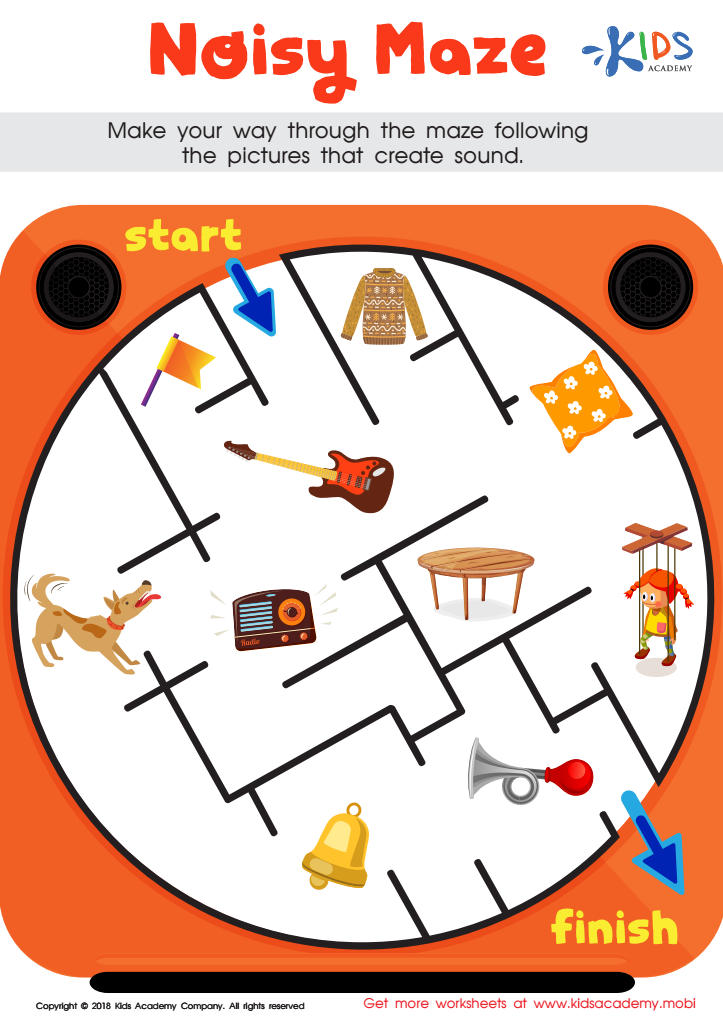
Noisy Maze Worksheet






Spatial orientation is a crucial developmental milestone for children aged 5 to 7, as it lays the groundwork for various cognitive and motor skills. During this critical period, children begin to understand their position relative to space and objects around them. This ability aids in tasks such as navigation, reading, writing, and mathematics. For instance, recognizing directions (left or right) and understanding geometric concepts become integral as they learn to read maps or solve puzzles.
Parents and teachers should care about spatial orientation because it directly influences a child's confidence and competence in both academic and everyday tasks. Difficulties in spatial awareness can lead to challenges in spatial reasoning and problem-solving, impacting their performance in subjects like math and science.
Moreover, fostering spatial orientation through engaging activities—like building blocks, outdoor games, or art projects—can offer children enjoyable learning experiences that promote creativity and critical thinking. By recognizing the significance of this developmental aspect, caregivers can ensure that children not only thrive in the classroom but also develop lifelong skills that enhance their navigation and understanding of the world. Ultimately, nurturing spatial orientation helps children become more confident and capable learners.








