Time-telling skills Normal Worksheets for Ages 5-7
3 filtered results
-
From - To
Discover our "Time-telling Skills Normal Worksheets for Ages 5-7," designed to nurture your child's understanding of time. These engaging and educational worksheets help young learners master reading clocks, differentiating between hours and minutes, and grasping concepts such as morning, afternoon, and evening. Through interactive activities and captivating illustrations, kids can enjoy a fun and stress-free learning experience. Perfect for both classroom use and at-home practice, these worksheets provide an excellent foundation for developing punctuality and time management skills. Invest in your child's future with our expertly crafted time-telling worksheets.
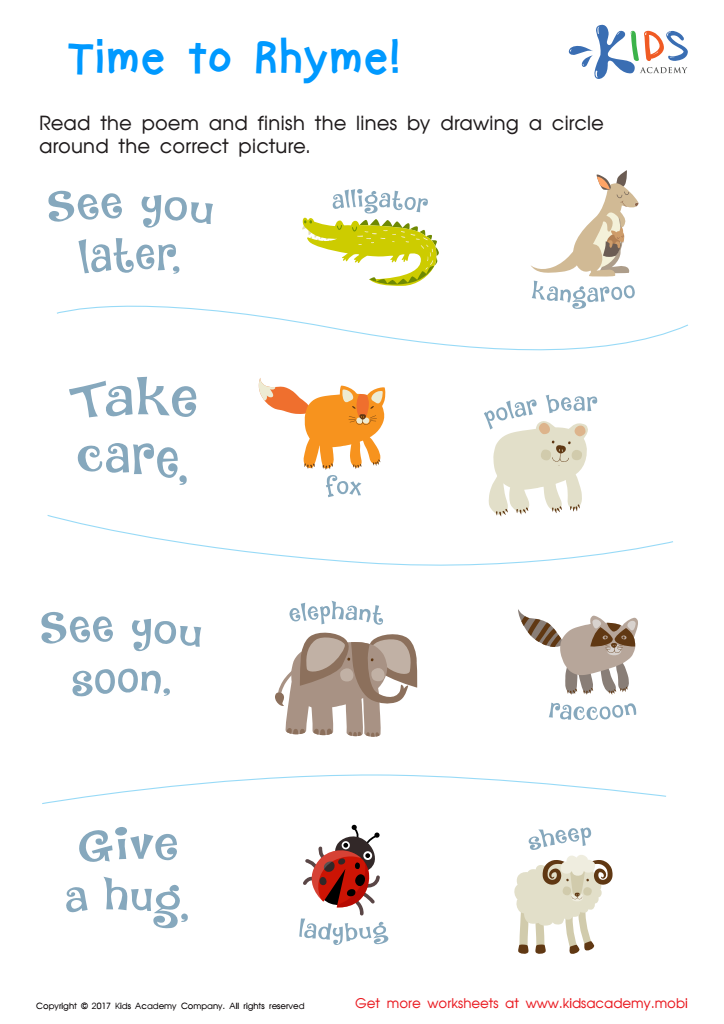
Time to Rhyme Rhyming Worksheet
 Assign to My Students
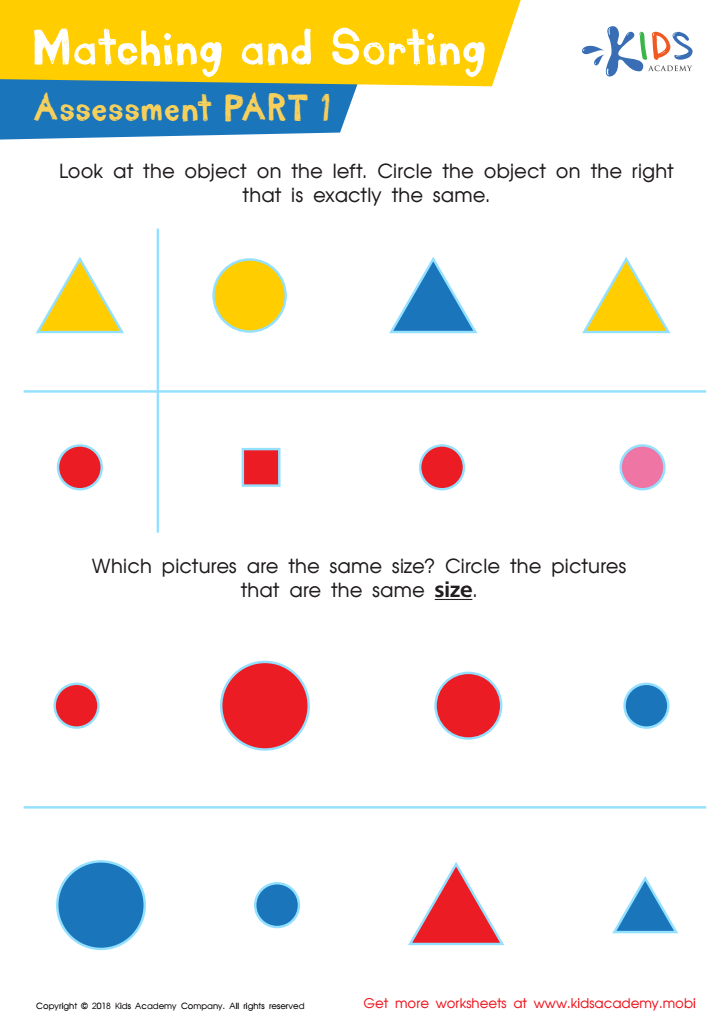
Matching and Sorting for Kindergarten: Assessment 1 Worksheet
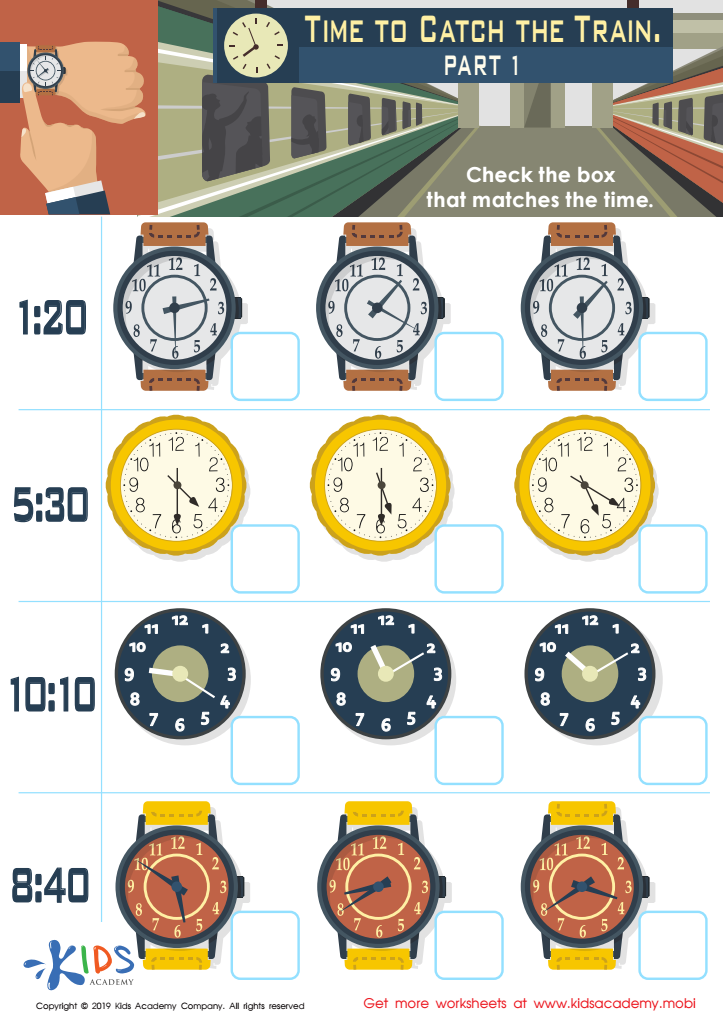
Time to Catch the Train Part 1 Worksheet







Time-telling skills are foundational for young children, typically between the ages of 5-7, due to their pivotal role in cognitive and social development. Understanding time helps children grasp concepts of routine, sequence, and duration, which are critical for the structure and predictability in daily life. This awareness cultivates time management skills early on, allowing children to transition smoothly between activities, thereby fostering a sense of responsibility and independence.
From an academic perspective, knowing how to tell time enhances mathematical abilities. Learning to recognize numbers, sequences, and the function of the clock's hands develops their counting and addition skills, important pillars in early math education. Additionally, time-telling integrates with literacy skills; as children articulate terms like "half past" and "quarter to," their vocabulary expands.
Socially, time-telling fosters punctuality and reliability in youngsters, aiding their interactions and setting lifelong habits. Whether getting to school on time or understanding when it's appropriate to begin homework or play, these skills play a part in developing students who are well-rounded, considerate, and aware of the world around them.
In essence, proficiency in time-telling equips children with vital tools for academic success, personal organization, and responsible social behavior, forming a cornerstone for future learning and daily life excellence.








