Understanding light sources Normal Worksheets for Ages 5-7
3 filtered results
-
From - To
Discover our engaging "Understanding Light Sources" worksheets tailored for children aged 5-7! These resources help young learners explore the different types of light sources, from natural sunlight to artificial lights, through fun activities and interactive exercises. Our worksheets encourage observation, creativity, and critical thinking, making learning about light sources exciting and accessible. With colorful illustrations and easy-to-follow instructions, children will develop important foundational skills in science while enjoying hands-on learning experiences. Perfect for homeschoolers or classroom settings, these worksheets promote curiosity and understanding in early education. Start your child’s journey into the world of light today!
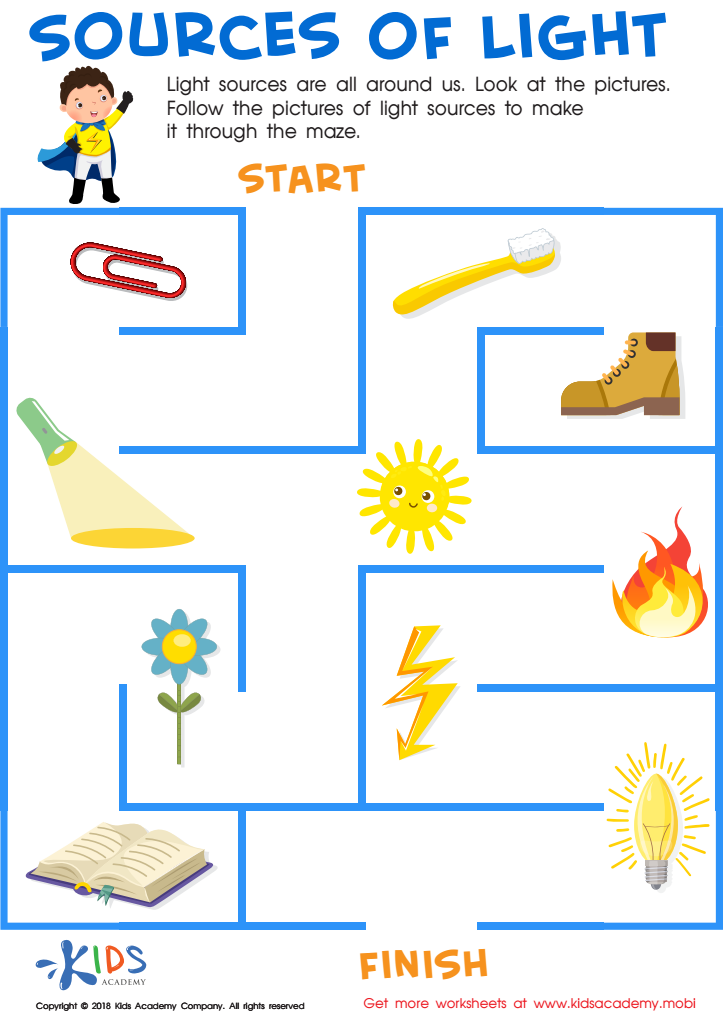
Sources of Light Worksheet
 Assign to My Students
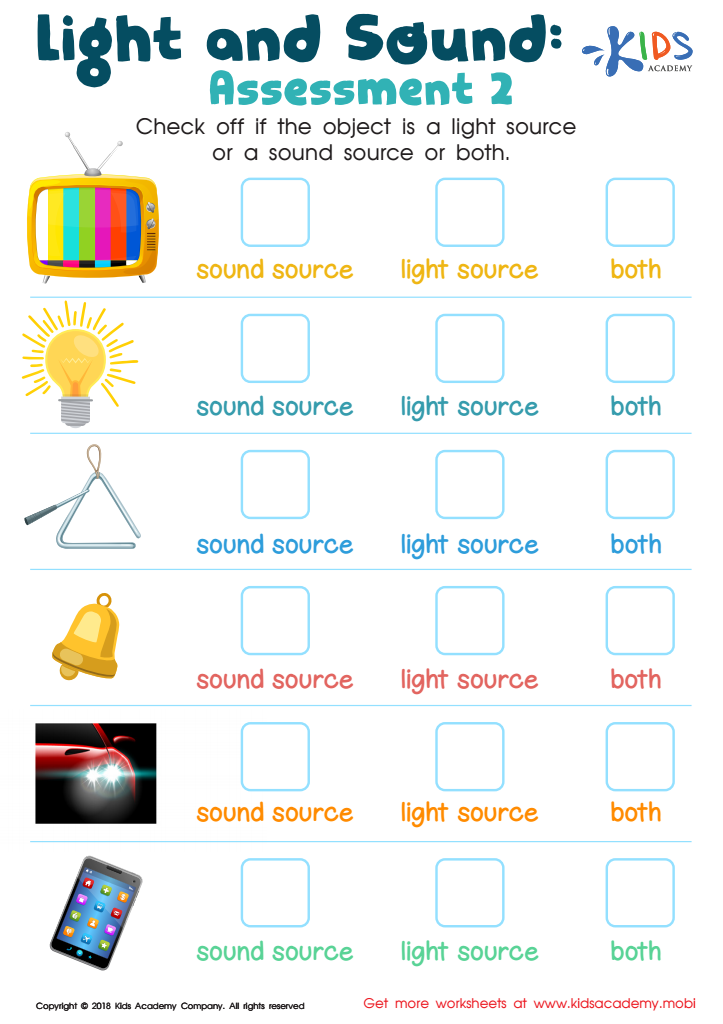
Light and Sound: Assessment 2 Worksheet
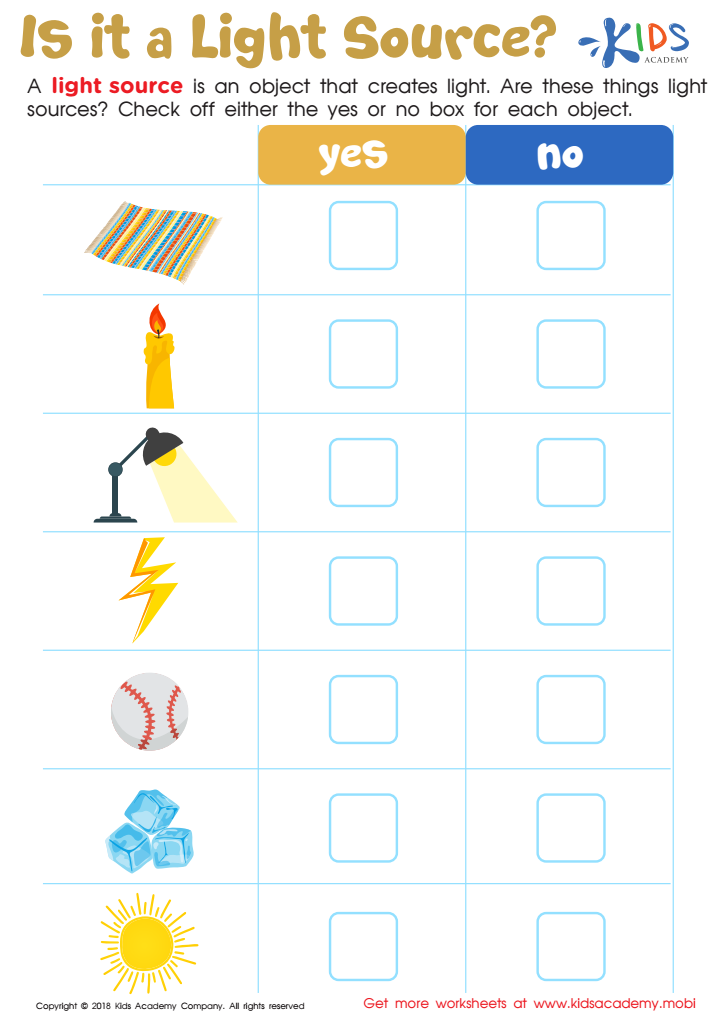
Is It a Light Source? Worksheet








Understanding light sources is crucial for children ages 5-7 as it lays the foundation for scientific literacy and critical thinking. At this stage, kids are naturally curious about the world around them, and learning about light sources encourages exploration and discovery. By identifying and categorizing light sources – such as the sun, light bulbs, and candles – children can grasp basic scientific concepts like how light travels and how it impacts our environment.
For teachers and parents, introducing the idea of light sources can enhance lesson plans and foster hands-on learning opportunities. Activities such as shadow play or sorting light sources promote engagement and interactive learning. It also helps develop vocabulary related to science and encourages discussions about energy sources, sustainability, and safety.
Moreover, understanding light sources is linked to various subjects, from science to art, as it affects how we see colors and create visual art. It promotes critical thinking as children begin to ask questions about how things work. By engaging with this topic, both parents and teachers are nurturing inquisitive minds, laying the groundwork for future learning, and fostering a lifelong interest in the sciences. Education at this level can spark a greater understanding of the world, benefitting children's overall development.








