
Understanding patterns Normal Worksheets for Ages 5-7
5 filtered results
Difficulty Level
Grade
Age
-
From - To
Subject
Activity
Standards
Explore our collection of engaging "Understanding Patterns" worksheets designed for children aged 5-7! These resources help young learners identify, create, and extend patterns using vibrant visuals and interactive activities. Each worksheet encourages critical thinking and boosts foundational math skills while making learning fun and enjoyable. The activities are tailored to promote cognitive development, enhance observational skills, and foster creativity in a playful way. Perfect for classrooms or at-home learning, these printable worksheets align with early education standards and are ideal for reinforcing concepts in patterns. Unlock your child's potential with exciting resources, and watch them thrive in their learning journey!
Favorites
With answer key
Interactive
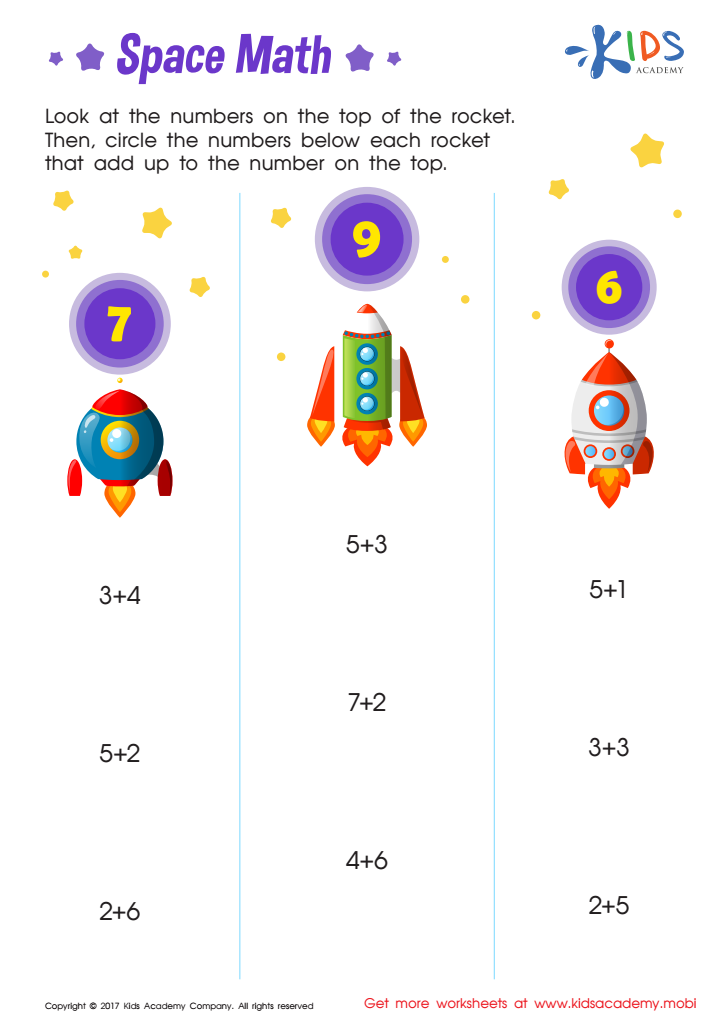
Addition: Space Math Worksheet
Fun and engaging space-themed practice with vivid pictures and matching numbers will make learning more meaningful. Take their math skills out of this galaxy today with Kids Academy!
 Assign to My Students
Addition: Space Math Worksheet
Worksheet
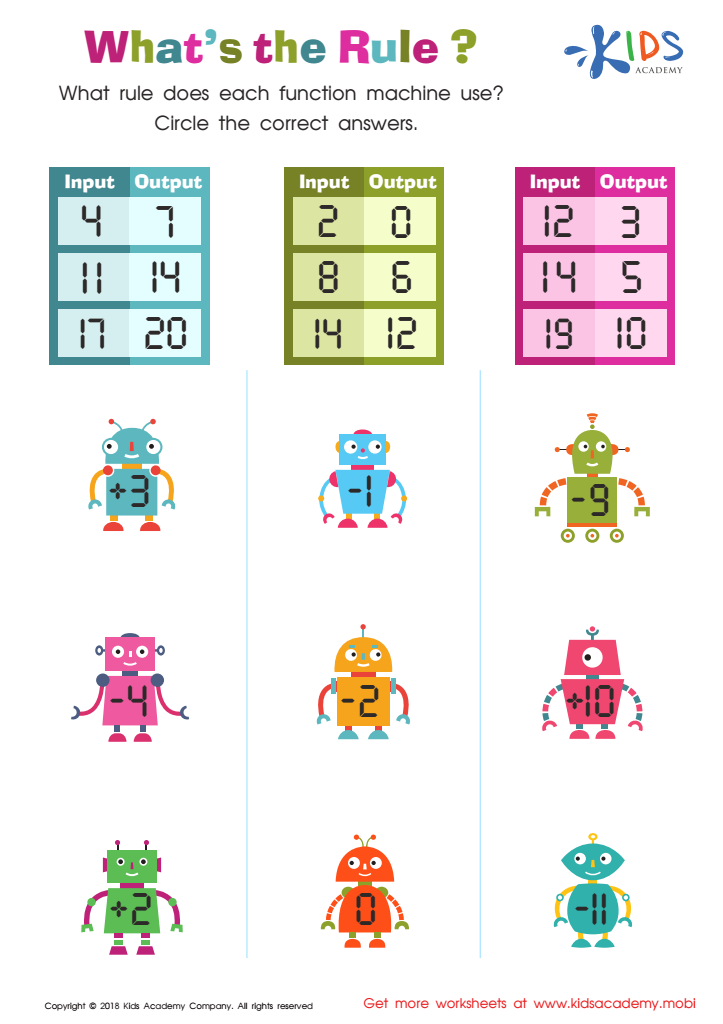
What's the Rule Worksheet
Robots are here to help your child find the relationship between each set of numbers! Adorably illustrated worksheets use vivid pictures that each contain a rule. Look at each function machine and find the pattern or relationship between the input and output. Then, complete the sheet by circling the correct answer!
What's the Rule Worksheet
Worksheet
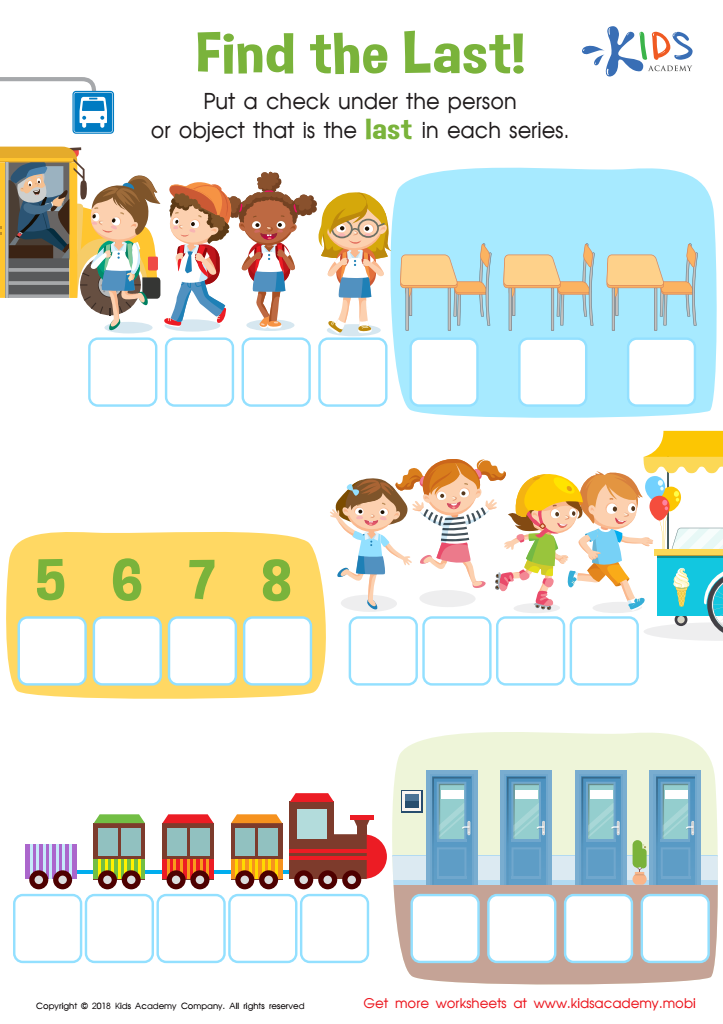
Find the Last! Worksheet
Teach young students about sequence words with this free worksheet. Have them look at sets of people or objects and choose the one that is last. Engage them further by having them describe or act out their day, and what happens last? Enjoy this printout and have fun!
Find the Last! Worksheet
Worksheet
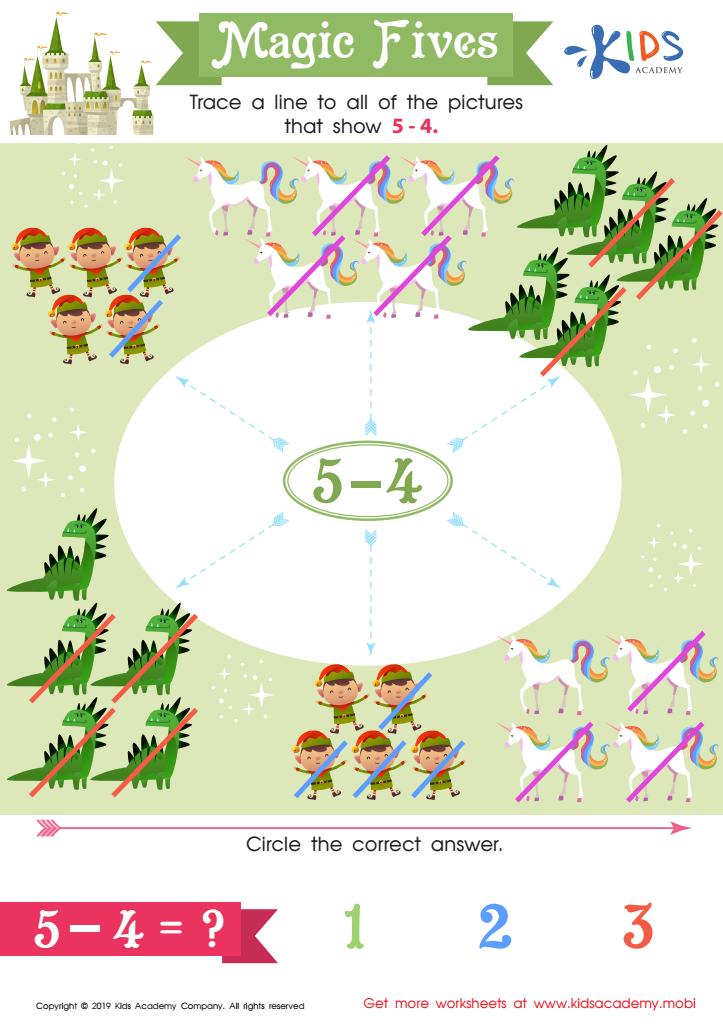
Magic Fives Worksheet
Help your students identify the objects & people in the worksheet. Point to the equation 5 -4 in the center, then get them to count the items and trace a line connecting those that add up to 5 - 4.
Magic Fives Worksheet
Worksheet
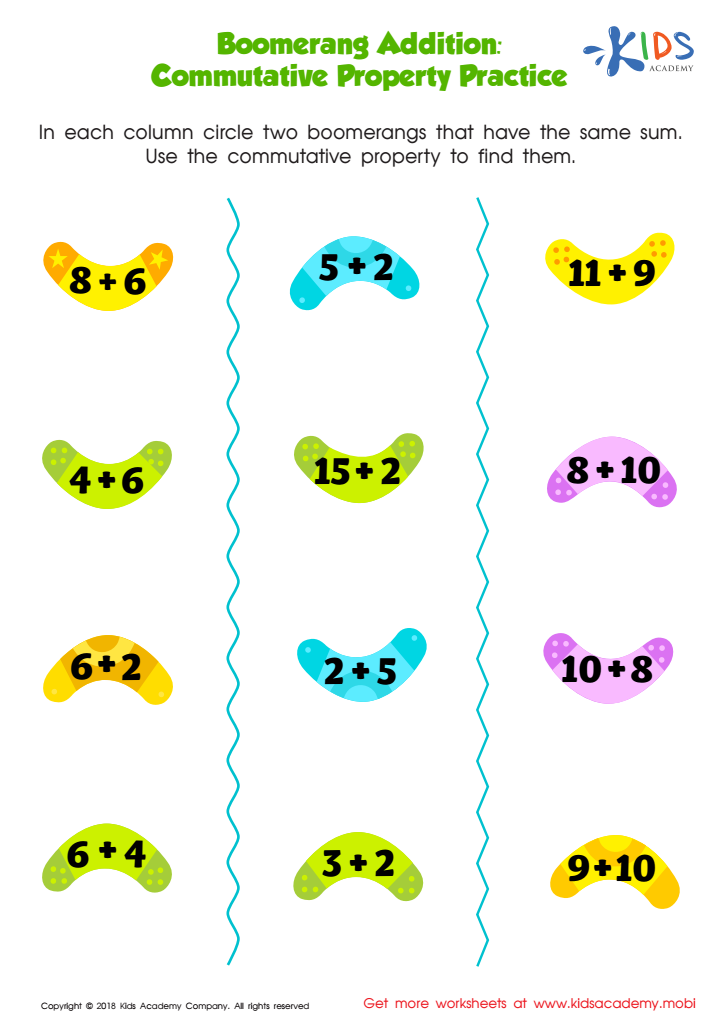
Boomerang Addition Worksheet
Kids know that when a boomerang is thrown, it reverses its path back. The same goes for addition: numbers can be rearranged and the sum will remain the same. Use this worksheet to find matching pairs of colorful boomerangs and equations. Look through each column and use the commutative property to find the pairs with the same sum.
Boomerang Addition Worksheet
Worksheet
Join Kids Academy for Free
Who is primarily going to use this learning content?






Understanding patterns is a fundamental building block in early childhood education, especially for children aged 5-7. At this stage, young learners are naturally curious and begin to make sense of the world around them, making it an ideal time to introduce the concept of patterns. Recognizing patterns helps children develop critical thinking and problem-solving skills as they learn to identify regularities and predict outcomes based on observed sequences.
Parents and teachers should care about teaching patterns because they provide a foundation for more complex mathematical concepts, such as algebra and geometry, that children will encounter later in their education. Additionally, patterns are integral to various subjects, including music and art, fostering creativity and enhancing cognitive development.
Moreover, understanding patterns promotes logical reasoning, enabling children to make connections between different pieces of information. This skill extends beyond academics, aiding in everyday decision-making and fostering confidence in their ability to solve problems.
By encouraging pattern recognition through engaging activities and real-life examples, adults can support children’s cognitive growth and instill a love for learning. This holistic approach is essential not only for academic success but also for developing essential life skills.








