Pattern recognition Normal 2D Shapes Worksheets for Ages 5-7
3 filtered results
-
From - To
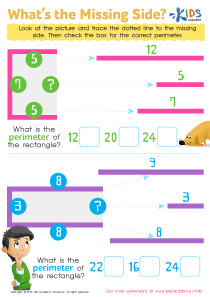
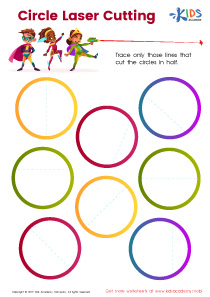
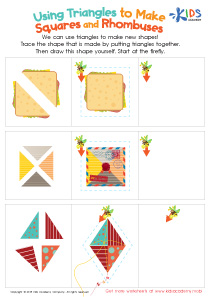
Discover our engaging "Pattern Recognition Normal 2D Shapes Worksheets" designed for children aged 5-7! These worksheets help young learners enhance their pattern recognition skills through colorful and interactive activities. Kids will explore basic 2D shapes, identifying and predicting patterns in a fun and educational way. Our carefully crafted exercises include connecting dots, matching shapes, and completing sequences, ensuring a solid foundation in geometry and critical thinking. Perfect for classroom or home use, these worksheets make learning enjoyable and intuitive. Foster your child's early math skills with our vibrant resources that promote creativity and confidence in shape recognition and pattern analysis!
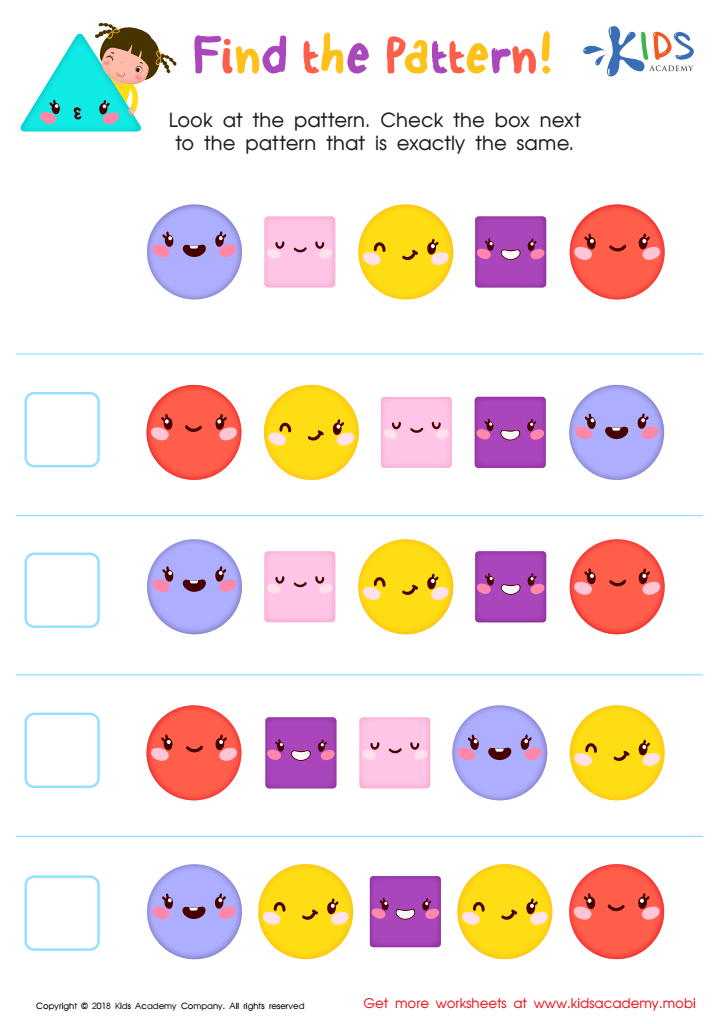
Find the Pattern Worksheet
 Assign to My Students











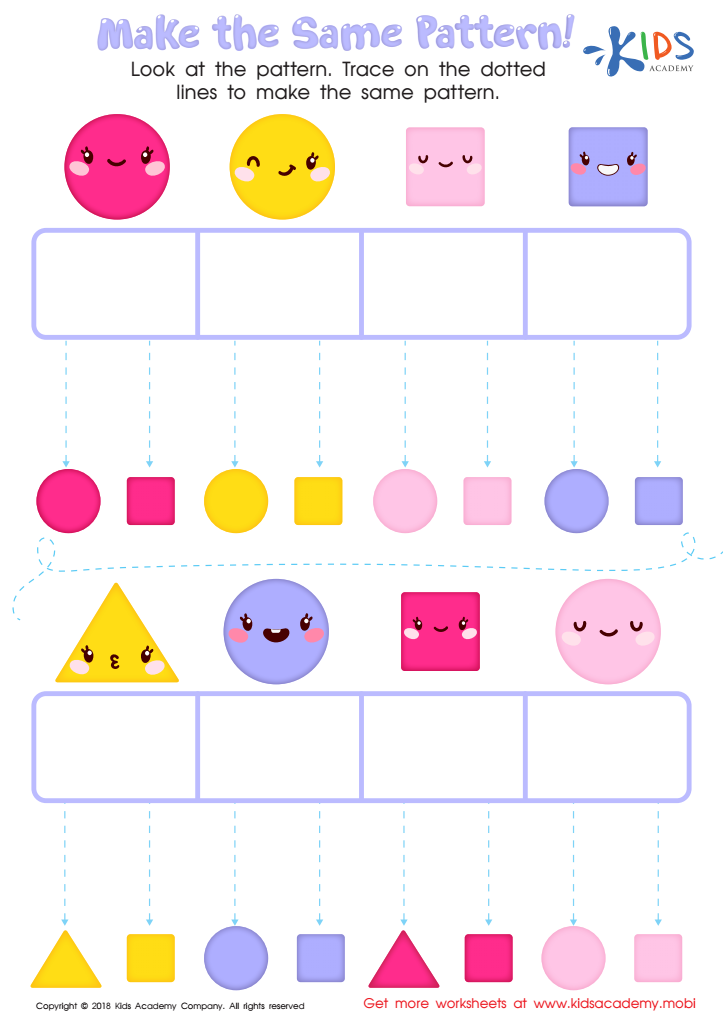
Make the Same Pattern Worksheet
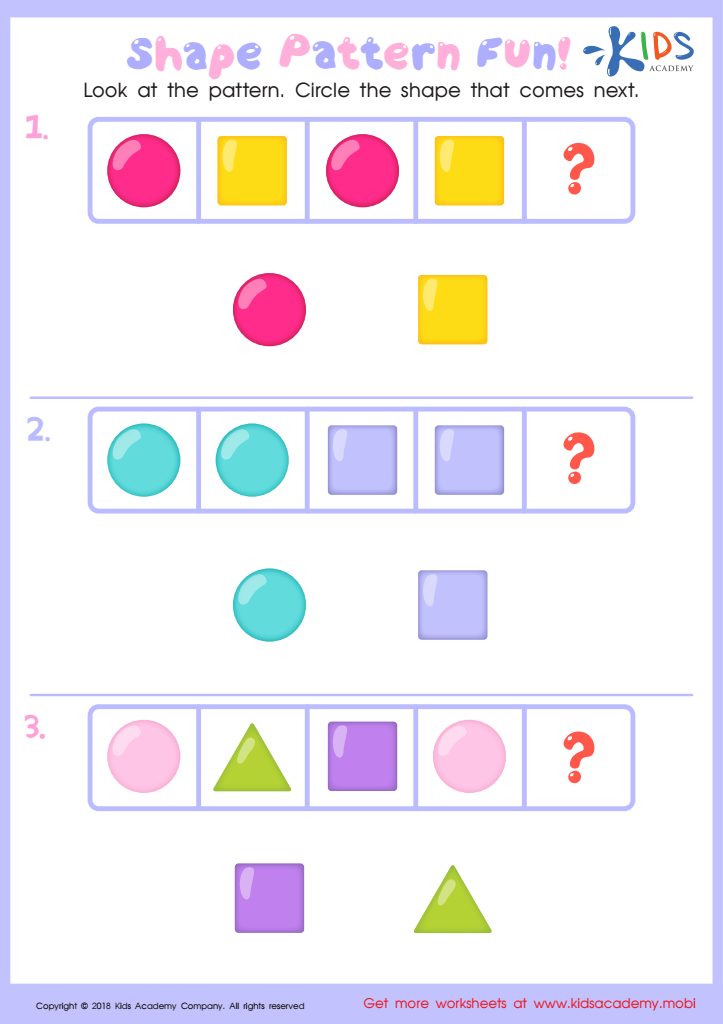
Shape Pattern Fun Worksheet








Pattern recognition and understanding normal 2D shapes are crucial skills for children aged 5-7, laying the foundation for their mathematical and cognitive development. At this age, children are naturally curious and eager to explore. Engaging with patterns and shapes helps them develop critical thinking and problem-solving skills. By recognizing patterns, children learn to anticipate and create, fostering creativity.
Understanding 2D shapes is equally important as it builds their spatial awareness, which is vital in various disciplines like math, science, and art. Shapes form the building blocks of geometry, contributing to academic readiness for more complex concepts in later grades. By mastering shapes and patterns, children also enhance their visual perception, which can improve their ability to interpret information critically.
Moreover, these concepts encourage collaboration and communication, as kids often work in groups or pairs to identify patterns, share observations, and describe shapes. This social interaction reinforces both language skills and teamwork.
In essence, parents and teachers should prioritize teaching pattern recognition and normal 2D shapes, as these concepts not only boost academic readiness but also enrich overall cognitive and social development, which plays a pivotal role in a child’s lifelong learning journey.