Critical Thinking Normal Addition & Subtraction Worksheets for Ages 5-7
5 filtered results
-
From - To
Enhance your child’s math skills with our Critical Thinking Normal Addition & Subtraction Worksheets, specially designed for ages 5-7. These engaging worksheets combine fundamental arithmetic with critical thinking exercises, helping young learners develop problem-solving abilities alongside their math knowledge. With a variety of fun, age-appropriate activities, children will explore addition and subtraction in meaningful contexts while strengthening their analytical skills. Ideal for classroom use or at-home practice, these worksheets encourage kids to approach challenges with curiosity and creativity. Start cultivating a strong math foundation today and inspire your child's passion for learning through interactive and thought-provoking exercises!
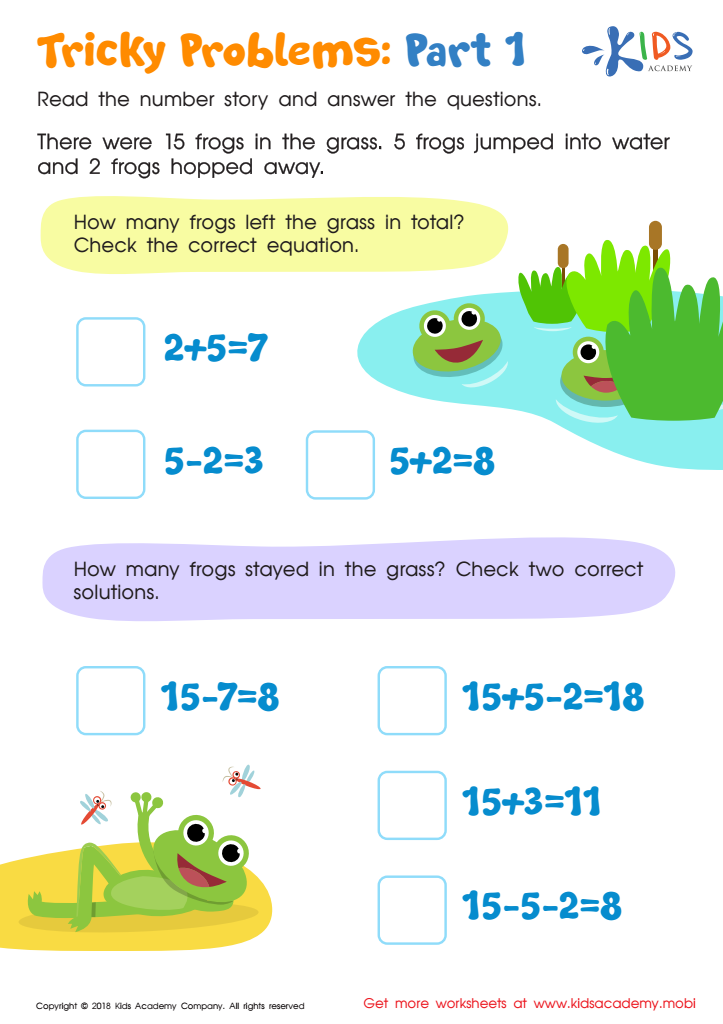
Tricky Problems Worksheet: Part 1
 Assign to My Students
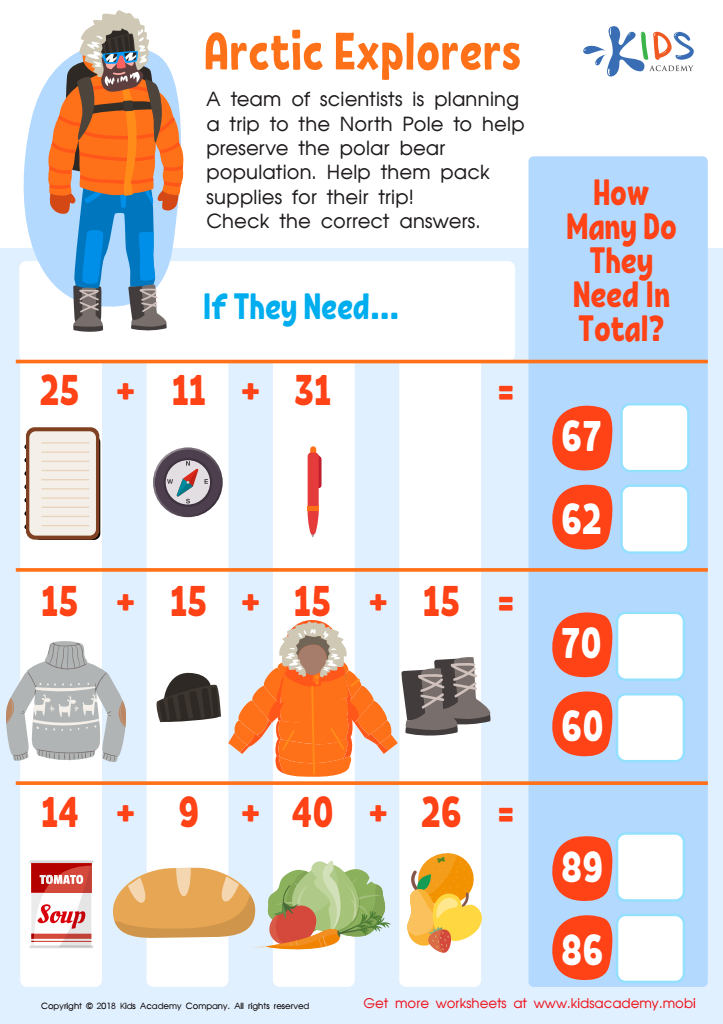
Arctic Explorers Worksheet
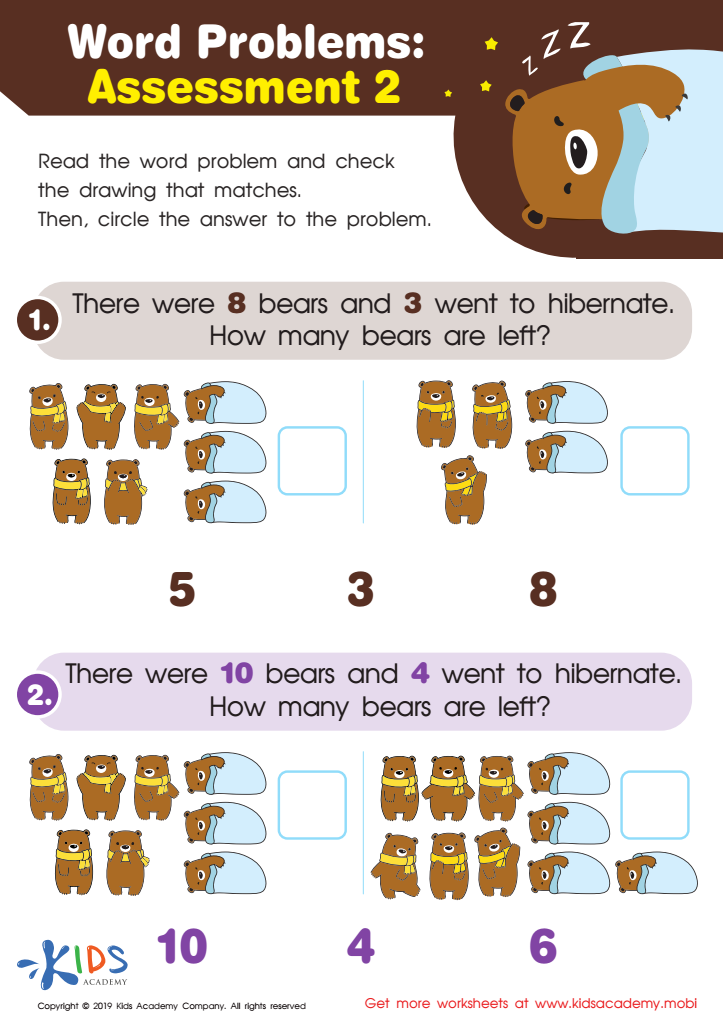
Word Problems: Assessment 2 Worksheet
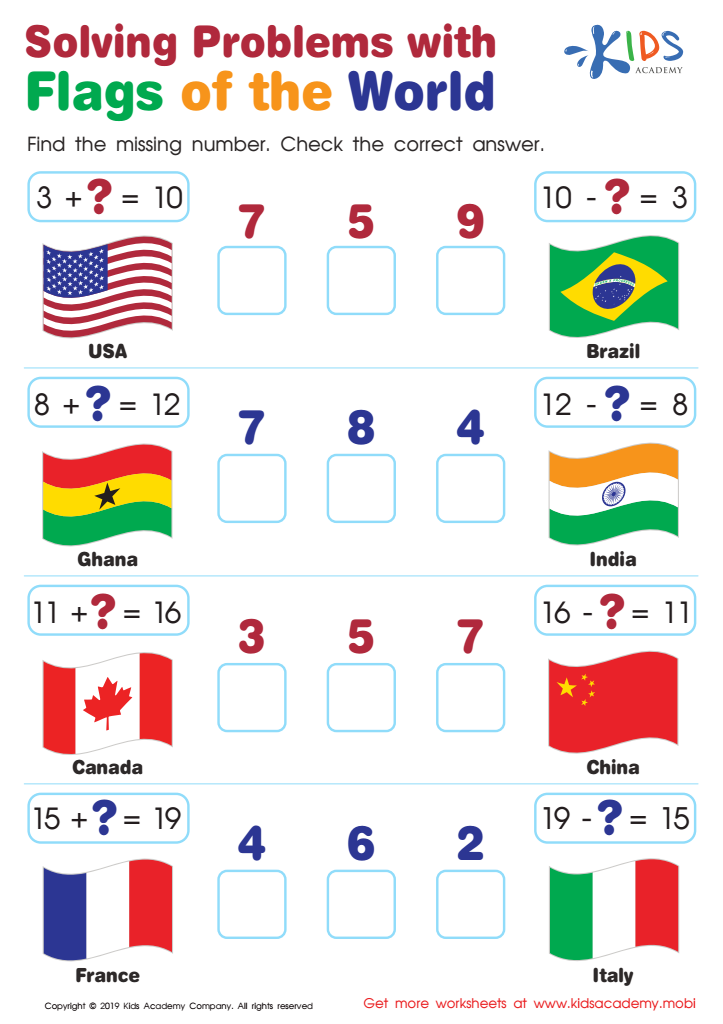
Solving Problems with Flags of the World Worksheet
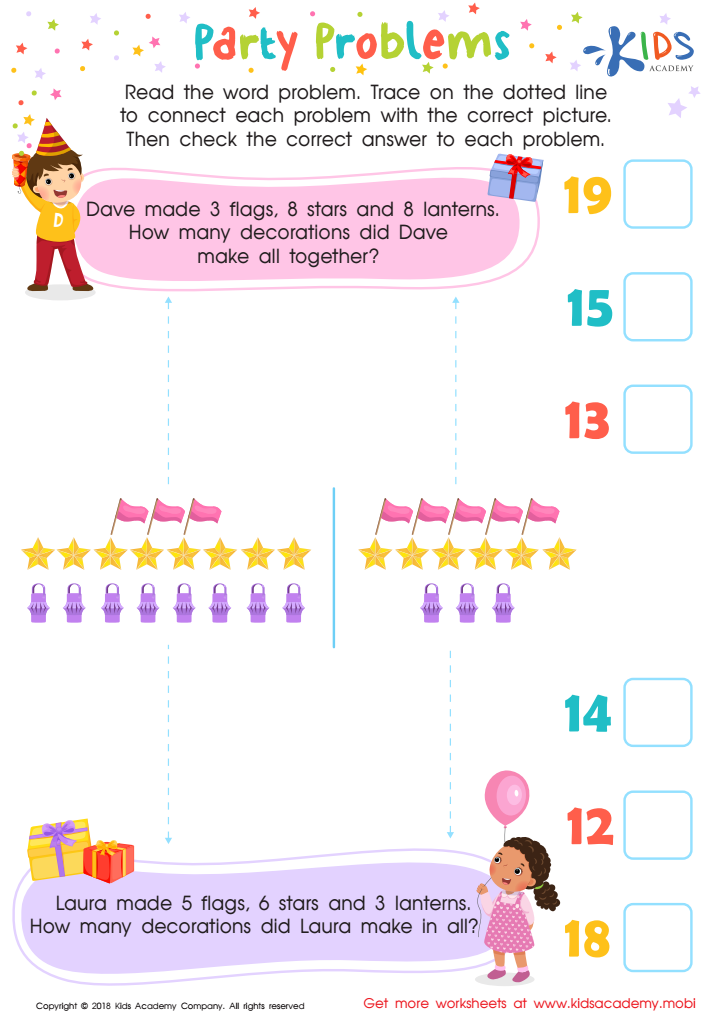
Party Problems Worksheet








Critical thinking skills in early mathematics, particularly in normal addition and subtraction for children aged 5-7, are vital for fostering a well-rounded educational foundation. At this age, learners begin developing mathematical reasoning and problem-solving abilities that are crucial not only for academic success but for everyday decision-making as well.
Encouraging critical thinking in basic arithmetic helps children to understand the "why" behind mathematical operations, rather than just memorizing formulas. This deeper understanding allows them to tackle more complex problems as they progress in their education. Parents and teachers who nurture these abilities can help children identify patterns, make connections, and apply logic to solve problems.
Moreover, early critical thinking skills in math can boost children’s confidence, making them more willing to engage in discussions and explore new concepts. This skill also plays an essential role in various aspects of life outside of academics, promoting analytical skills that children will use throughout their lives.
Ultimately, by supporting critical thinking in normal addition and subtraction, parents and teachers are laying the groundwork for a love of learning, empowering students to become independent thinkers and instilling a lifelong appreciation for mathematics. This approach paves the way for successful futures.








