Shape identification Normal Geometry Worksheets for Ages 5-7
5 filtered results
-
From - To
Introduce your young learners to the exciting world of shapes with our "Shape identification Normal Geometry Worksheets for Ages 5-7". Designed for kids bursting with curiosity, these engaging resources help children effortlessly identify and differentiate basic geometric shapes. Our colorful and fun-filled worksheets cater to ages 5-7, emphasizing hands-on learning and visual aids to ensure comprehension. Whether at home or school, these activities are perfect for building foundational math skills while making geometry fun and accessible. Boost your child's shape recognition abilities and lay a solid foundation for future math success with our expertly crafted worksheets.
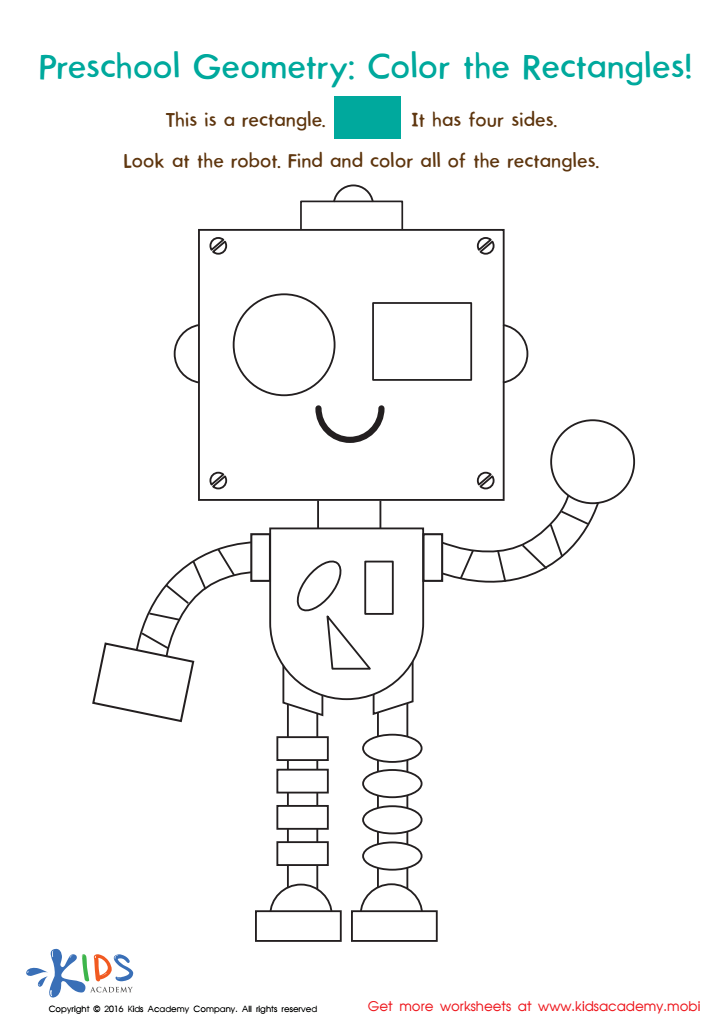
Geometry Worksheet
 Assign to My Students











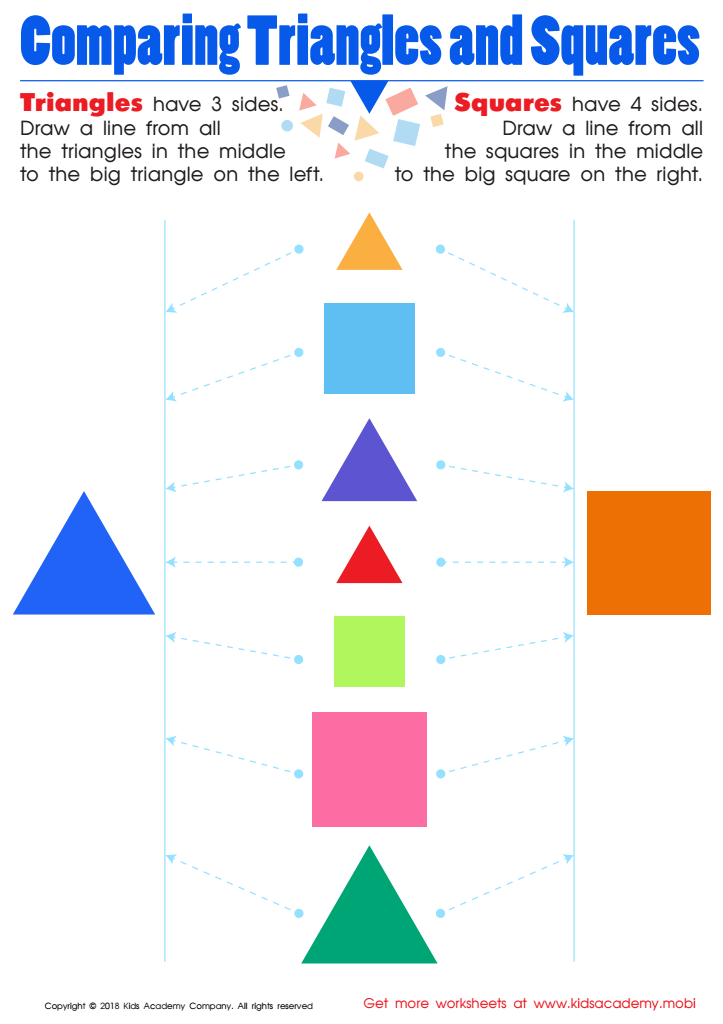
Comparing Triangles Squares Worksheet
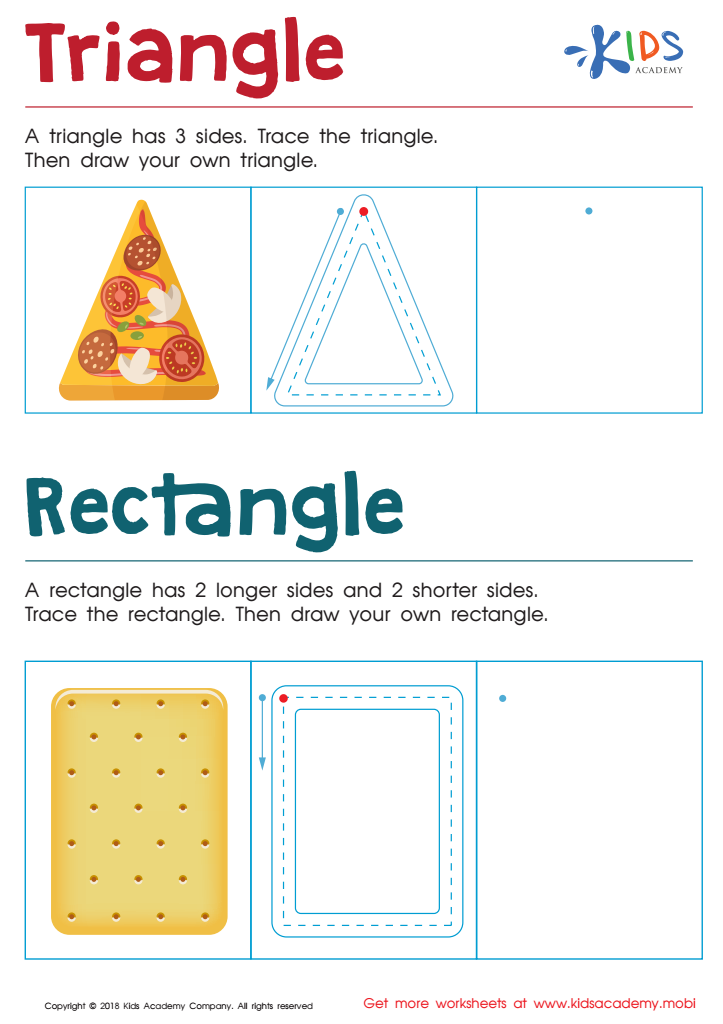
Triangle Rectangle Worksheet
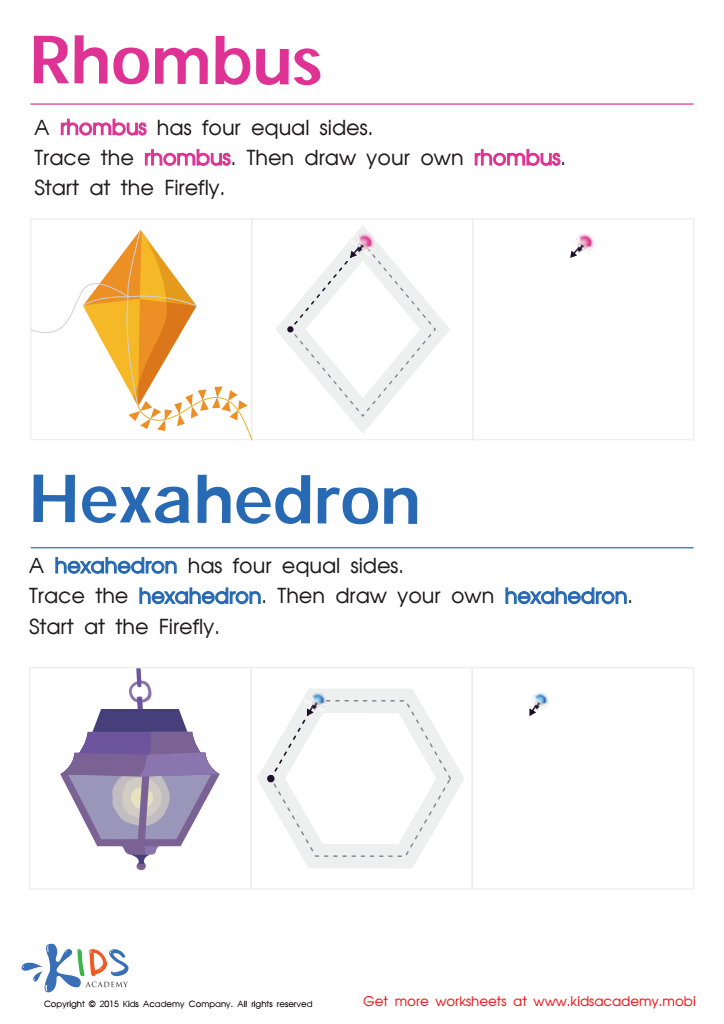
Draw a Rhombus And a Hexahedron Printable
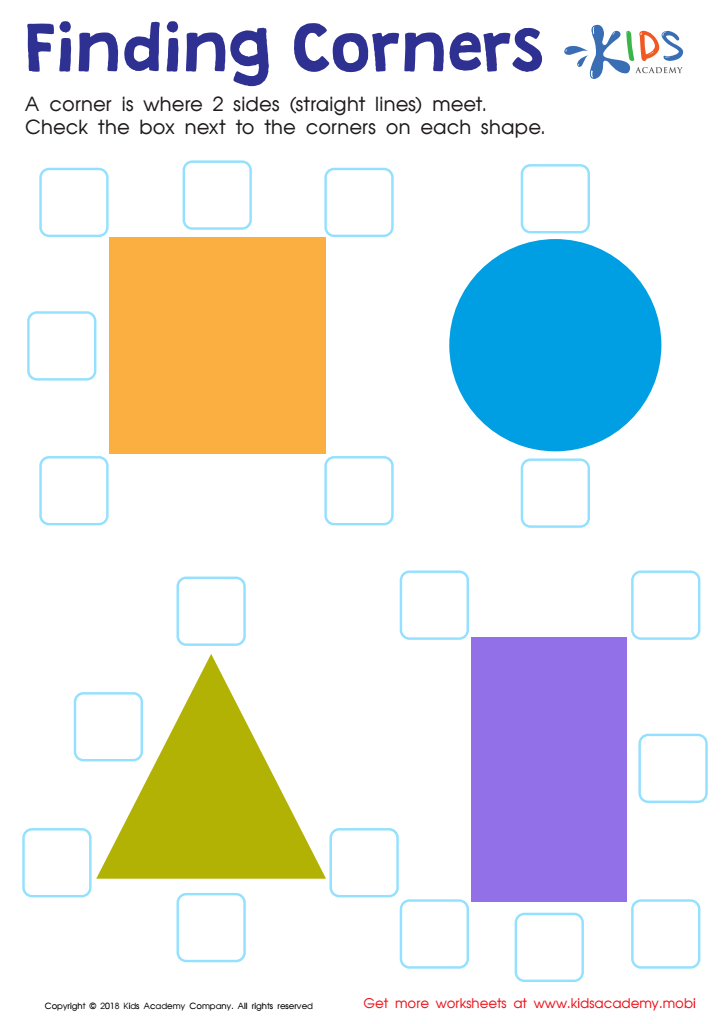
Finding Corners Worksheet








Shape identification and basic geometry are fundamental building blocks for young learners aged 5-7, and parents and teachers should prioritize these concepts for several compelling reasons.
Firstly, understanding shapes enhances children's spatial awareness. By recognizing and differentiating between triangles, squares, circles, and other shapes, kids develop the ability to grasp complex visuals and navigate the world around them. This spatial understanding is critical for everyday tasks such as reading maps and balancing objects, and it lays the groundwork for more advanced subjects like trigonometry and engineering in later years.
Secondly, learning shapes improves cognitive skills. Shape identification exercises engage children in classification, comparison, and pattern recognition, all of which are higher-order thinking skills. These activities also perfect fine motor skills when kids draw or construct shapes with various materials, boosting their overall dexterity and hand-eye coordination.
Moreover, geometry in early education enhances language development. As children describe shapes and their properties, they expand their vocabulary and improve communication skills. Conversing about shapes and their similarities or differences encourages critical thinking and expressive language use.
Finally, a solid grasp of shapes is integral to mathematical concepts, including understanding numbers, measurement, and problem-solving. Shapes are the building blocks for algebraic thinking and geometry, forming a critical part of the math curriculum throughout a child's education.
In summary, early geometry doesn't just teach shapes; it builds a foundation for spatial, cognitive, linguistic, and mathematical development, ensuring young learners are prepared for future academic success.








