Cognitive Development Normal Math Worksheets for Ages 5-7 - Page 2
25 filtered results
-
From - To
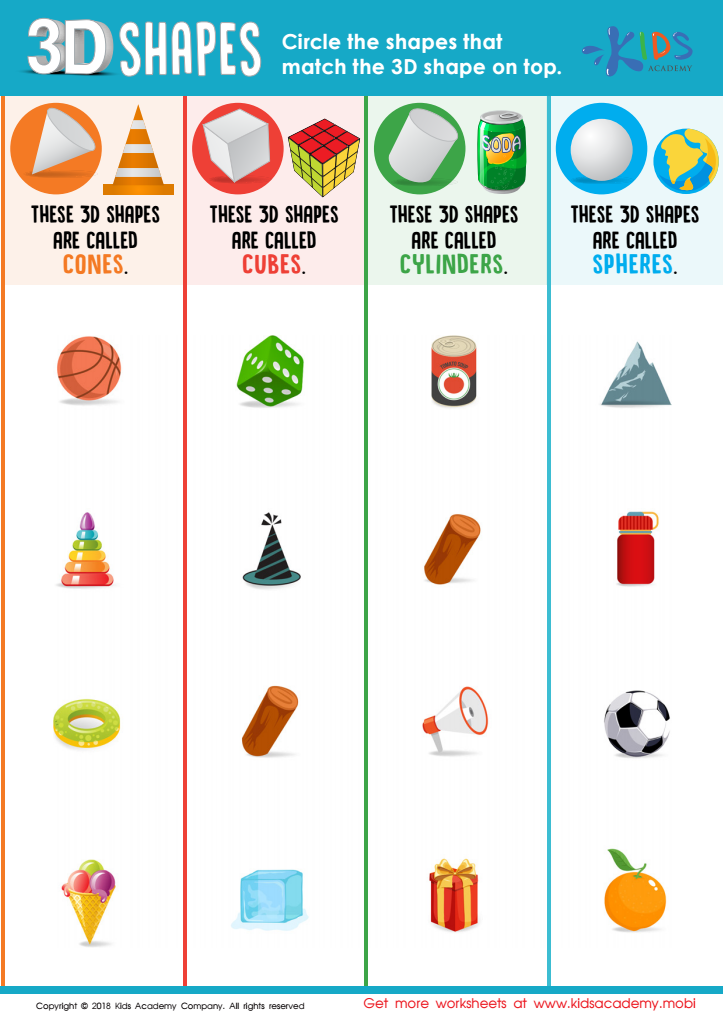
3D Shapes Worksheet
 Assign to My Students



.jpg)




Cognitive development in math for children aged 5-7 is crucial as it lays the foundation for future academic success and everyday problem-solving skills. At this early age, children's brains are incredibly receptive to new information, and they begin to develop essential skills such as recognizing numbers, understanding basic arithmetic concepts, and comprehending patterns.
For parents and teachers, fostering cognitive development in math ensures that children build a solid understanding of fundamental math concepts, which is critical for their confidence and competence in the subject later in life. Activities involving counting, simple addition and subtraction, sorting, and identifying shapes not only make math tangible and relatable to their everyday experiences but also stimulate their mental agility and analytical thinking.
Furthermore, early proficiency in math can boost self-esteem and foster a positive attitude toward learning. Children who grasp these concepts early are more likely to enjoy learning and view challenges as opportunities rather than obstacles. For parents and teachers, prioritizing cognitive development in math also means equipping children with critical problem-solving skills used beyond the classroom — in real-life situations and other academic areas.
Therefore, a focus on cognitive development in math at this young age serves as a critical investment in a child’s educational journey and overall intellectual growth. It's an opportunity to instill strong foundational skills that support a lifetime of learning and development.








