
Differentiating shapes Normal Math Worksheets for Ages 5-7
3 filtered results
Difficulty Level
Grade
Age
-
From - To
Subject
Activity
Standards
Our "Differentiating Shapes" normal math worksheets for ages 5-7 are expertly designed to enhance your child's ability to recognize and distinguish between various shapes. These engaging, age-appropriate activities focus on identifying circles, squares, triangles, and more. Ideal for building a strong foundational understanding of geometry, these worksheets combine fun visuals with practical exercises to keep young learners motivated. Tailored to support early math skills, each worksheet fosters critical thinking and problem-solving, ensuring a comprehensive learning experience. Perfect for parents and teachers, our resources provide all the tools needed to help children succeed in shape differentiation.
Favorites
With answer key
Interactive
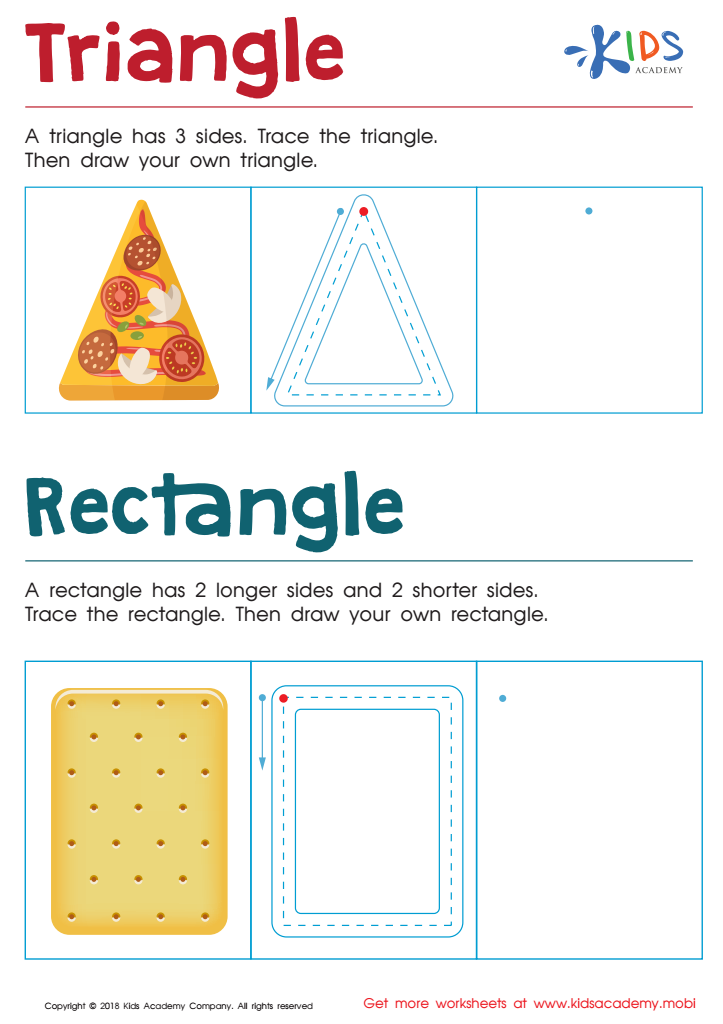
Triangle Rectangle Worksheet
This printable worksheet helps kids draw rectangles and triangles. Have your child trace the pizza and cracker shapes to become familiar, then try their own. Perfect for second graders! Coloring and creativity make this fun and educational.
 Assign to My Students
Triangle Rectangle Worksheet
Worksheet
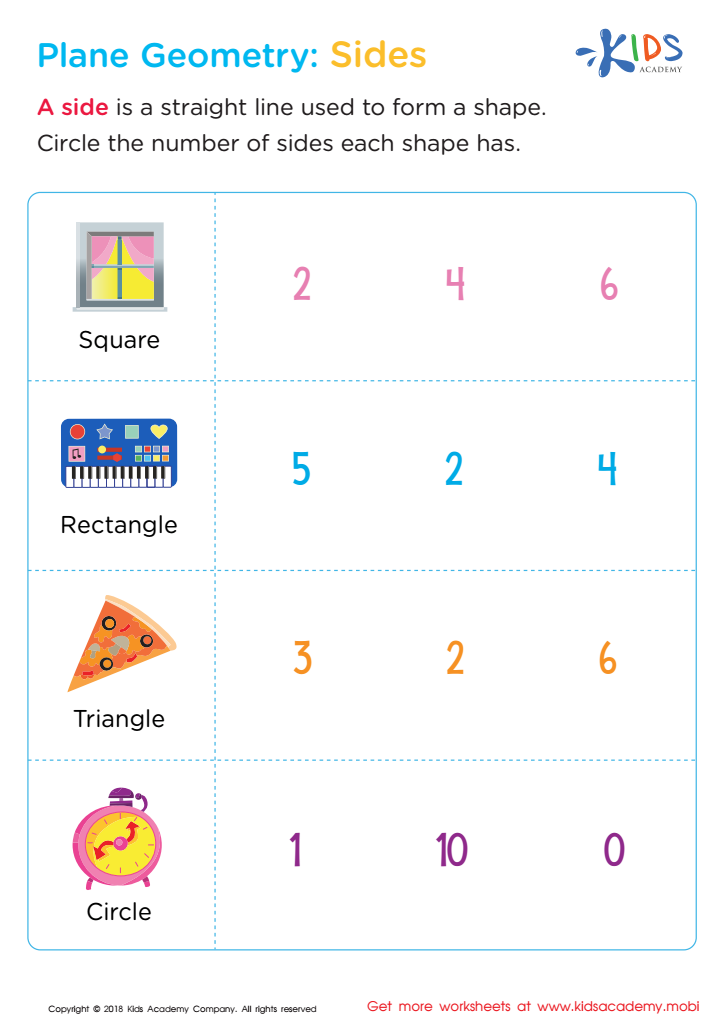
Plane Geometry: Sides Worksheet
Knowing the properties of basic geometric shapes is a great skill to have. Download this free worksheet and let your kids learn about sides and shapes using colorful pictures. They'll see each shape has its own number of sides, laying the groundwork for identifying and recognizing shapes in the future.
Plane Geometry: Sides Worksheet
Worksheet
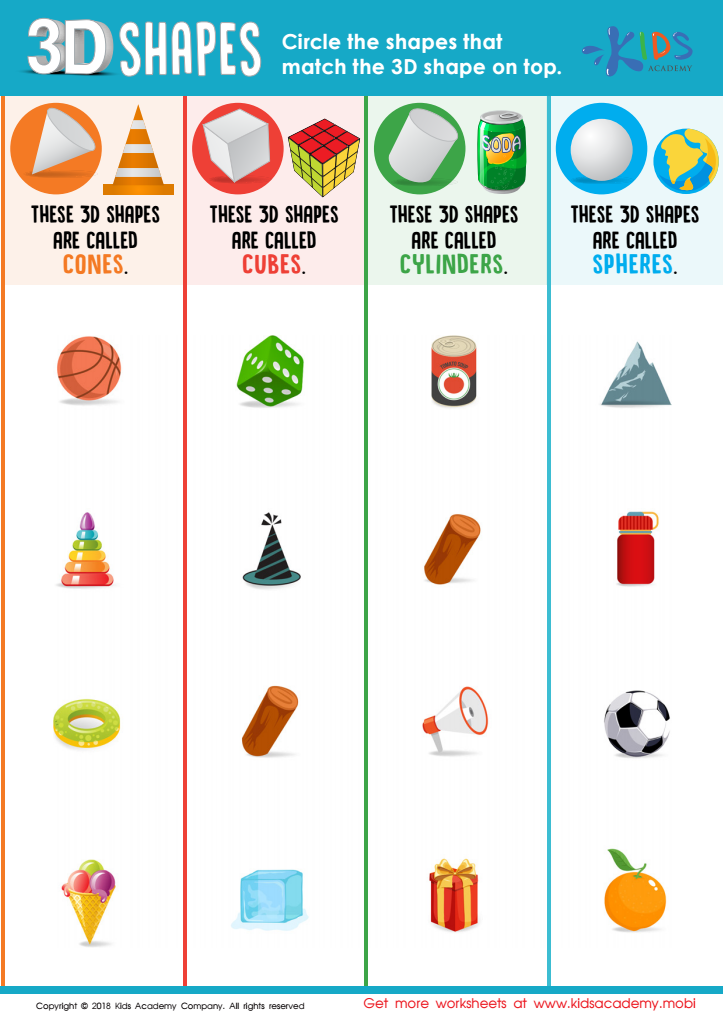
3D Shapes Worksheet
It's time to identify 3D shapes! This worksheet helps kids find and name shapes like cones, cylinders, cubes, and spheres using pictures of everyday objects. Let's explore 3D shapes in the real world!
3D Shapes Worksheet
Worksheet
Join Kids Academy for Free
Who is primarily going to use this learning content?


.jpg)



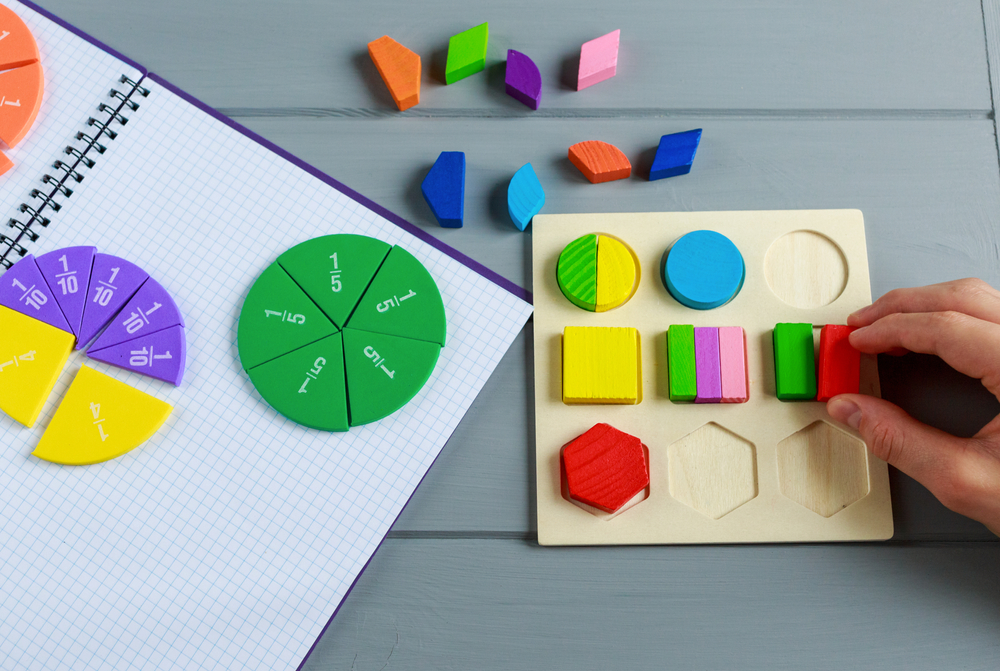

Parents and teachers should care about differentiating shapes in early math education for children ages 5-7 because it forms the foundation for essential cognitive and motor skills. Recognizing and differentiating shapes aids in the development of spatial awareness, a critical component of later mathematical skills like geometry, measurement, and even data visualization. By identifying different shapes, children learn to observe, compare, and categorize objects based on their attributes, which fosters analytical thinking.
Moreover, understanding shapes is pivotal for language development as children learn new vocabulary—circle, square, triangle—alongside concepts like "sides," "corners," and "angles." These linguistic skills are essential for effective communication and academic success across subjects.
From a creative standpoint, grasping the basics of shapes encourages artistic expression. Children who can understand and manipulate shapes are better equipped to draw, mold, and construct, further stimulating their creativity and fine motor skills. Shapes are integral to navigating everyday activities too, from assembling puzzles to recognizing traffic signs.
Additionally, incorporating differing shapes within play provides an interactive and enjoyable learning experience. This engenders a positive attitude towards learning and bolsters self-confidence as children master new concepts.
Thus, a focus on differentiating shapes offers a holistic developmental advantage, bridging cognitive, linguistic, motor, and emotional growth.








