Division practice Normal Math Worksheets for Ages 5-7
4 filtered results
-
From - To
Welcome to our Division Practice Normal Math Worksheets, designed specifically for children aged 5-7! These engaging, printable worksheets provide a fun and interactive way for young learners to develop their division skills. Featuring colorful illustrations and age-appropriate exercises, our resources make mastering basic division concepts enjoyable and accessible. Each worksheet allows kids to practice and reinforce their understanding through various problem types, ensuring a strong foundation in math. Perfect for teachers, parents, or homeschooling, our division practice worksheets are essential tools to boost confidence and proficiency in early math learning. Start your child’s division journey today with our comprehensive materials!
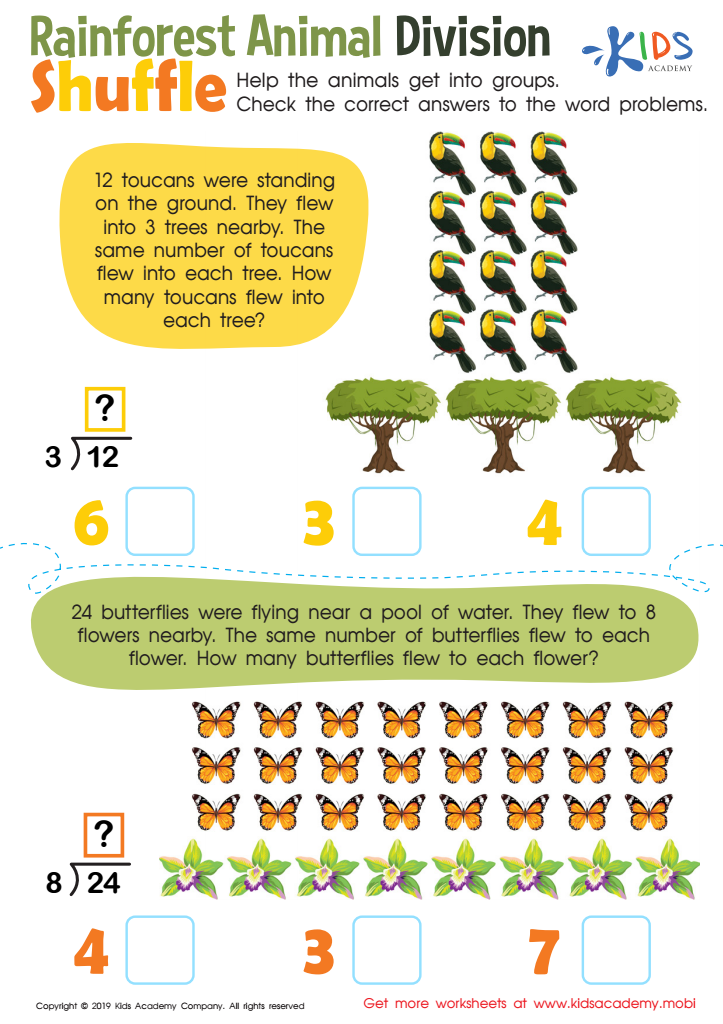
Rainforest Animal Division Worksheet
 Assign to My Students
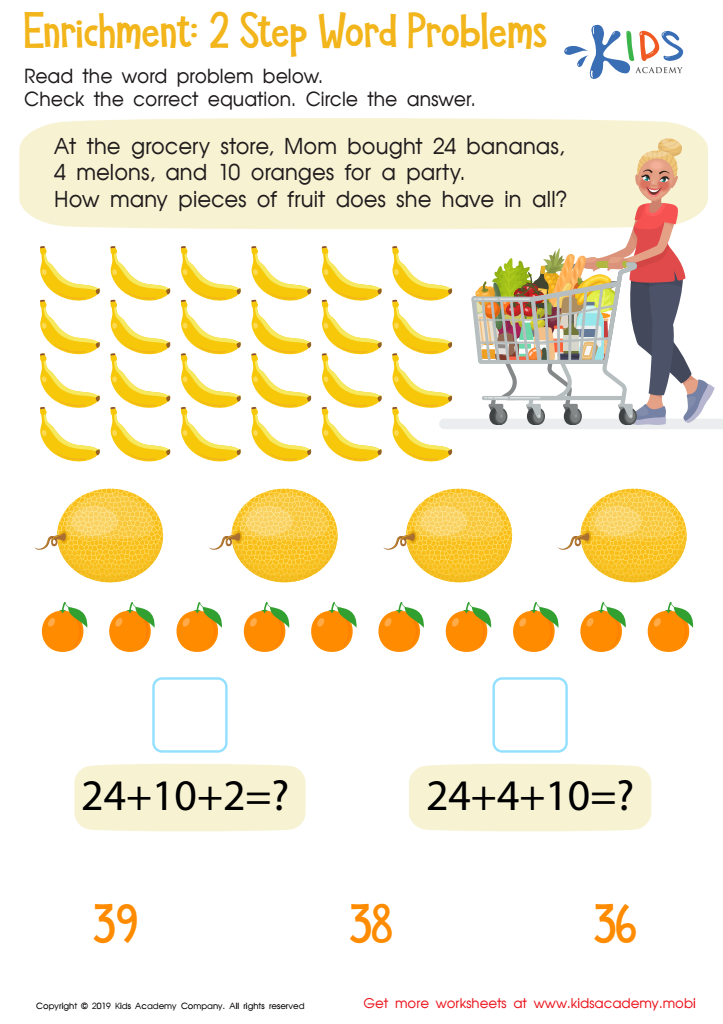
Enrichment -2 Step Word Problems Worksheet
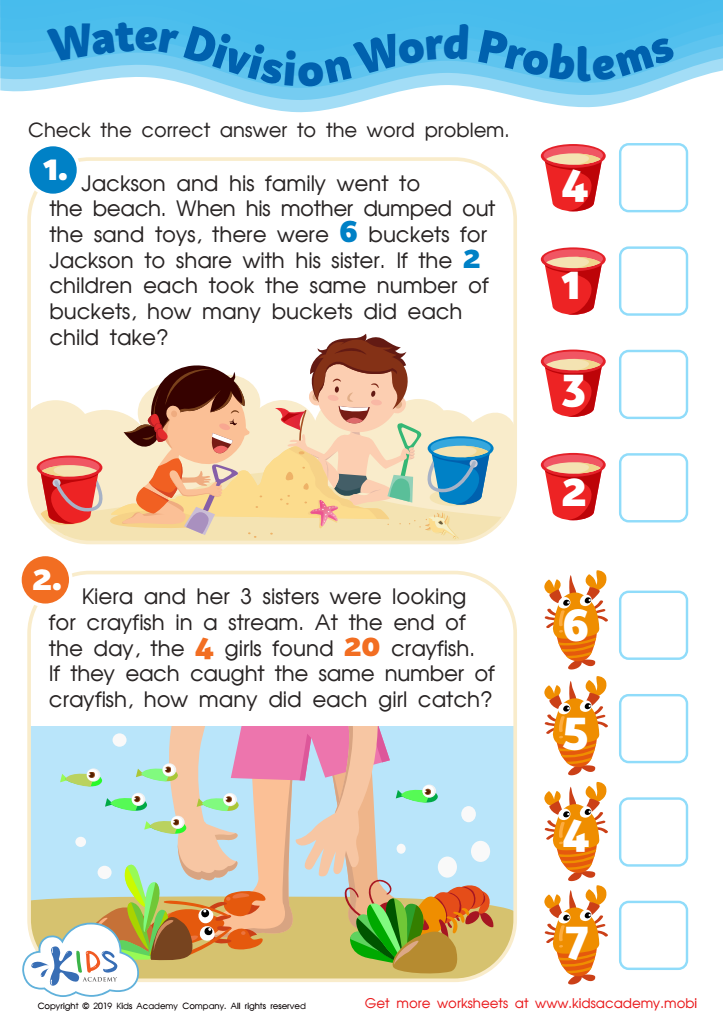
Water Division Word Problems Worksheet
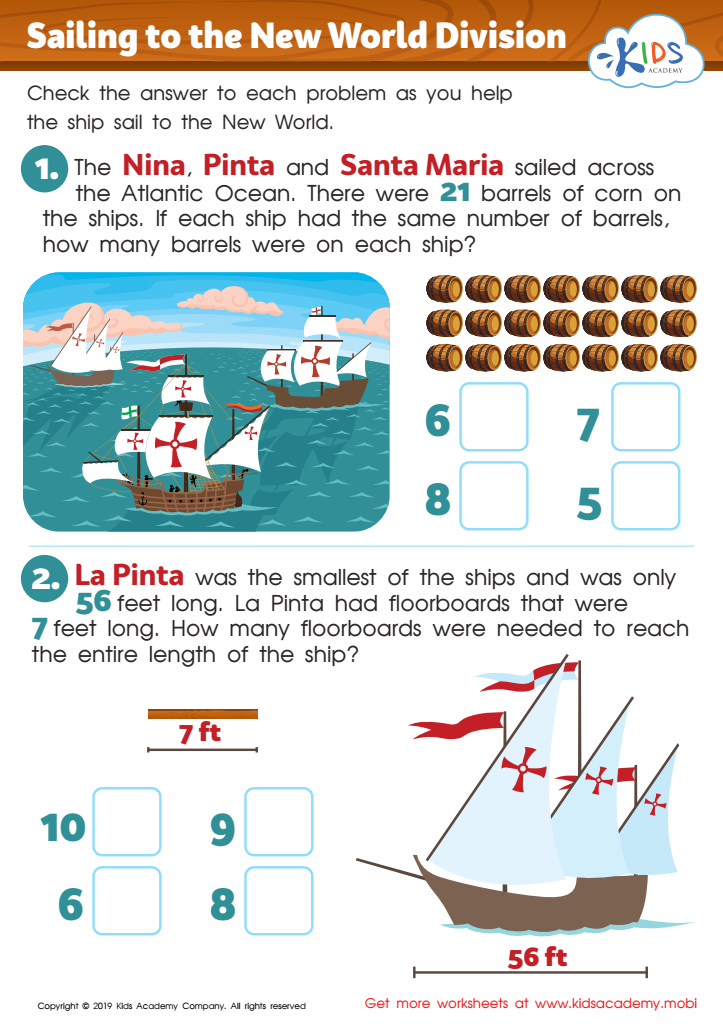
Sailing to the New World Division Worksheet






Parents and teachers should prioritize division practice in math for children aged 5-7 because it establishes a crucial foundation for future arithmetic skills. At this stage, children are learning to make sense of numbers and operations, and division helps them understand the concept of sharing and grouping. By introducing division early, educators can promote critical thinking and problem-solving skills, which are essential for later mathematical concepts.
Moreover, applying division through relatable activities, such as sharing snacks or toys, makes learning more engaging and enjoyable for young children. This real-life context aids retention and creates strong associations between numbers and their practical use. Further, consistent division practice promotes number fluency, which enhances overall confidence in math. Ultimately, an early grasp of division can pave the way to success in more advanced mathematical operations such as multiplication and fractions.
Engaging in division activities also fosters important social and emotional skills as children collaborate and communicate their reasoning with peers. In summary, focusing on division during these formative years not only strengthens academic competencies but also supports holistic development, setting children up for a lifelong appreciation of mathematics.








