Enhancing critical thinking Normal Math Worksheets for Ages 5-7
5 filtered results
-
From - To
Unlock your child's potential with our "Enhancing Critical Thinking Normal Math Worksheets" designed for ages 5-7! Each engaging worksheet promotes problem-solving skills and cognitive reasoning, paving the way for academic success. Our thoughtfully crafted activities encourage young learners to analyze, compare, and draw conclusions while practicing essential math concepts. Perfect for parents and educators alike, these worksheets combine fun with fundamental skills, ensuring a well-rounded educational experience. Whether at home or in the classroom, our resources inspire curiosity and a love for learning, making math an enjoyable adventure. Empower your child’s critical thinking today with our dynamic and interactive math materials!

Identifying Living and Non–living Things Sorting Worksheet
 Assign to My Students
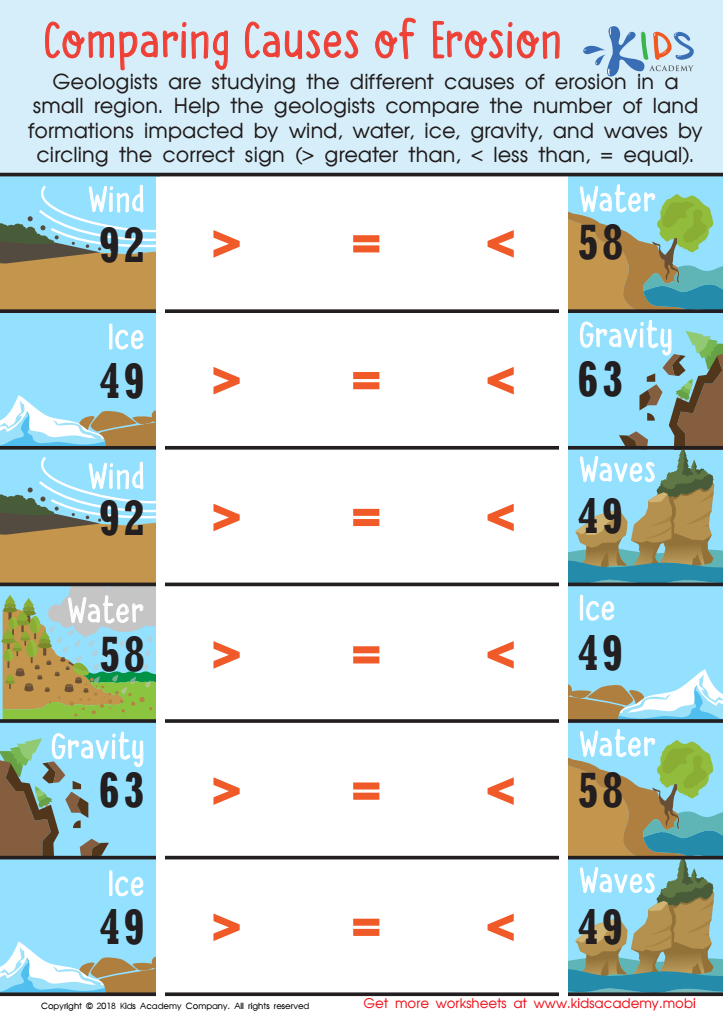
Comparing Causes of Erosion Worksheet
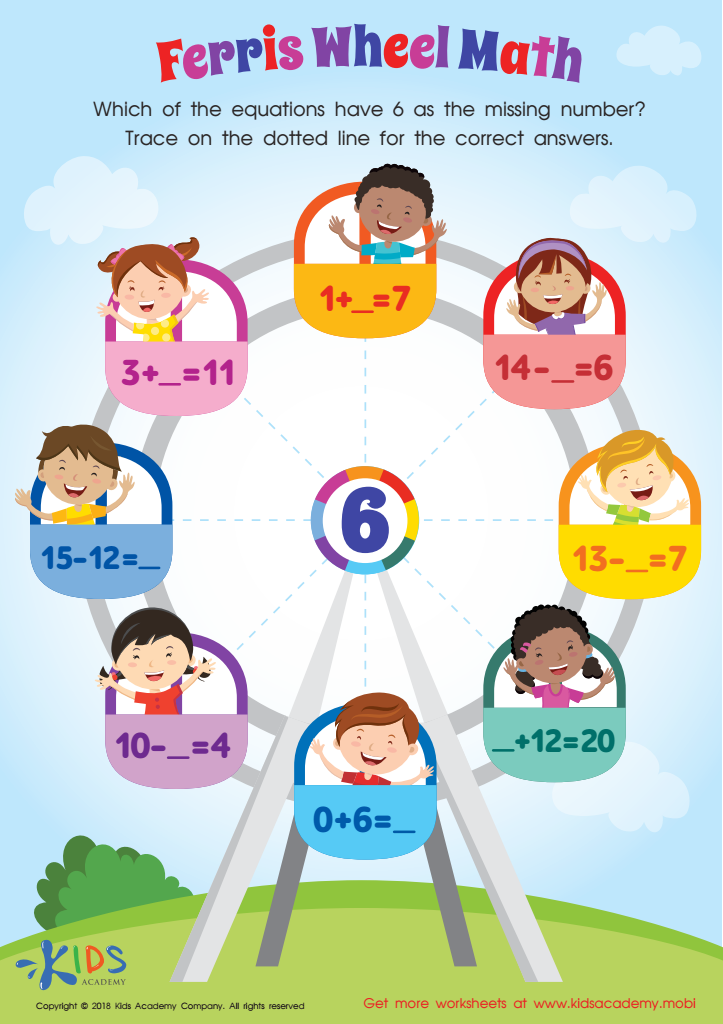
Missing Number: Ferris Wheel Math Worksheet
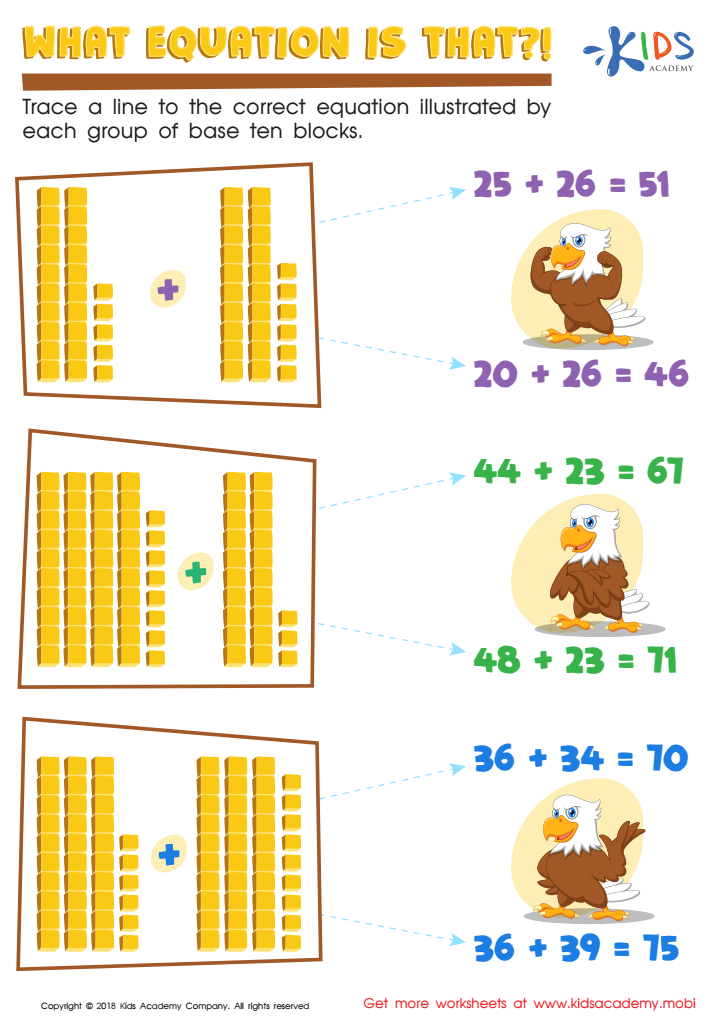
What Equation Is That? Worksheet
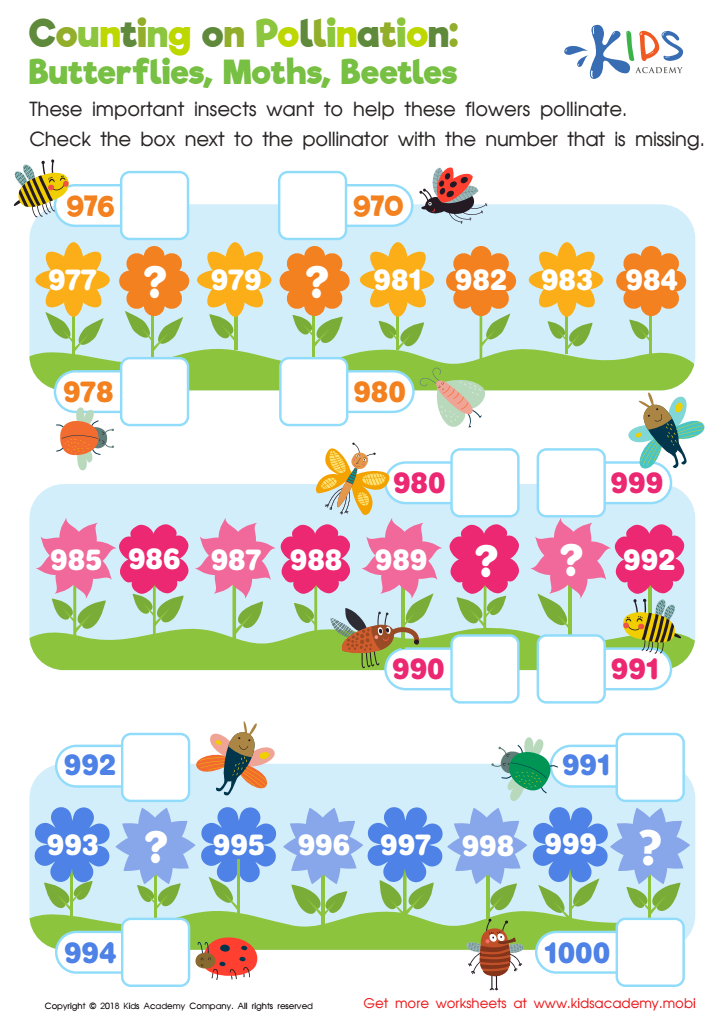
Counting on Pollination: Butterflies, Moths, Beetles Worksheet







Enhancing critical thinking in early mathematics (ages 5-7) is essential for cognitive development and future academic success. At this stage, children are forming their understanding of numbers, patterns, and problem-solving. By emphasizing critical thinking, parents and teachers help children learn to analyze, evaluate, and create solutions rather than simply memorize facts or follow procedures.
Engaging young learners in activities that promote critical thinking—like exploring patterns, making predictions, or solving real-world problems—builds a strong foundation for more complex mathematical concepts later on. When children are encouraged to question why and how, they develop a deeper understanding of mathematical principles, foster independence in learning, and cultivate curiosity.
Moreover, these skills are not limited to math; they transfer to other subjects and everyday situations, equipping children with essential life skills. Fostering critical thinking also instills confidence, as students learn to trust their reasoning processes and become active participants in their learning journey.
Ultimately, investing in critical thinking during these formative years not only enhances mathematical abilities but also nurtures well-rounded, capable individuals prepared to tackle challenges in school and beyond. Encouraging this approach benefits both the child and the broader community, promoting a more analytical and innovative future generation.








