Problem-Solving Skills Normal Math Worksheets for Ages 5-7 - Page 3
50 filtered results
-
From - To
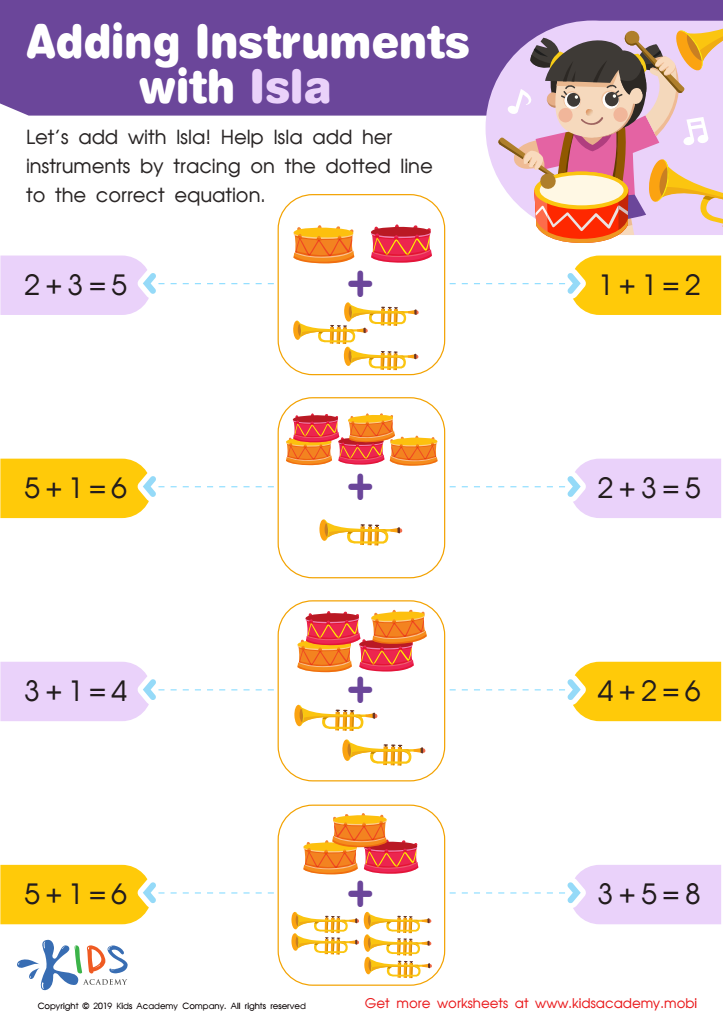
Adding Instruments with Isla Worksheet
 Assign to My Students

Time to Catch the Train Part 2 Worksheet





.jpg)


Problem-solving skills in math for children aged 5-7 are crucial for several reasons that extend beyond the subject itself. First, developing these skills at an early age fosters critical thinking, which is essential for their academic success across various subjects. When children learn to solve math problems, they enhance their abilities to analyze situations, recognize patterns, and make accurate decisions.
Second, problem-solving encourages perseverance. Kids learn that it's okay to make mistakes and that persistence can lead to success. This mindset is important not just for math, but for all challenges they might face in life.
Additionally, early math problem-solving skills are linked to future academic achievements. Studies have shown that proficiency in math at a young age sets a foundation for higher achievement in school and professional life. It's like building a strong educational scaffold that supports all future learning.
Parents and teachers should also consider the joy and confidence that children derive from solving problems on their own. This boosts their self-esteem and eagerness to tackle new learning experiences.
In conclusion, prioritizing problem-solving skills in math for young children equips them with the tools they need for lifelong learning, making them more resilient, confident, and proficient thinkers. Parents and teachers play a vital role in nurturing these abilities, setting the stage for brighter academic and personal futures for their children.








