Reading analog clocks Normal Math Worksheets for Ages 5-7
3 filtered results
-
From - To
Introducing our "Reading Analog Clocks Normal Math Worksheets" designed specifically for children ages 5-7! These engaging worksheets help young learners master the essentials of telling time on analog clocks. Through vibrant visuals and fun exercises, children will build their confidence in recognizing hours, half-hours, and quarter hours. Each worksheet is tailored to strengthen clock-reading skills while providing an enjoyable learning experience. Perfect for classroom or home use, these resources promote essential early math skills. Help your child take the next step in their educational journey with our user-friendly and effective worksheets that turn learning to tell time into an exciting adventure!
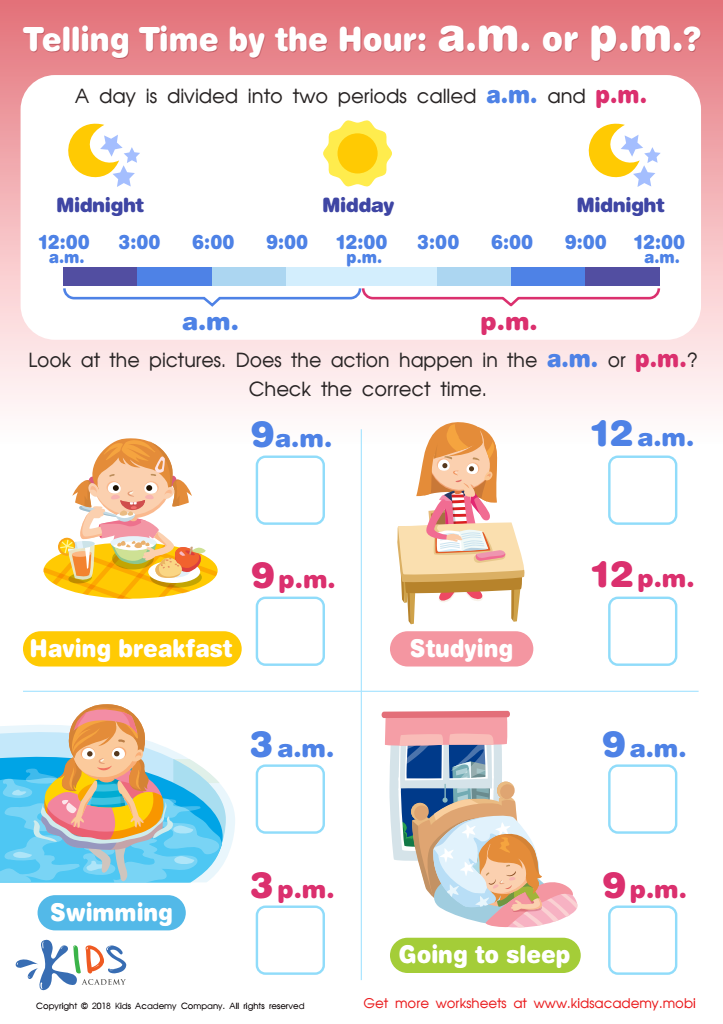
Tilling Time by the Hour: a.m. or p.m.? Worksheet
 Assign to My Students
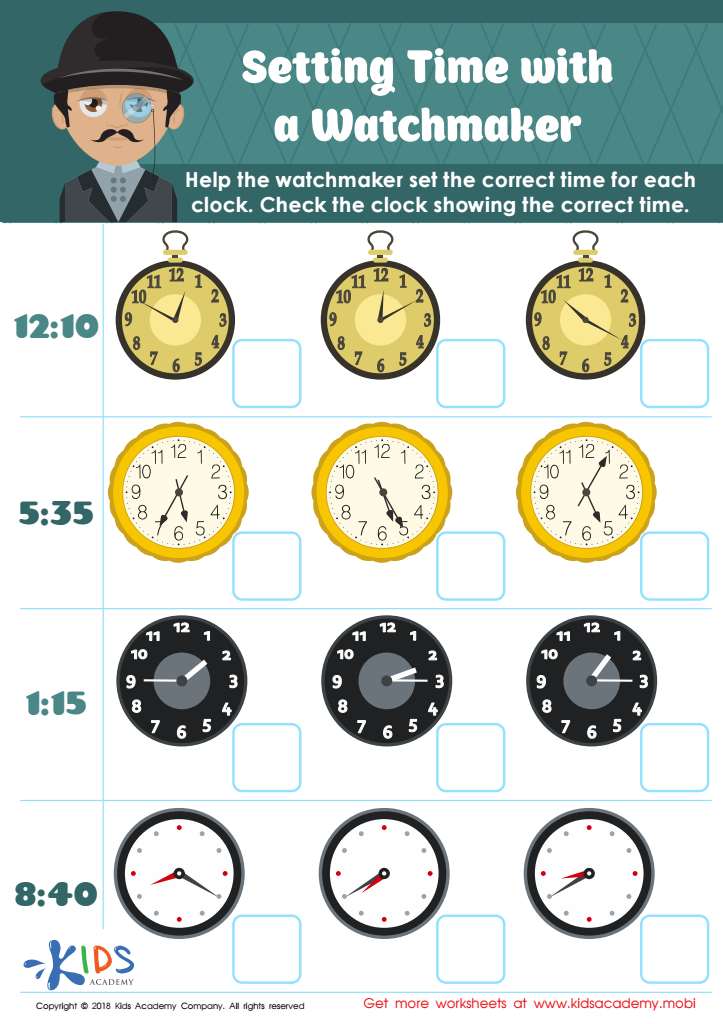
Setting Time with Watchmaker Worksheet
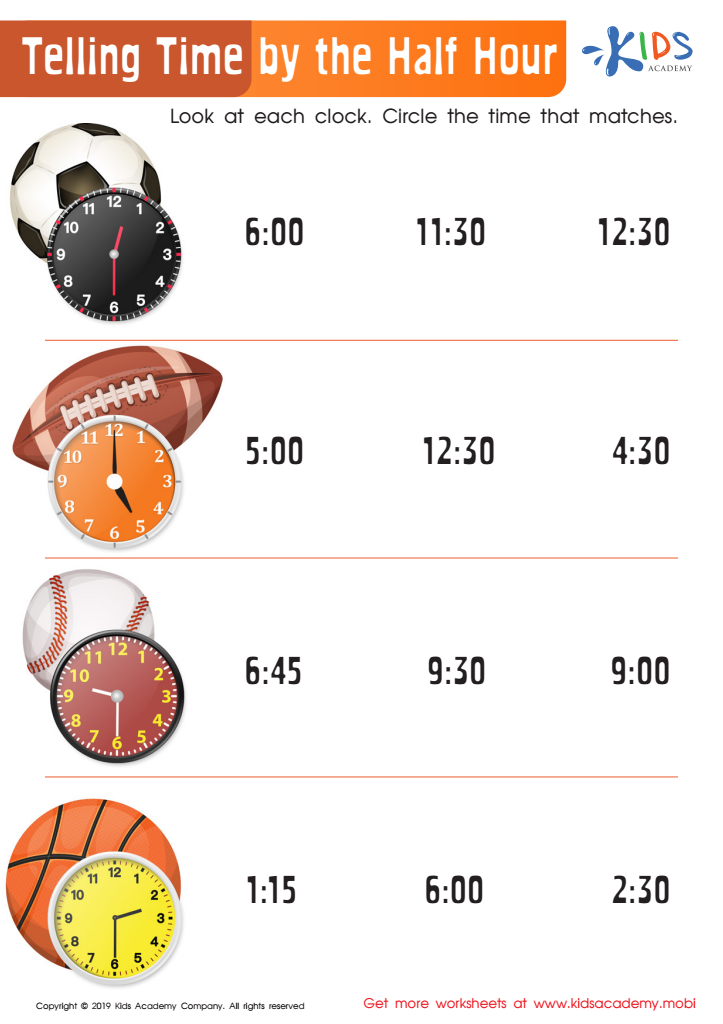
Telling Time by the Half Hour Worksheet








Understanding how to read analog clocks is an essential skill for children aged 5-7, influencing more than just their ability to tell time. For parents and teachers, fostering this skill encourages a deeper grasp of numerical concepts and enhances cognitive development. Reading clocks involves pattern recognition and spatial awareness, helping children improve their mathematical thinking.
Moreover, learning to read analog clocks also contributes to a sense of independence and responsibility. Children who can tell time can better manage their daily schedules, understand routines, and navigate activities with confidence. Developing these skills encourages self-discipline as they learn to allocate time for play, study, and rest appropriately.
Additionally, teaching children about analog clocks fosters family discussions about time, day-to-day activities, and planning. Parents and teachers can engage children in practical-learning experiences, reinforcing time concepts through fun activities.
Lastly, with technology dominating our lives, the ability to interpret analog clocks sets a foundation for critical life skills. As many public clocks still use analog displays, ensuring children grasp this concept ensures they remain adept and adaptable in various situations. For these reasons, teaching reading analog clocks is integral to holistic education for young learners.








