Spelling practice Normal Math Worksheets for Ages 5-7
3 filtered results
-
From - To
Strengthen your child's early math and literacy skills with our engaging Spelling Practice Normal Math Worksheets designed for ages 5-7! These worksheets cleverly blend spelling and math exercises, providing a fun, educational experience. Young learners will enjoy tasks that boost their spelling capabilities while simultaneously enhancing their understanding of basic math concepts like counting, addition, and subtraction. Our carefully crafted worksheets ensure that kids have a balanced developmental approach, promoting both language arts and mathematical thinking. Perfect for homeschoolers, classroom activities, or extra practice, these resources support a well-rounded early education. Download now to give your child a head start!
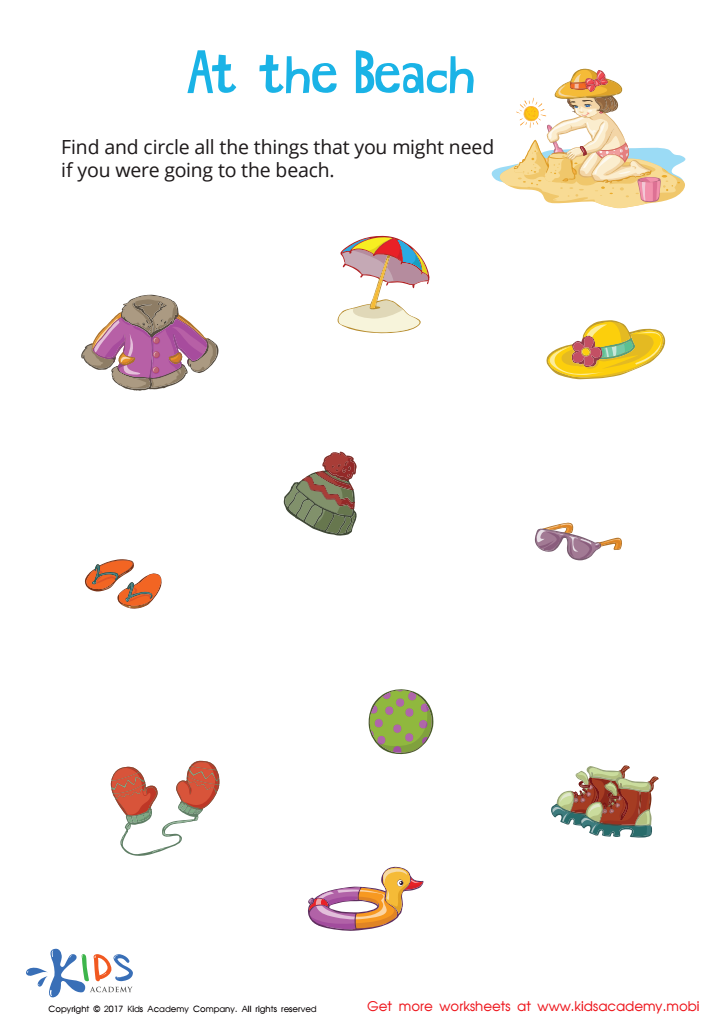
At the Beach Sorting Worksheet
 Assign to My Students
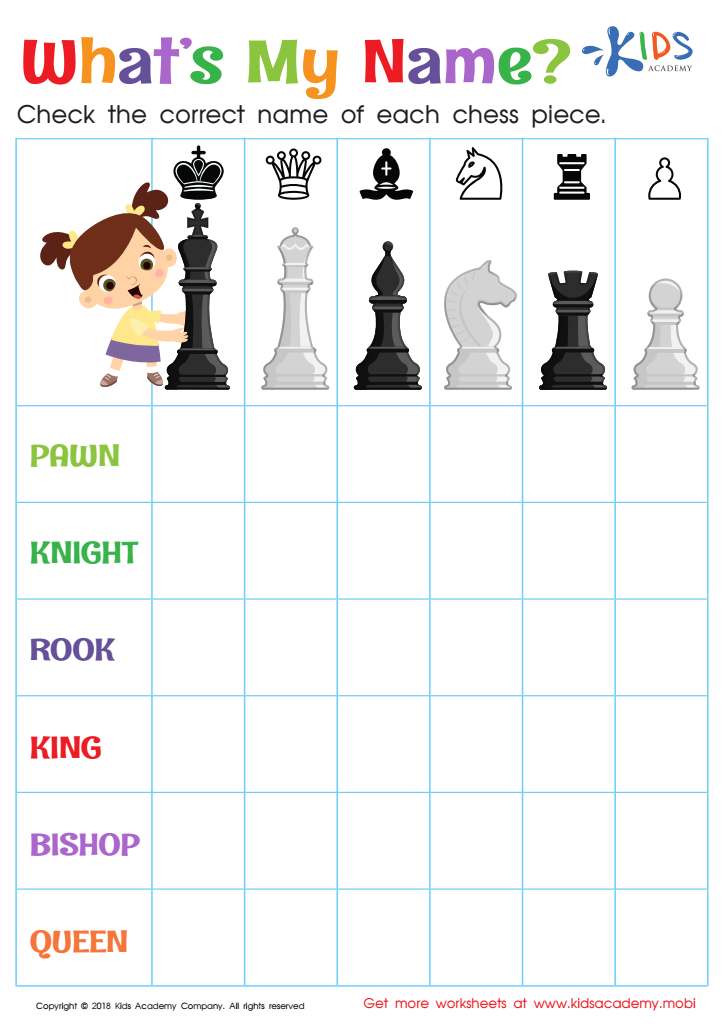
What's My Name? Worksheet
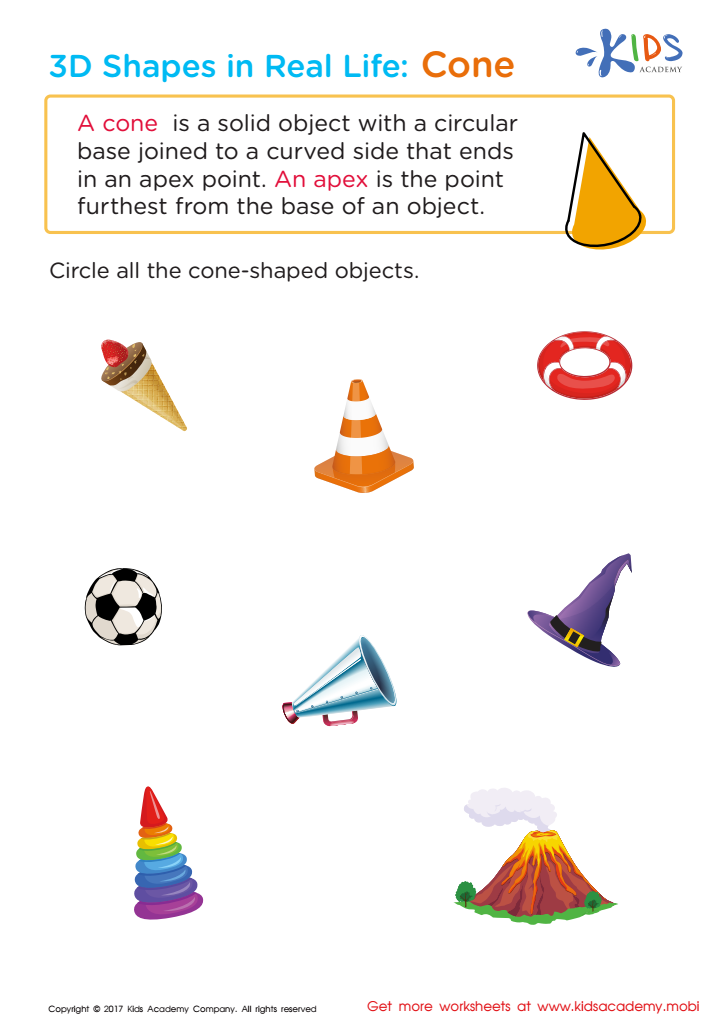
Shapes in Real Life: Cone Worksheet






Spelling practice and basic math skills form foundational elements in a child's education, particularly for ages 5-7. During this critical developmental period, young minds absorb new knowledge rapidly, building the skills necessary for future learning success.
Spelling practice helps children understand the relationship between letters and sounds, improving their reading and writing abilities. By mastering the basics of spelling, children enhance their vocabulary, comprehension, and communication skills. These abilities are crucial as they lay the groundwork for more complex literacy skills and foster a lifelong love for reading.
Similarly, normal math skills, like counting, addition, and subtraction, are fundamental for cognitive development. Math practice at this age sharpens logical thinking, problem-solving abilities, and helps children recognize patterns and relationships in numbers. These skills are not only essential for advanced math but are also applicable to everyday situations, boosting a child's confidence in their ability to navigate the world.
Incorporating consistent spelling and math practice into a child's routine provides a strong educational foundation. Parents and teachers who prioritize these elements contribute to a comprehensive learning experience, better preparing children for academic and real-world challenges. Thus, investment in these fundamental skills is essential for a child’s overall intellectual growth and future success.








