Subtraction skills Normal Math Worksheets for Ages 5-7
6 filtered results
-
From - To
Discover our expertly designed subtraction skills worksheets tailored specifically for ages 5-7. At Kids Academy, we understand the importance of building a strong mathematical foundation early on. Our engaging worksheets focus on fundamental subtraction concepts, helping young learners develop confidence and proficiency. Each worksheet features colorful illustrations, interactive activities, and age-appropriate problems that make learning subtraction fun and effective. Ideal for classroom use or home practice, these worksheets support educators and parents in guiding children through their early math journey. Start today and watch your child's subtraction skills flourish with our enjoyable and educational resources!
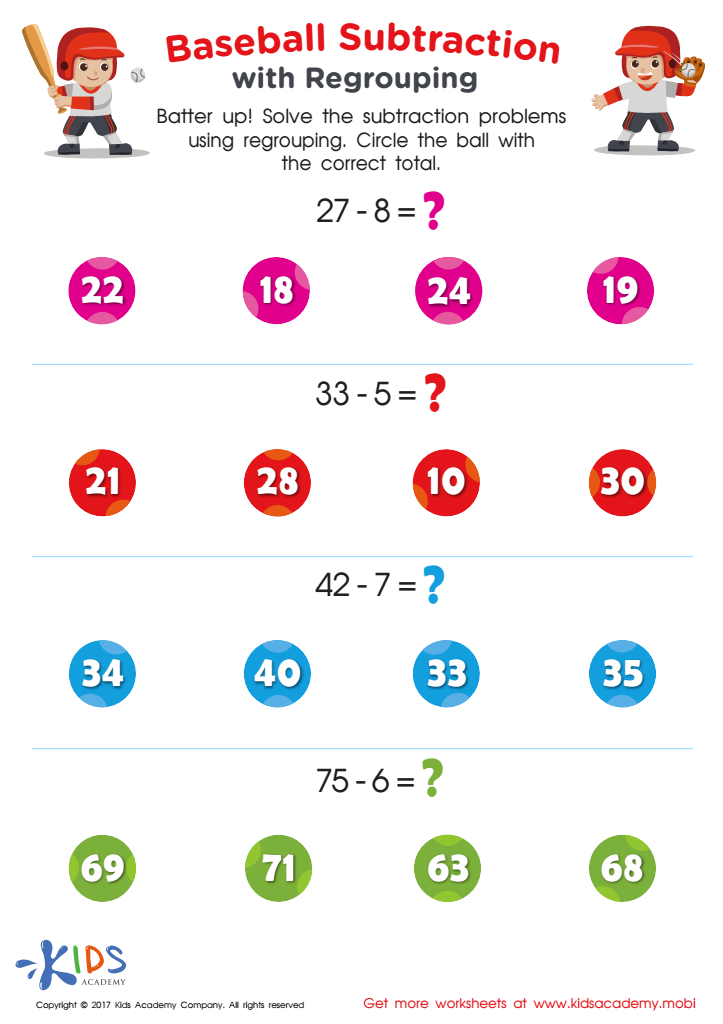
Subtraction With Regrouping for 2nd Grade Worksheet
 Assign to My Students
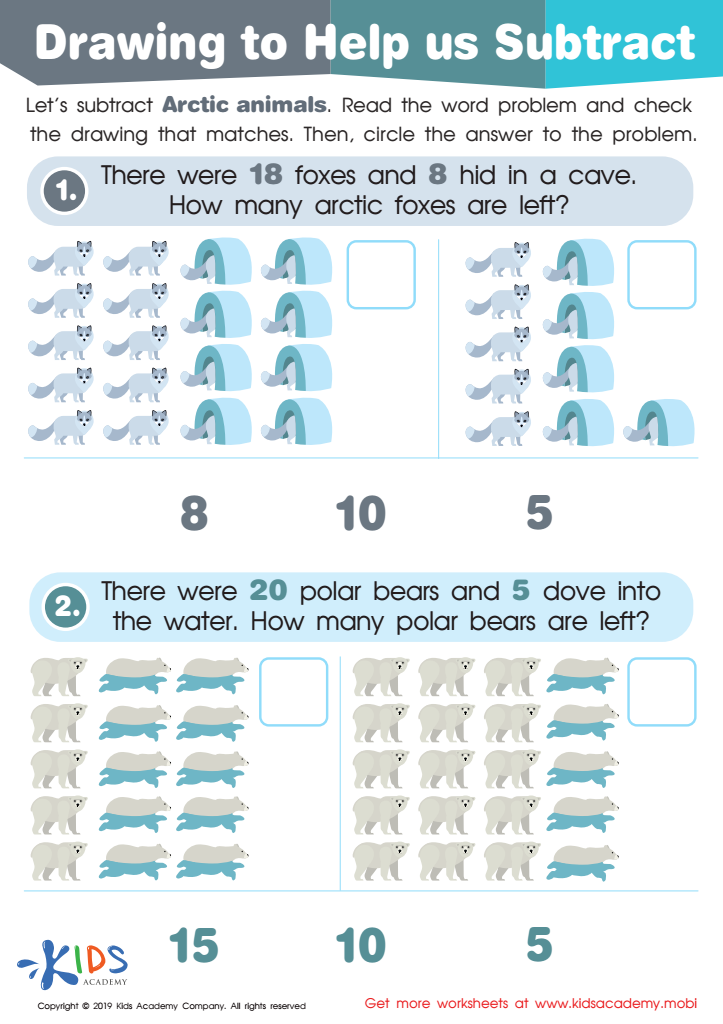
Drawing to Help Us Subtract Worksheet
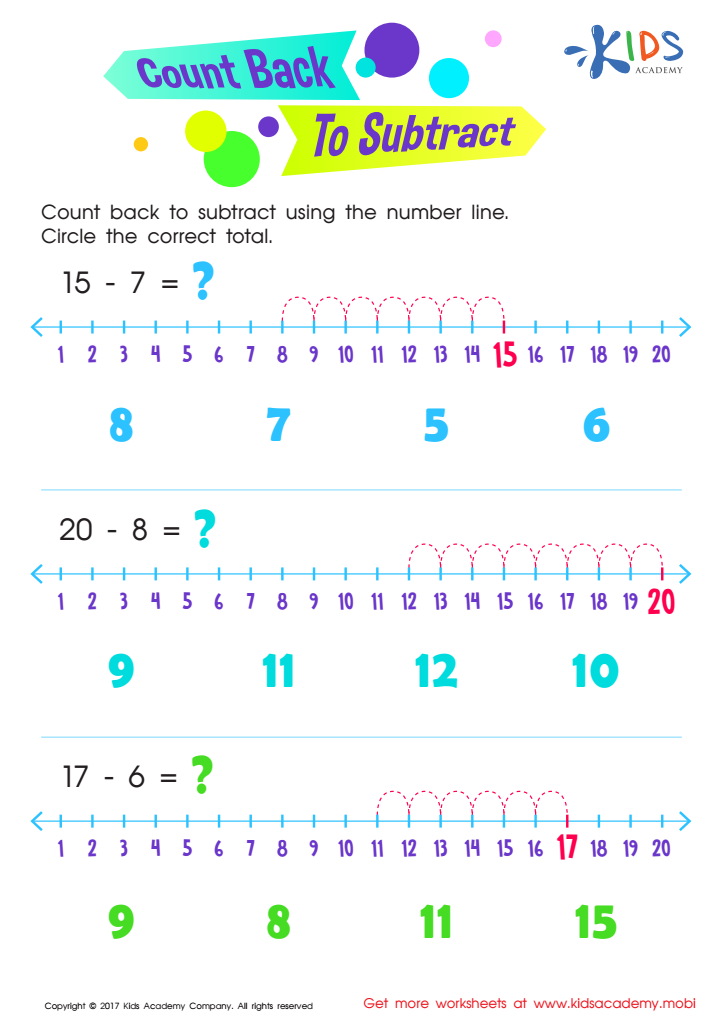
Count Back to Subtract Substraction Worksheet
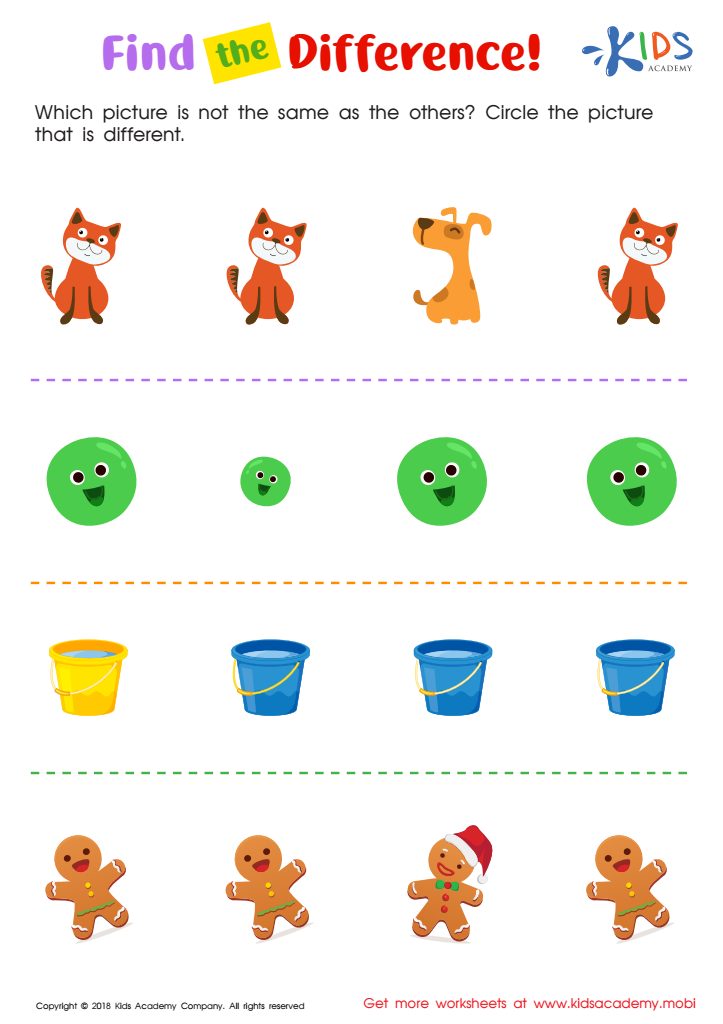
Find the Difference Worksheet
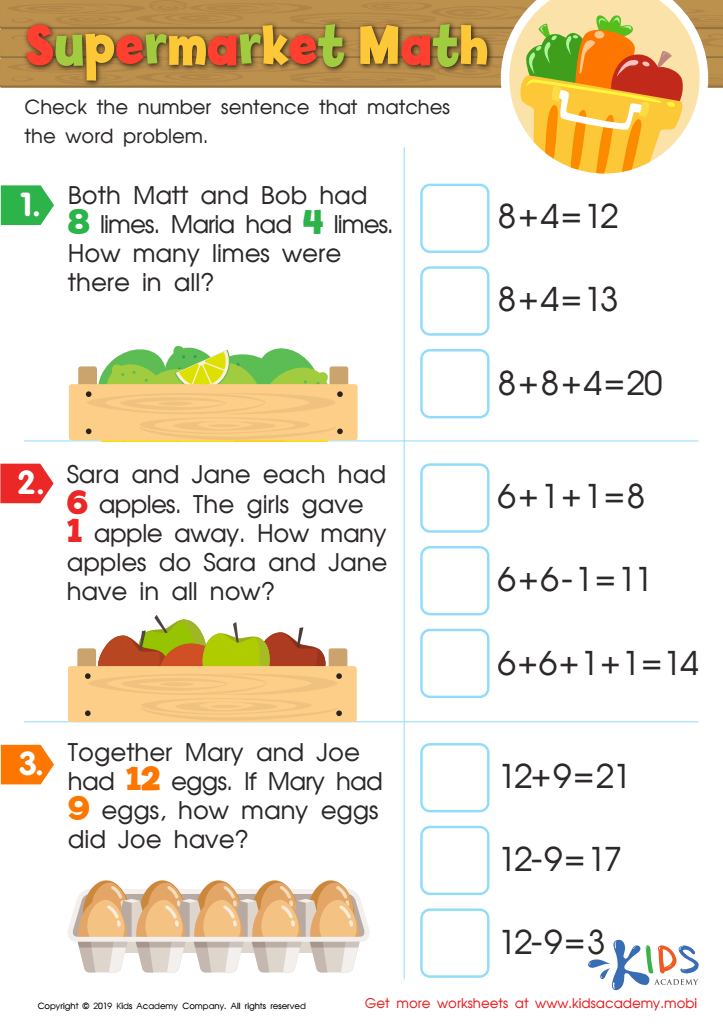
Supermarket Math Worksheet
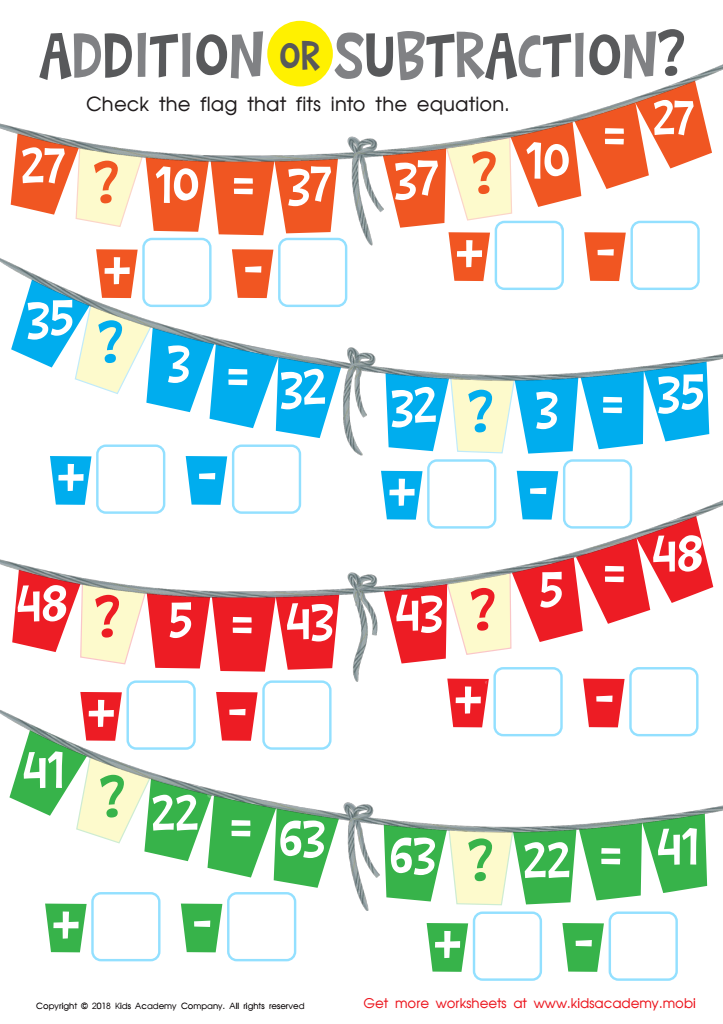
Addition or Subtraction? Worksheet








Subtraction skills are fundamental for children aged 5-7 because they lay the groundwork for more advanced math concepts and everyday problem-solving. During these early years, developing a solid understanding of subtraction helps children build strong numerical literacy. This foundational skill is crucial for mastering other mathematical operations, such as multiplication and division, which they will encounter in later years.
For parents and teachers, fostering subtraction skills means supporting cognitive development and enhancing logical thinking. Children use subtraction concepts to compare quantities, determine differences, and understand the relationship between numbers. These mental exercises boost their analytical abilities and improve overall academic performance, not just in math but across various subjects that require logical reasoning and critical thinking.
Subtraction skills also have practical applications beyond the classroom. Young children often engage in situations requiring subtraction, such as sharing treats, determining time left for activities, or figuring out how many toys are missing. Proficiency in subtraction helps them navigate these everyday scenarios with confidence and independence.
Therefore, prioritizing subtraction skills in early education helps children develop a comprehensive understanding of math, facilitates advanced learning, and equips them with essential life skills. By doing so, parents and teachers set children on a path to academic success and lifelong problem-solving abilities.








