Understanding directions Normal Math Worksheets for Ages 5-7
3 filtered results
-
From - To
Welcome to our "Understanding Directions" math worksheets designed specifically for children aged 5 to 7. These engaging worksheets aim to enhance young learners' ability to follow instructions and comprehend spatial concepts. Through fun activities, kids will practice understanding various directional terms, such as left, right, up, and down, while developing foundational math skills. Our interactive resources make learning enjoyable, creating a confident learner in both math and everyday situation navigation. Perfect for teachers and parents, our printable worksheets offer a fantastic way to promote critical thinking and problem-solving. Download now and help your child become directionally savvy!
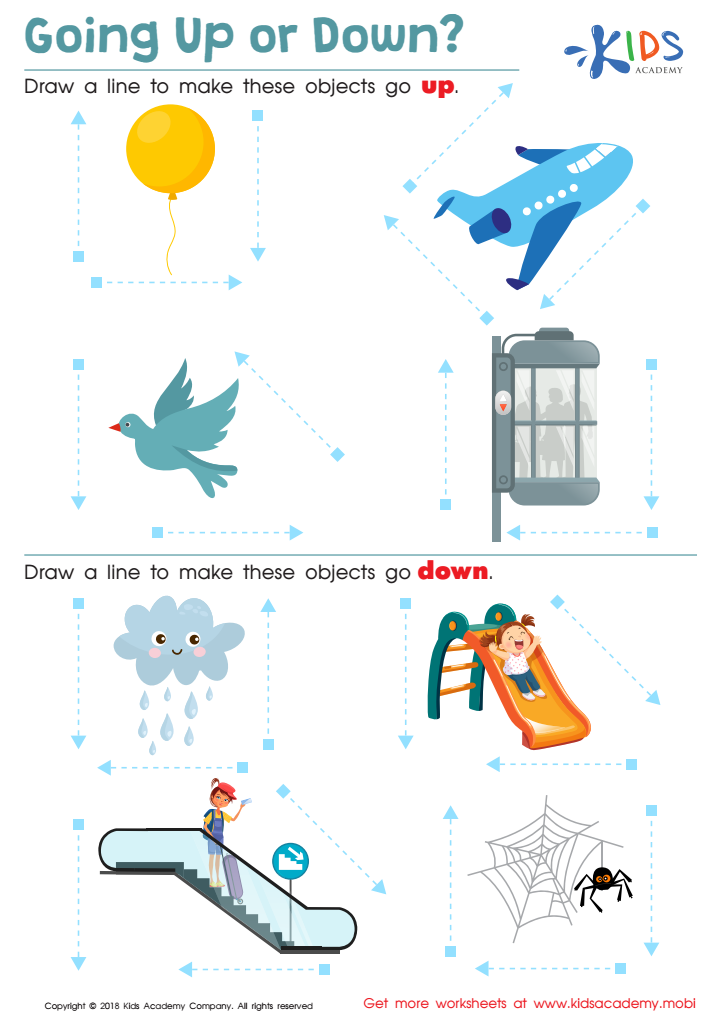
Going up or Down? Worksheet
 Assign to My Students
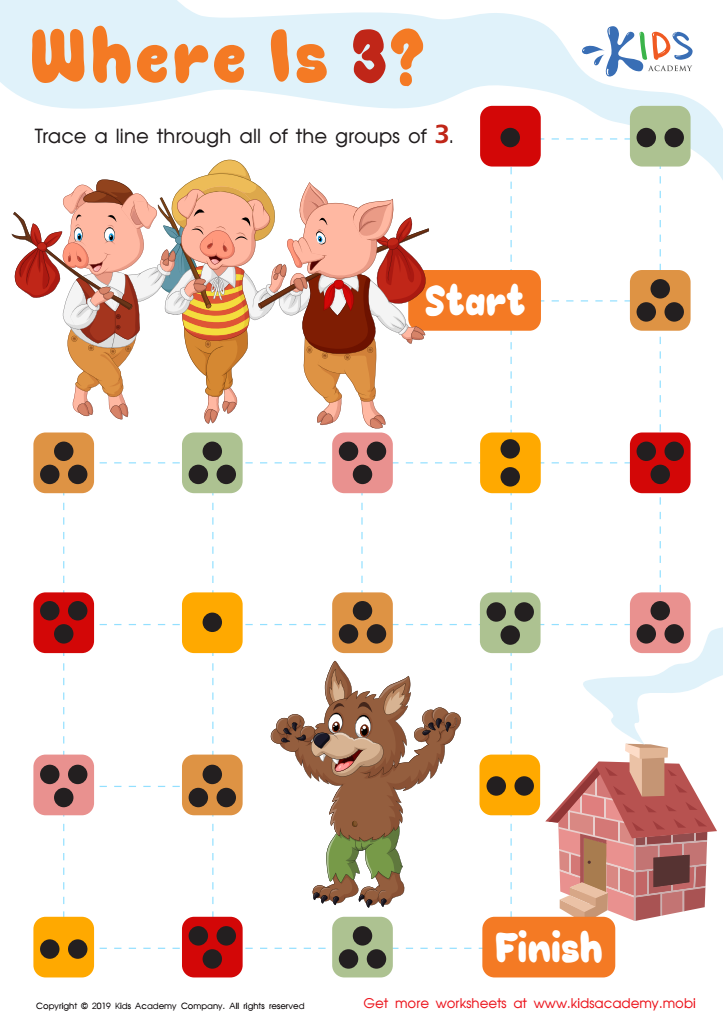
Where Is 3? Worksheet
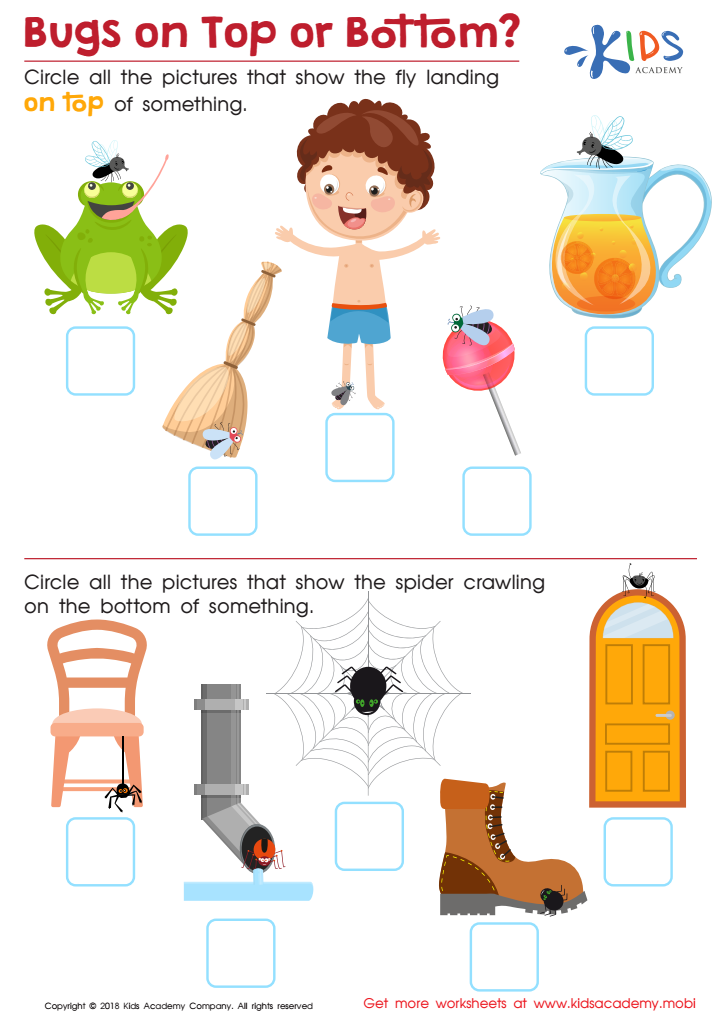
Bugs on Top or Bottom? Worksheet








Understanding directions in normal math is crucial for children aged 5-7, as it lays the foundation for their mathematical skills and overall cognitive development. At this age, children are not only learning how to perform basic operations like addition and subtraction but are also enhancing their ability to follow instructions. Math instruction often involves multiple-step processes that require students to listen, interpret, and execute tasks based on verbal or written directions.
Parents and teachers should care about developing this skill because it directly impacts a child's learning experience. When children comprehend and follow directions effectively, they are more likely to engage meaningfully with math tasks, leading to deeper understanding and better retention of concepts. Additionally, these skills promote critical thinking and problem-solving abilities, which are vital in all aspects of education and life. Encouraging children to actively understand and execute mathematical directions fosters independence, boosts confidence, and prepares them for more advanced subjects in the future. Pairing math instruction with clear, structured directions also helps create a supportive learning environment, enabling students to ask questions and seek clarification, which is essential for their academic growth. Ultimately, effective direction-following in math aids children in becoming proficient learners in various domains.








