Identifying story elements Normal Reading Worksheets for Ages 5-7
3 filtered results
-
From - To
Unlock your child's reading potential with our "Identifying Story Elements Normal Reading Worksheets" designed for ages 5-7. These engaging worksheets help young learners recognize key story elements such as characters, settings, and plot. Through fun activities and colorful illustrations, children will develop essential comprehension skills while building a strong foundation for reading success. Our user-friendly resources cater to various learning styles, ensuring that each child progresses at their own pace. Perfect for home or classroom use, these worksheets make learning enjoyable and interactive. Start your child's reading journey today and watch them thrive as they explore the world of stories!
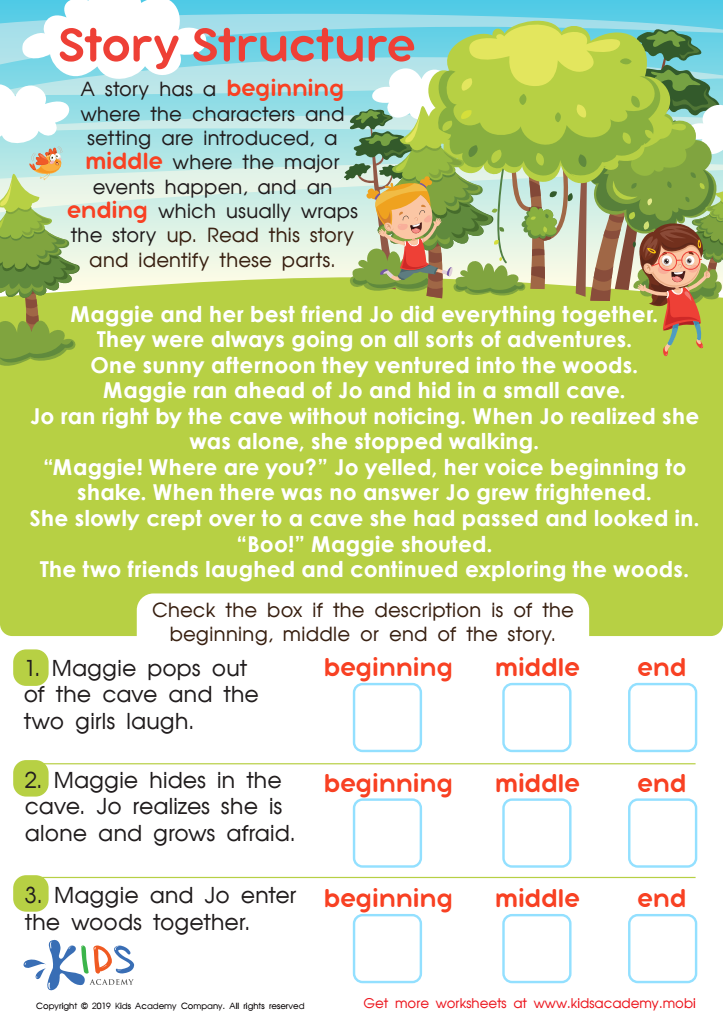
Story Structure Worksheet
 Assign to My Students
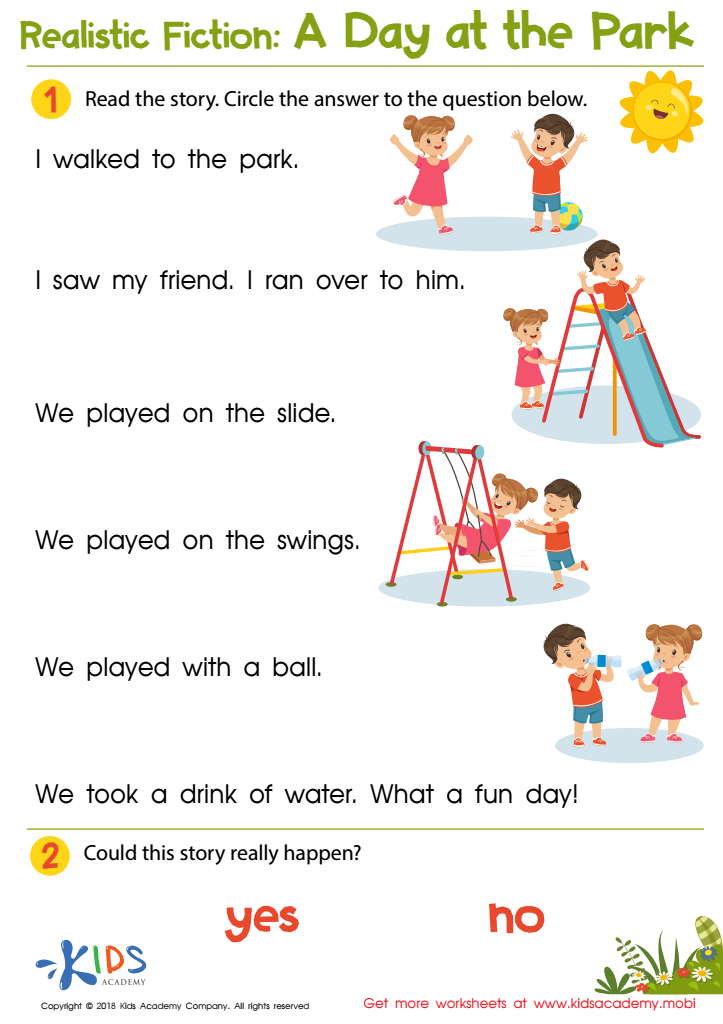
A Day at the Park Worksheet
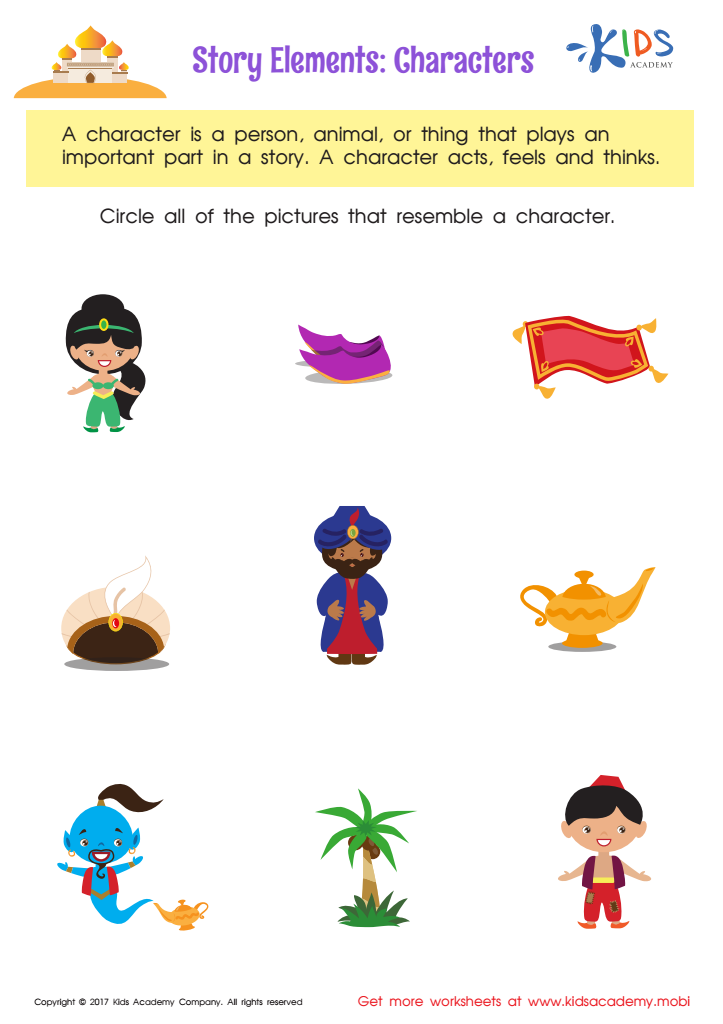
Story Elements Printable







Identifying story elements is crucial for young readers aged 5-7, and it's important for parents and teachers to understand its significance. Story elements include characters, setting, plot, theme, and resolution, which form the foundation of comprehension and narrative structure.
First, recognizing these elements enhances a child's understanding of the story, allowing them to make predictions, ask questions, and engage more deeply with the text. When children can identify characters and their motives, they become more empathetic readers, connecting with different perspectives.
Additionally, understanding the setting helps children visualize and mentally construct the world of the story, which improves their visualization skills and imagination. Furthermore, grasping the plot and sequence of events fosters logical thinking, as children begin to understand causality and the flow of actions within narratives.
These skills extend beyond reading, encouraging critical thinking, creativity, and effective communication. By familiarizing children with story elements, parents and teachers equip them with tools that enrich their language development, enhance their literacy skills, and cultivate a lifelong love for reading. Ultimately, a strong grasp of story elements lays the groundwork for academic success and encourages a broader engagement with literature.








