Rhyming skills Normal Reading Worksheets for Ages 5-7
3 filtered results
-
From - To
Enhance your child's literacy with our engaging Rhyming Skills Worksheets, designed for ages 5-7! These printable resources help young learners recognize and produce rhymes, an essential phonemic awareness skill. Each worksheet is filled with fun activities that encourage creative thinking while developing critical reading abilities. From matching rhyming words to completing fun sentences, your kids will enjoy a playful approach to learning. Perfect for home or classroom use, our worksheets promote independent learning and foster a love for reading. Give your child the tools they need to succeed in literacy with our carefully crafted rhyming skills resources. Download today!
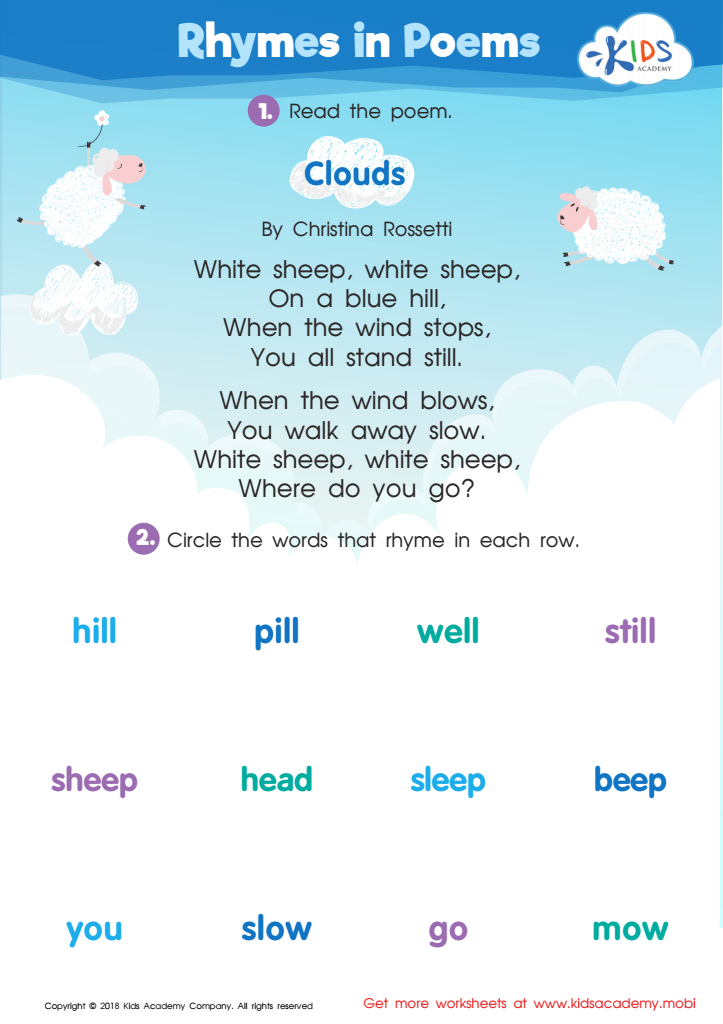
Rhymes in Poems Worksheet
 Assign to My Students
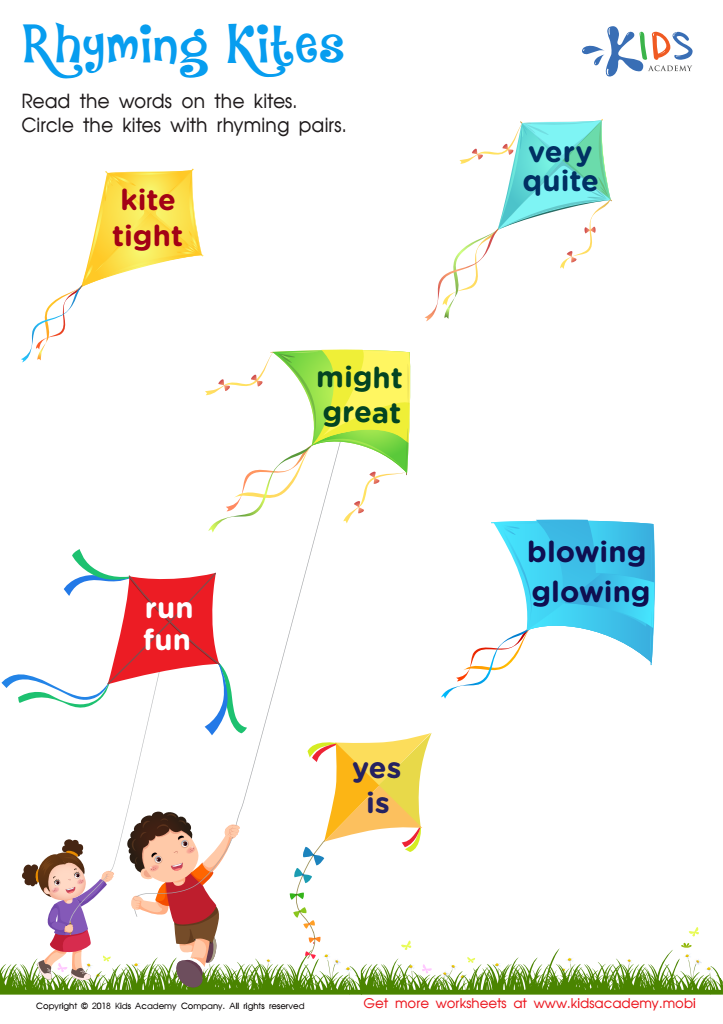
Rhyming Kites Worksheet
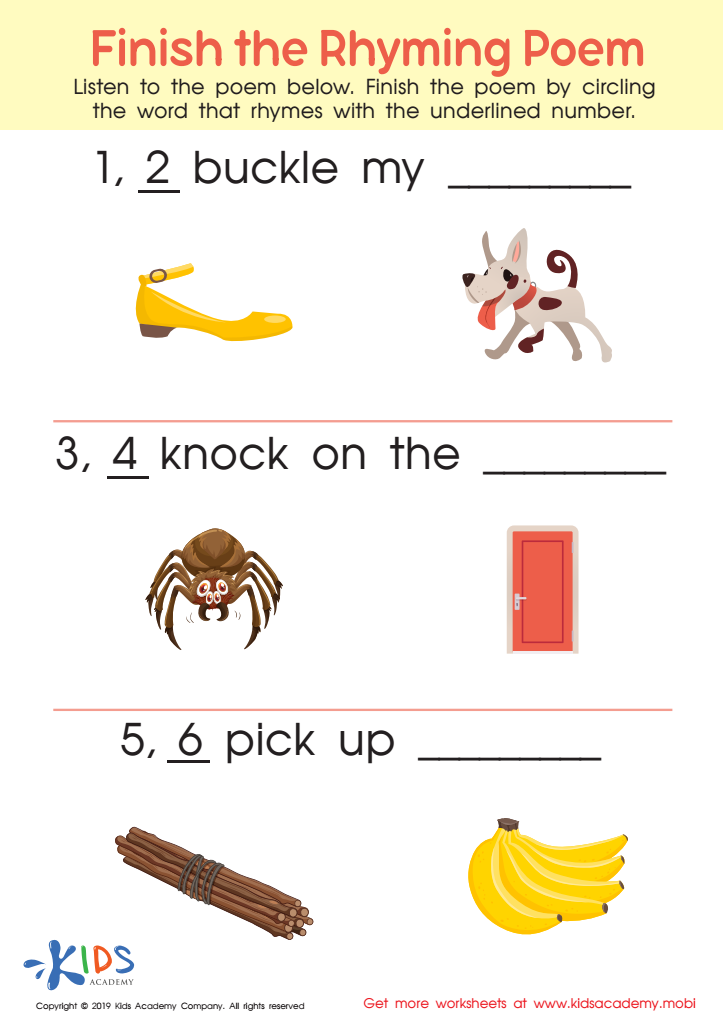
Finish Rhyming Poem Worksheet



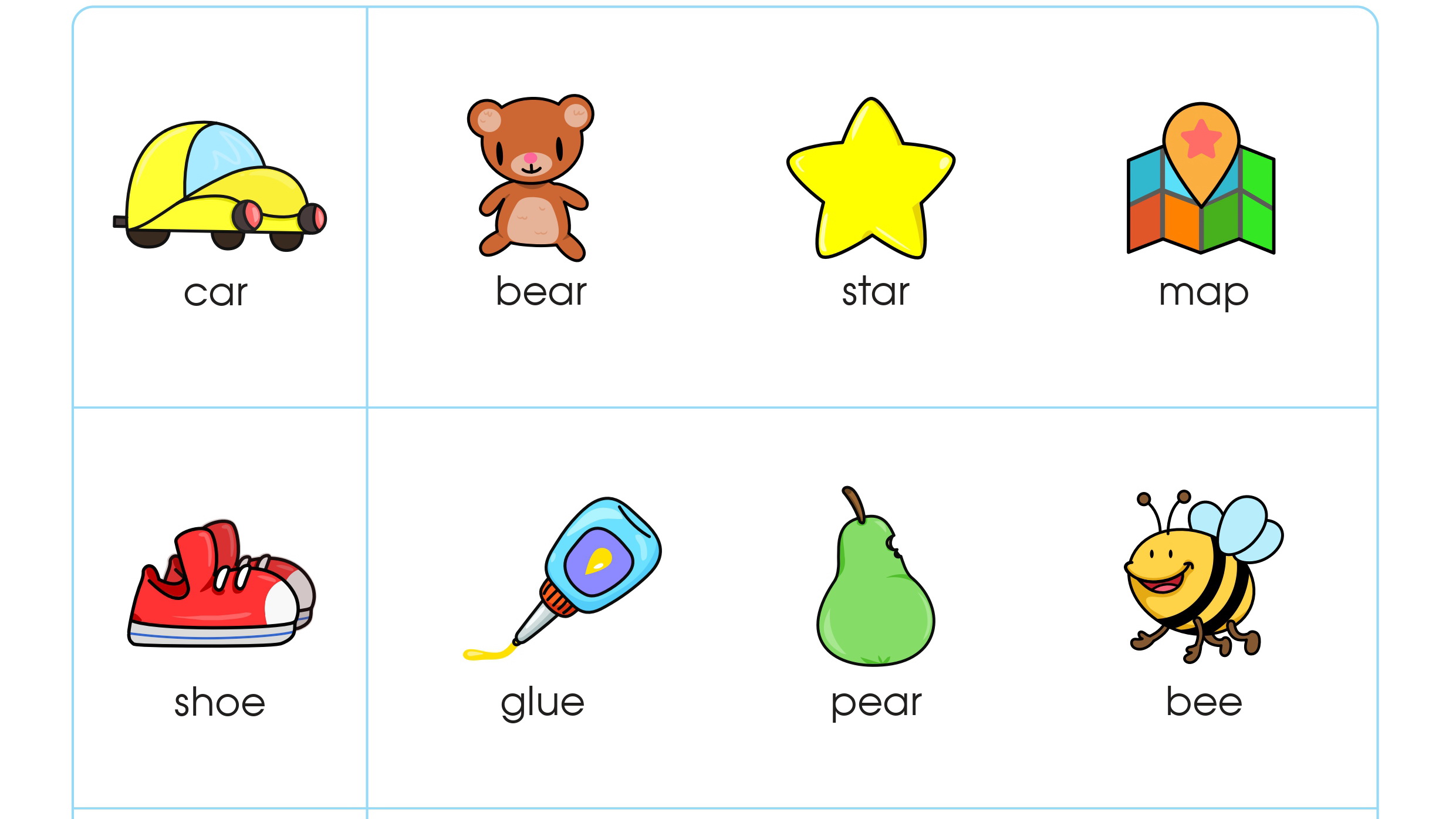




Rhyming skills are essential for children aged 5-7 as they lay the foundation for strong reading and writing abilities. When children recognize and produce rhymes, they are developing phonemic awareness, which is crucial for reading fluency. Phonemic awareness involves understanding that words are made up of sounds, and being able to manipulate these sounds helps children decode new words and spell accurately.
Moreover, rhyming contributes to vocabulary development. Exposure to rhyming words expands a child's understanding of language, as they learn to associate sounds with meanings, enabling them to use words more creatively in their speech and writing.
Additionally, rhyming activities foster engagement and enjoyment in learning. Singing songs, reading nursery rhymes, or playing rhyming games makes reading fun, encouraging children to practice more willingly. This engagement aids memory retention and boosts confidence in their reading skills.
Lastly, strong rhyming skills are linked to improved comprehension. Children who are adept at recognizing patterns in sounds can anticipate and understand the flow of language, enhancing their overall reading experience. Thus, nurturing rhyming skills is critical for parents and educators invested in a child’s literacy journey.








