Analytical skills Normal Reading Fiction Worksheets for Ages 5-7
5 filtered results
-
From - To
Discover our Analytical Skills Normal Reading Fiction Worksheets tailored for ages 5-7. These engaging worksheets are designed to help young learners develop critical thinking and comprehension skills through captivating fictional stories. Each worksheet presents fun exercises that encourage kids to analyze plots, characters, settings, and events, enhancing their ability to understand and interpret text. Our well-structured, age-appropriate activities foster a love for reading while building foundational analytical skills crucial for academic growth. Perfect for home or classroom use, these worksheets are an excellent resource for nurturing young readers' intellectual curiosity and enthusiasm for literary exploration.
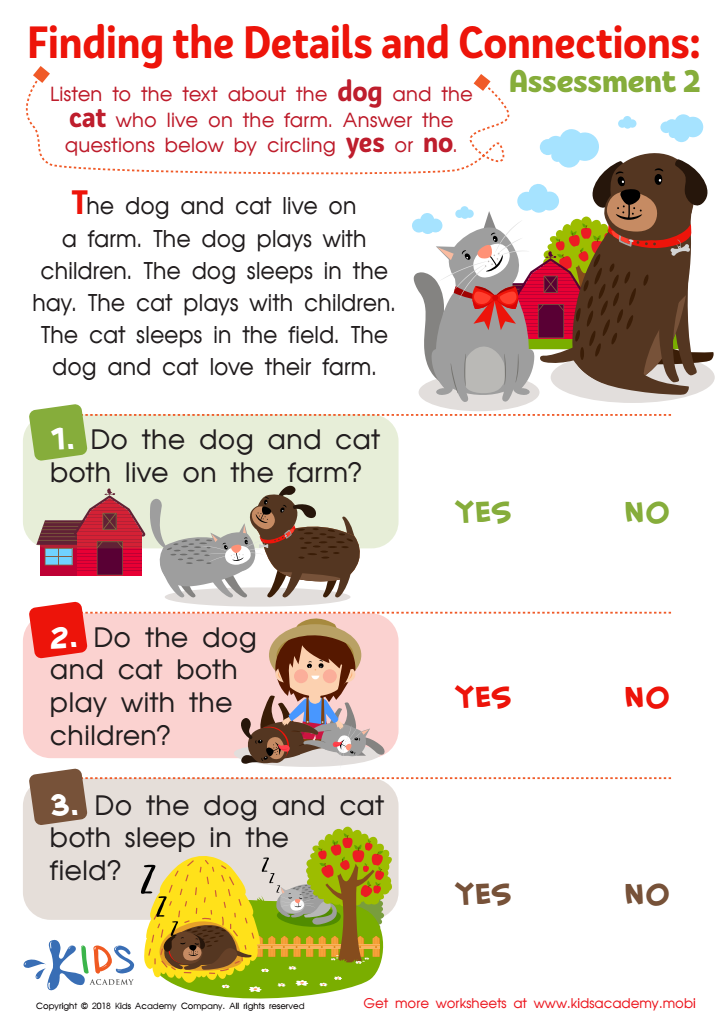
Finding the Details and Connections: Assessment 2 Worksheet
 Assign to My Students
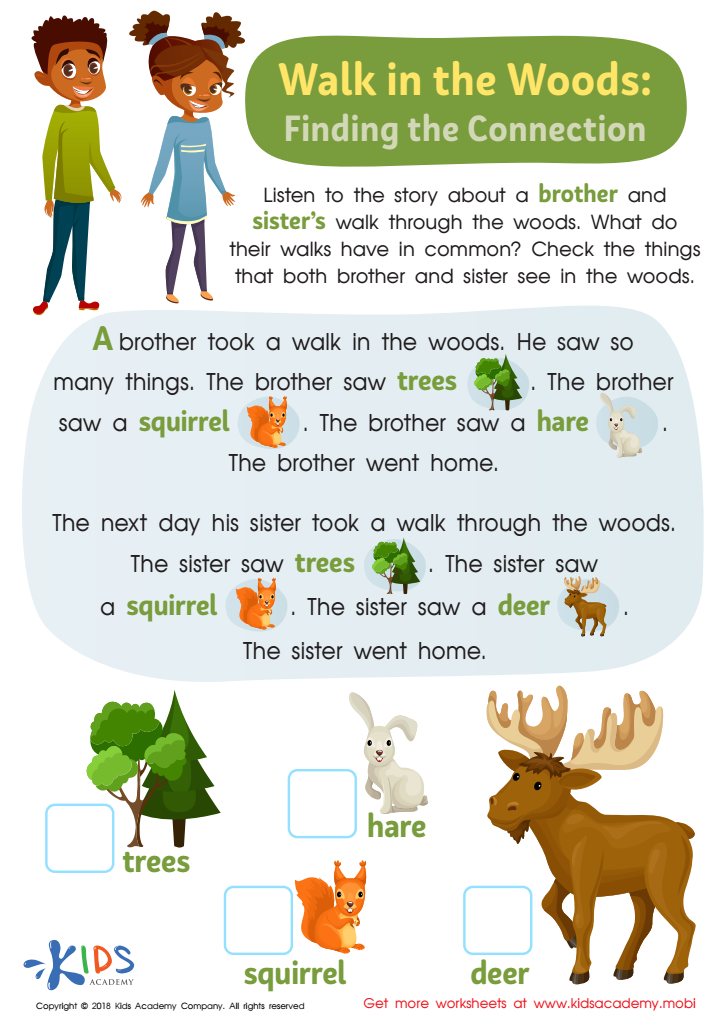
Walk In the Woods: Finding Connections Worksheet
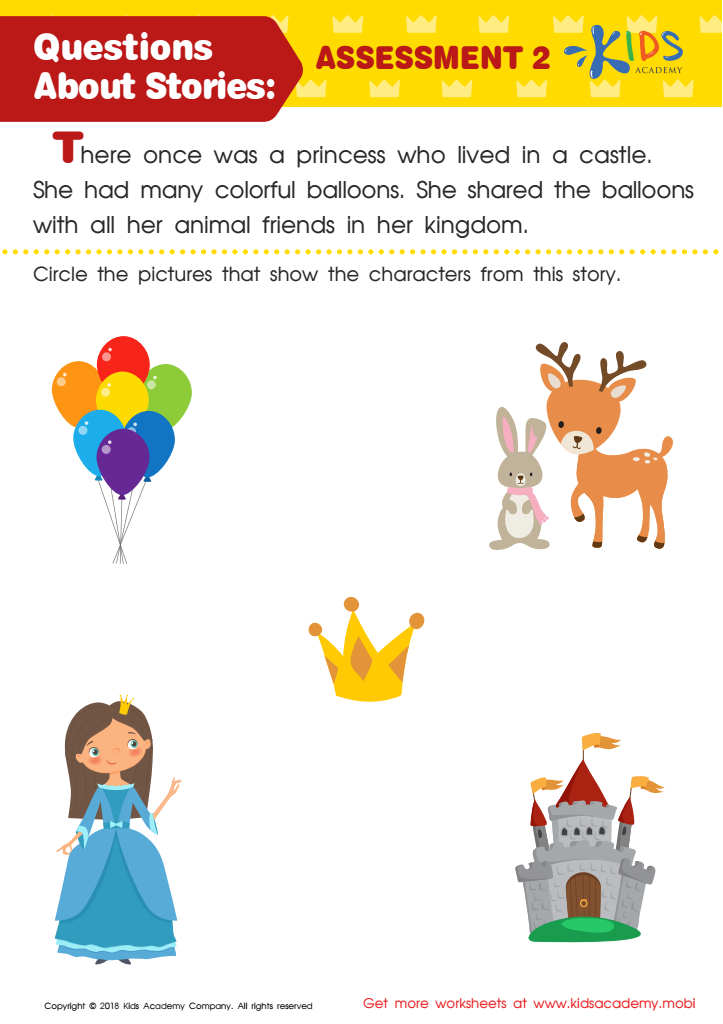
Questions About Stories: Assessment 2 Worksheet
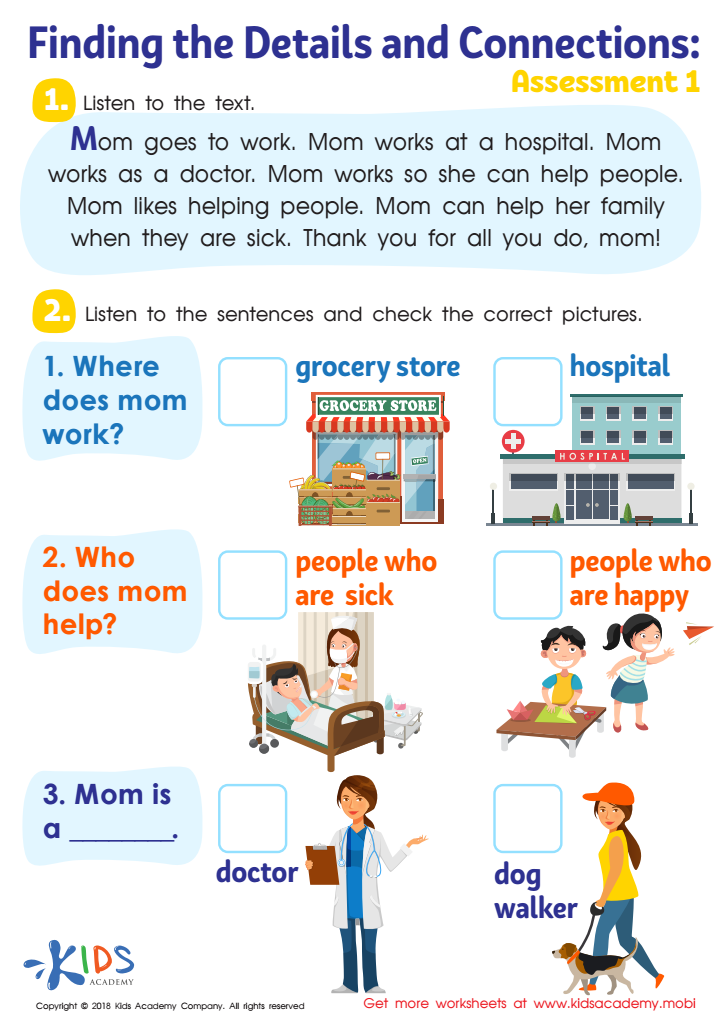
Finding the Details and Connections: Assessment 1 Worksheet
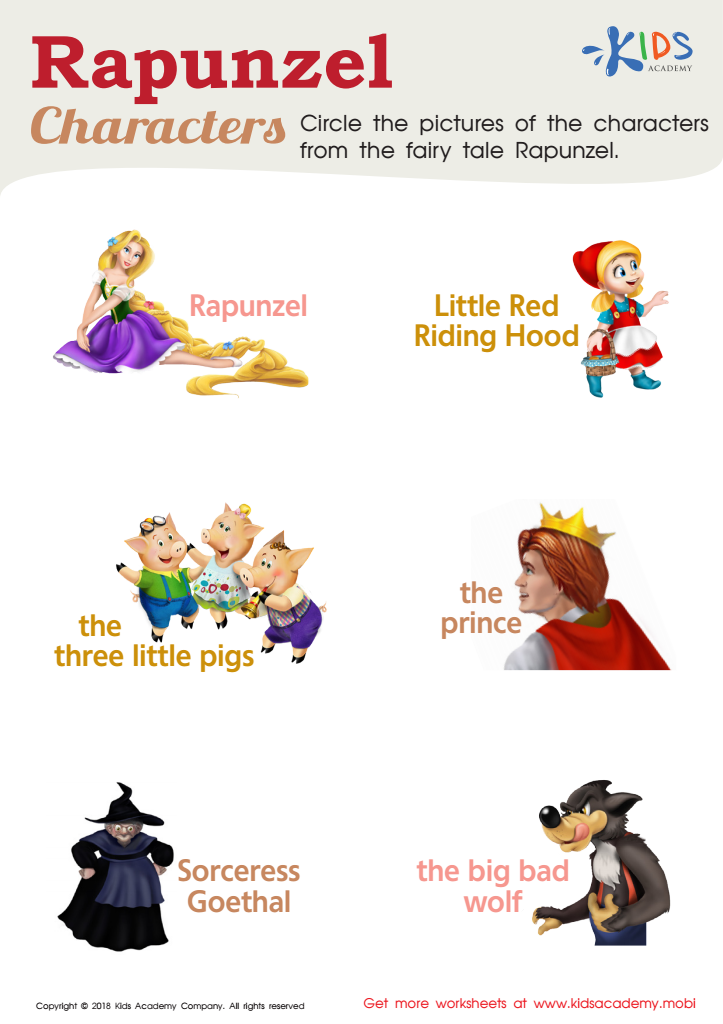
Rapunzel Characters Worksheet



.jpg)




Parents and teachers should prioritize fostering analytical skills in young children (ages 5-7) within the context of reading fiction as it forms a foundational aspect of cognitive development and lifelong learning. At this formative stage, engaging with narrative-driven books not only entertains but also stimulates the brain's analytical capabilities. When children explore characters, plot twists, and underlying themes, they learn to dissect and comprehend complex ideas. This enhances their critical thinking skills, helping them differentiate between cause and effect, recognize patterns, and make predictions.
Additionally, interactive discussions about fiction can boost children's vocabulary, comprehension, and communication skills. By analyzing stories, they learn to express their thoughts and emotions more clearly, a skill essential for effective social interactions. Furthermore, young readers better grasp moral and ethical lessons embedded in tales, promoting empathy and moral reasoning.
Consider the developmental advantage: children's brains are exceptionally receptive at ages 5-7. Exposure to fiction fortified with guided analytical questioning helps them become creative problem solvers. They progressively become comfortable with abstract thinking and diverse perspectives. By fostering these skills early on, parents and teachers equip children with robust mental frameworks crucial for academic success and for navigating complex real-world situations in later life.







