
Comprehension skills Normal Reading Fiction Worksheets for Ages 5-7
6 filtered results
Difficulty Level
Grade
Age
-
From - To
Subject
Activity
Standards
Our "Comprehension Skills Normal Reading Fiction Worksheets for Ages 5-7" are designed to boost young readers' understanding and enjoyment of stories. These age-appropriate printable worksheets focus on helping children identify main ideas, characters, and sequences in engaging tales. By guiding kids through thoughtful questions and fun activities, our worksheets enhance their critical thinking and narrative skills. Perfect for early readers, these exercises make mastering comprehension both effective and enjoyable. Whether used in classrooms or at home, our resources support educators and parents in nurturing a love of reading and boosting literacy from an early age.
Favorites
With answer key
Interactive
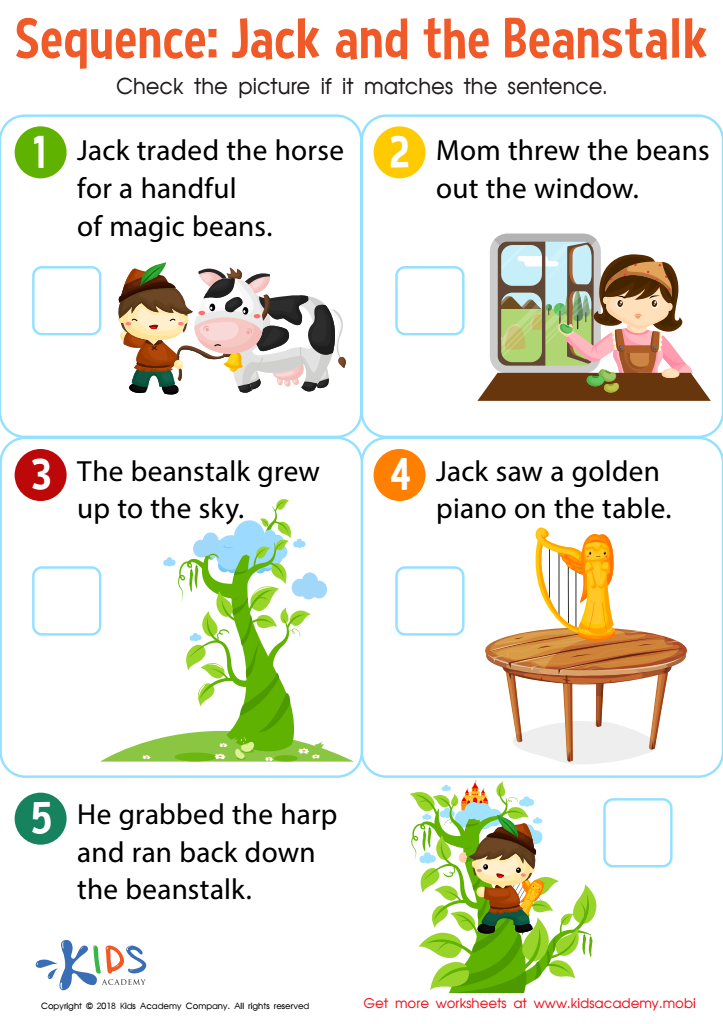
Sequence: Jack and The Beanstalk Worksheet
Ensure your kids are familiar with Jack and the Beanstalk before starting this worksheet. If not, read them the story. In the pdf, there are five pictures with sentences. Read the sentences, ask your kid if it matches the picture, then help them check if it does.
 Assign to My Students
Sequence: Jack and The Beanstalk Worksheet
Worksheet
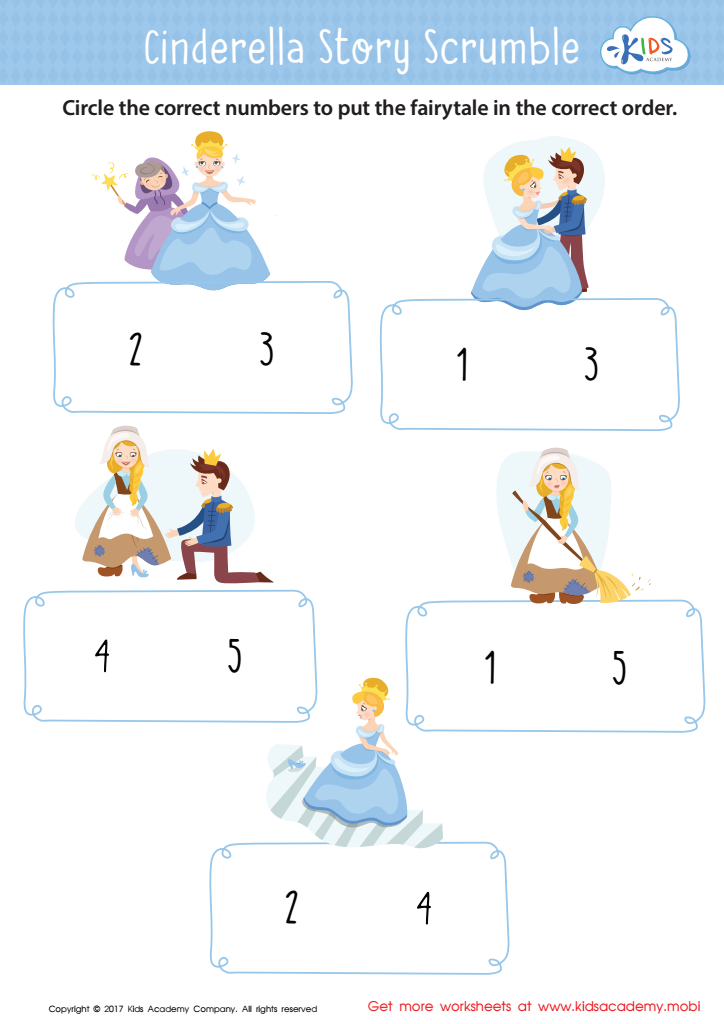
Cinderella Story Sequencing Worksheet
This worksheet helps strengthen reading comprehension skills by getting your child to remember key moments from the Cinderella story. They'll be asked to place pictures in the right order to tell the story.
Cinderella Story Sequencing Worksheet
Worksheet
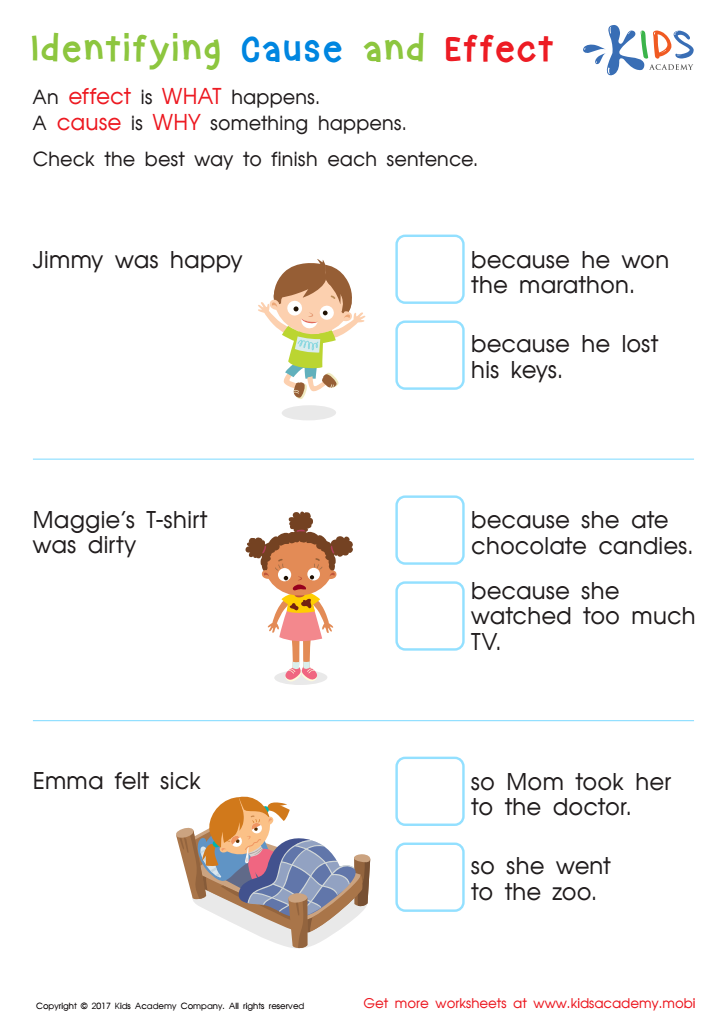
Indentifying Cause and Effect Worksheet
2nd grade cause & effect worksheets give your child practice making connections between events and their results. Fun activities help develop reading and critical thinking skills.
Indentifying Cause and Effect Worksheet
Worksheet
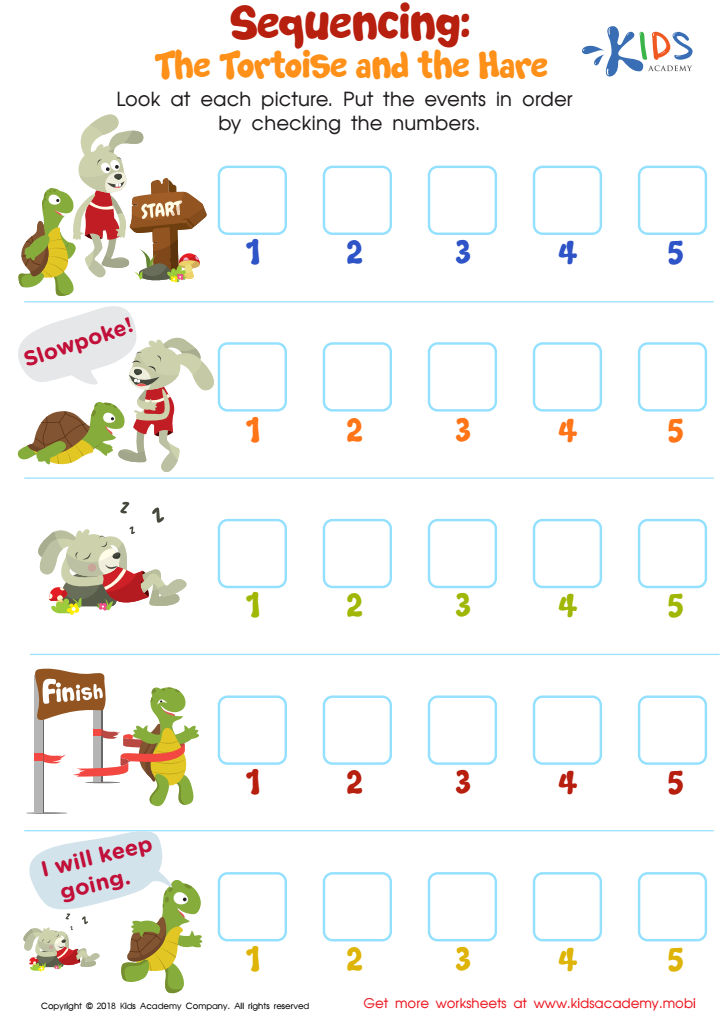
Sequencing: The Tortoise and the Hare Worksheet
Help your child become an independent reader and critical thinker with a sequencing worksheet from Kids Academy! Have them read the classic tale of the tortoise and the hare and use the accompanying worksheet to check their understanding of the story's sequence of events. Have kids identify the correct order of events by selecting the box next to the correct number for each image!
Sequencing: The Tortoise and the Hare Worksheet
Worksheet
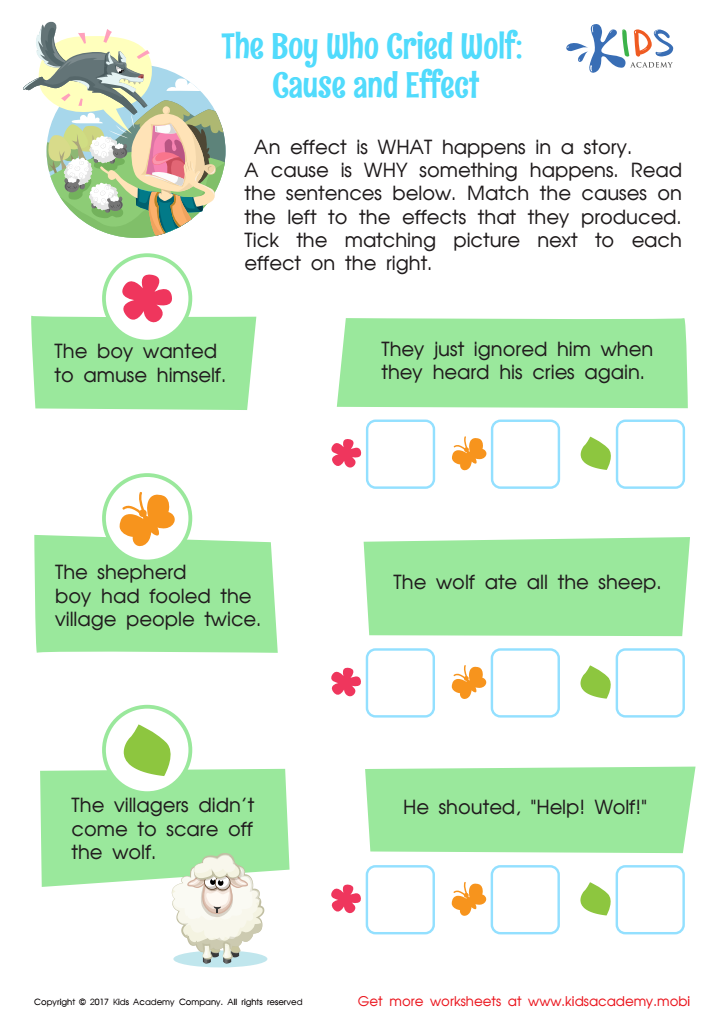
The Boy Who Cried Wolf: Cause and Effect Worksheet
With classic stories and fables, learning reading comprehension is easy - and fun!
The Boy Who Cried Wolf: Cause and Effect Worksheet
Worksheet
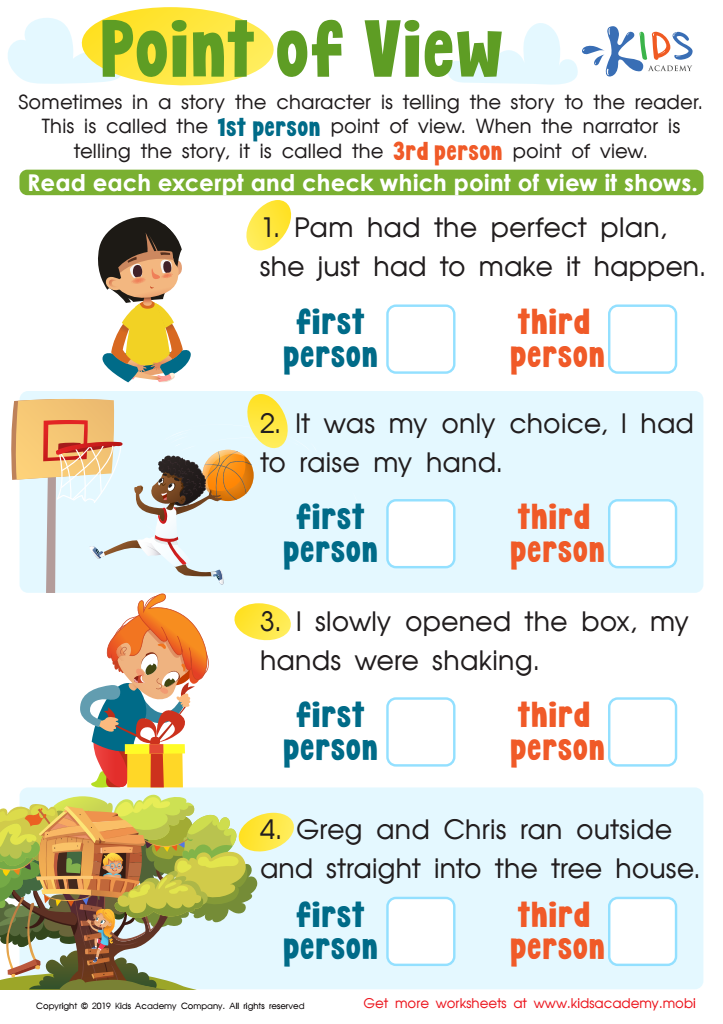
Point of View Printable
Teach your kids about points of view with this worksheet! In a story, characters can tell the story in first person or it can come from a narrator in third person. Read the excerpt in the worksheet and ask your kids to identify which point of view it is.
Point of View Printable
Worksheet
Join Kids Academy for Free
Who is primarily going to use this learning content?




.jpg)



Parents and teachers should place significant emphasis on developing comprehension skills in young readers as these are formative years when foundational literacy abilities are built. Reading fiction plays a pivotal role in this development for children aged 5-7. Engaging with stories invites children to explore new worlds and characters, fostering imagination and creativity. When comprehension skills are nurtured during these early encounters with reading, children learn to follow plots, understand settings, and empathize with characters, all of which enhance their ability to grasp more complex texts and ideas as they grow.
Understanding fiction also improves language skills. Exposure to diverse vocabulary and sentence structures in stories enhances linguistic capabilities. These children begin to recognize narrative elements like beginning, middle, and end, which will assist in their writing and storytelling.
Beyond language and literacy, good reading comprehension fosters critical thinking. When children ask questions about the story and predict outcomes, they practice logical reasoning and inferencing. Additionally, discussing stories can aid social-emotional development, as it helps children learn to articulate feelings and understand others' perspectives.
Fostering strong reading comprehension in these early stages builds a robust educational foundation, aiding not just in academic success, but in lifelong learning and emotional intelligence. Prioritizing these skills ensures children are not just able to read, but to understand and enjoy what they read.







