Animal Classification Normal Plants and Animals Worksheets for Ages 5-7
5 filtered results
-
From - To
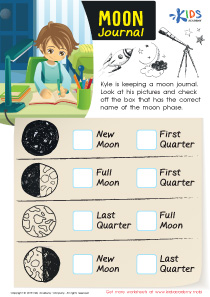
Our "Animal Classification: Normal Plants and Animals Worksheets for Ages 5-7" are crafted to make learning fun and engaging for young learners. Perfectly designed for children in Kindergarten through Grade 2, these worksheets introduce foundational concepts of biology, helping kids differentiate between plants and animals. Through vibrant illustrations and interactive activities, children explore various species, learning to classify animals by different attributes. Suitable for classroom or home use, these worksheets not only build essential science skills but also encourage curiosity and a love for nature. Give your child the tools to succeed with our expertly created, age-appropriate educational resources.
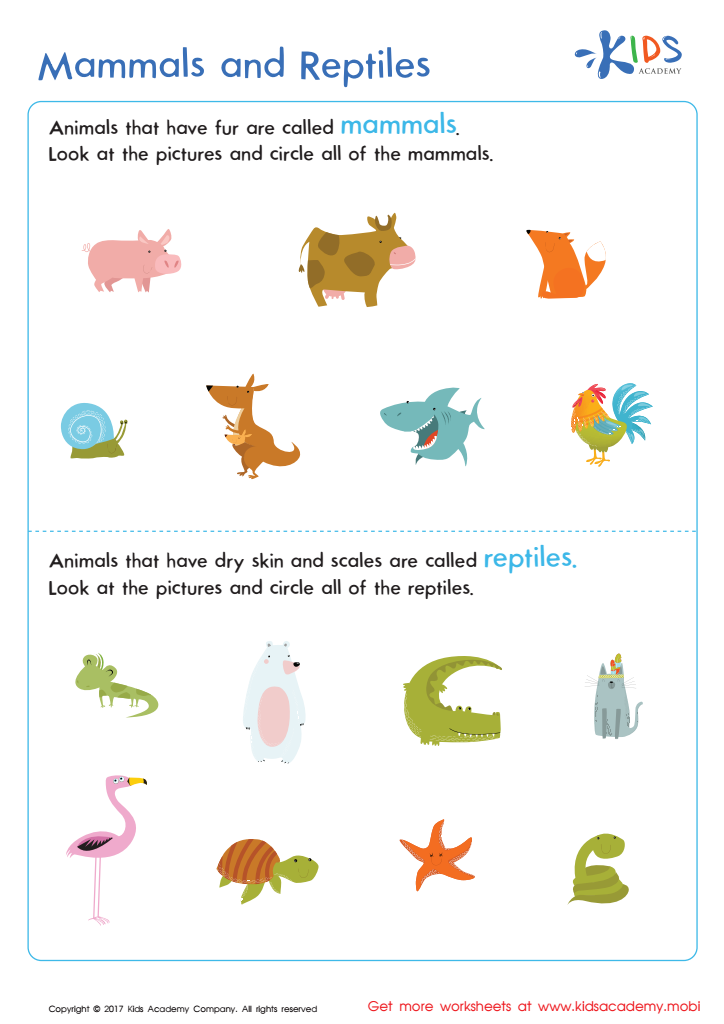
Mammals and Reptiles Worksheet
 Assign to My Students

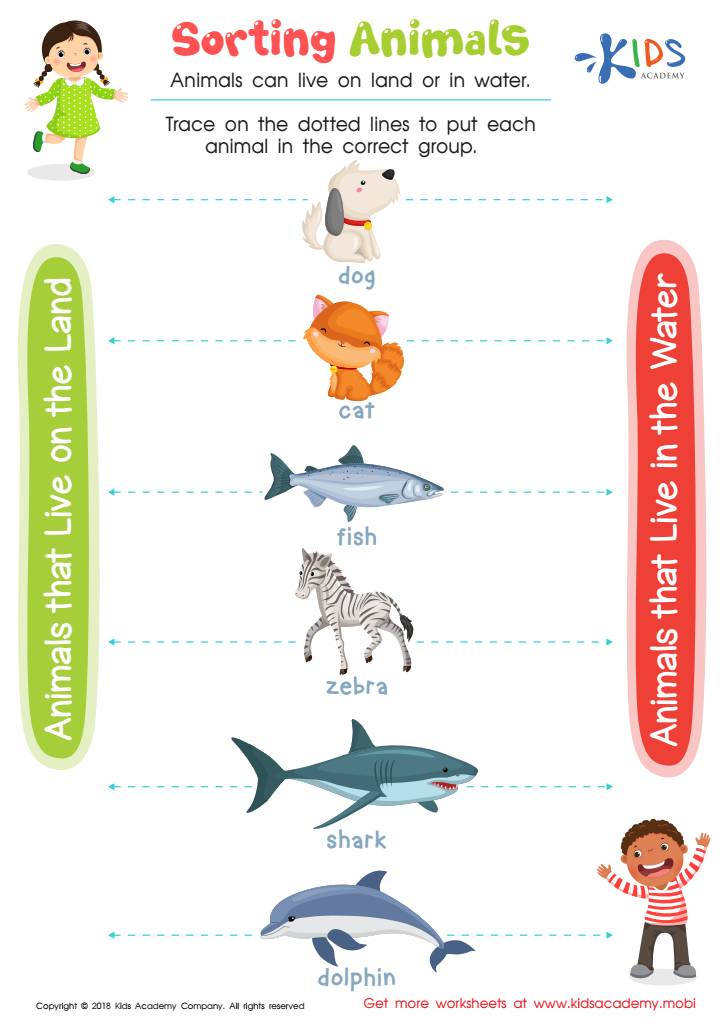
Sorting Animals Worksheet
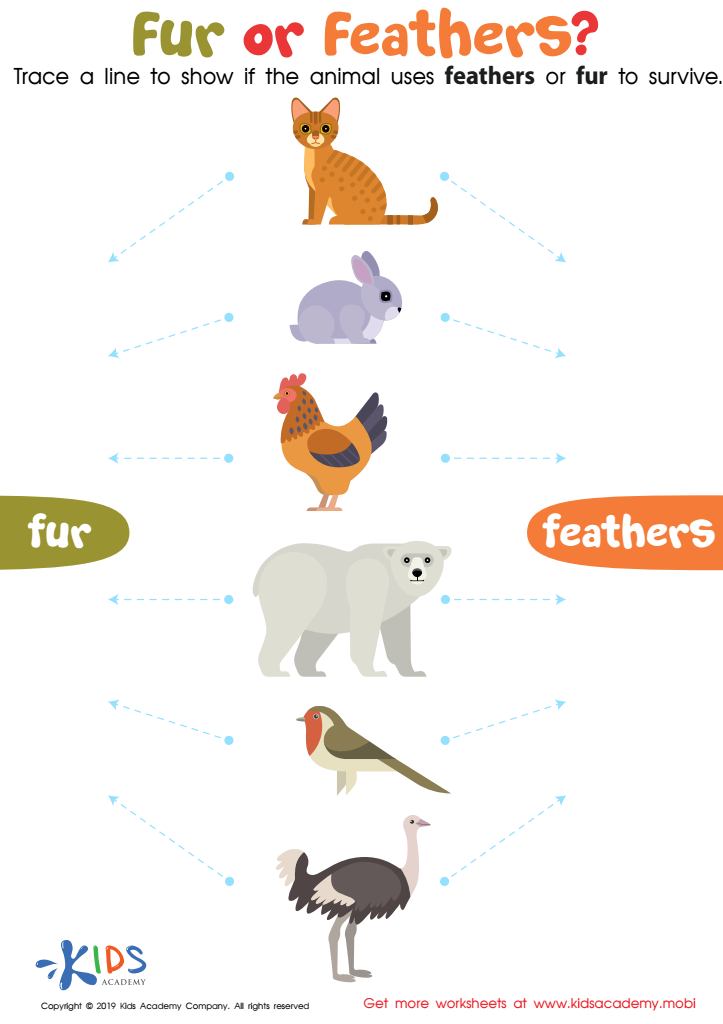
Fur or Feathers? Worksheet
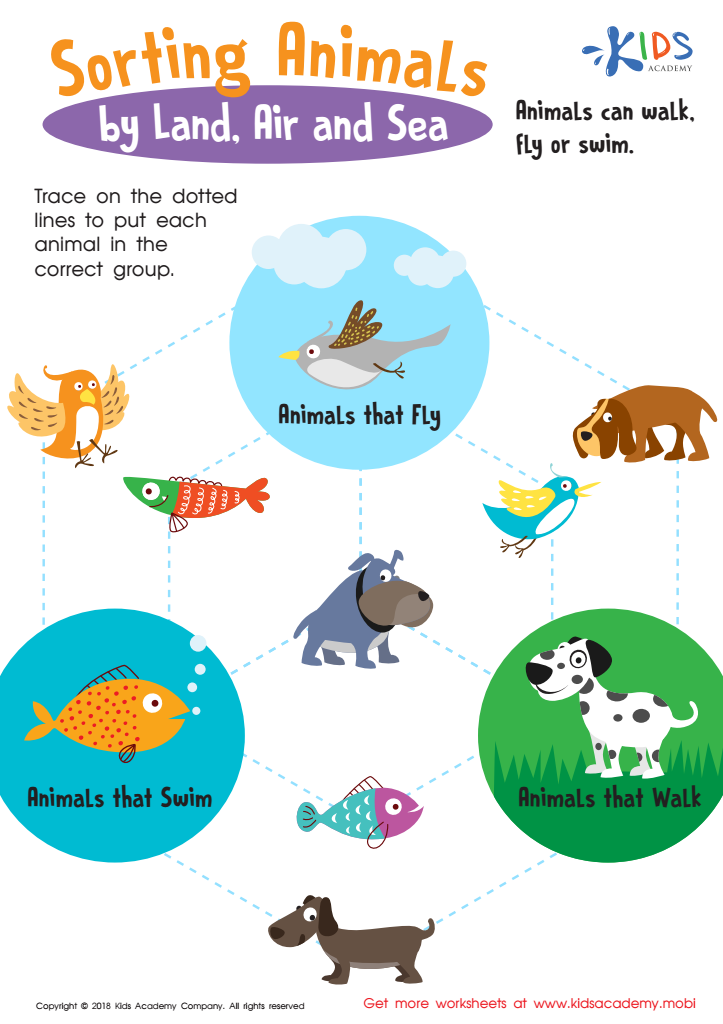
Sorting Animals by Land, Air and Sea Worksheet
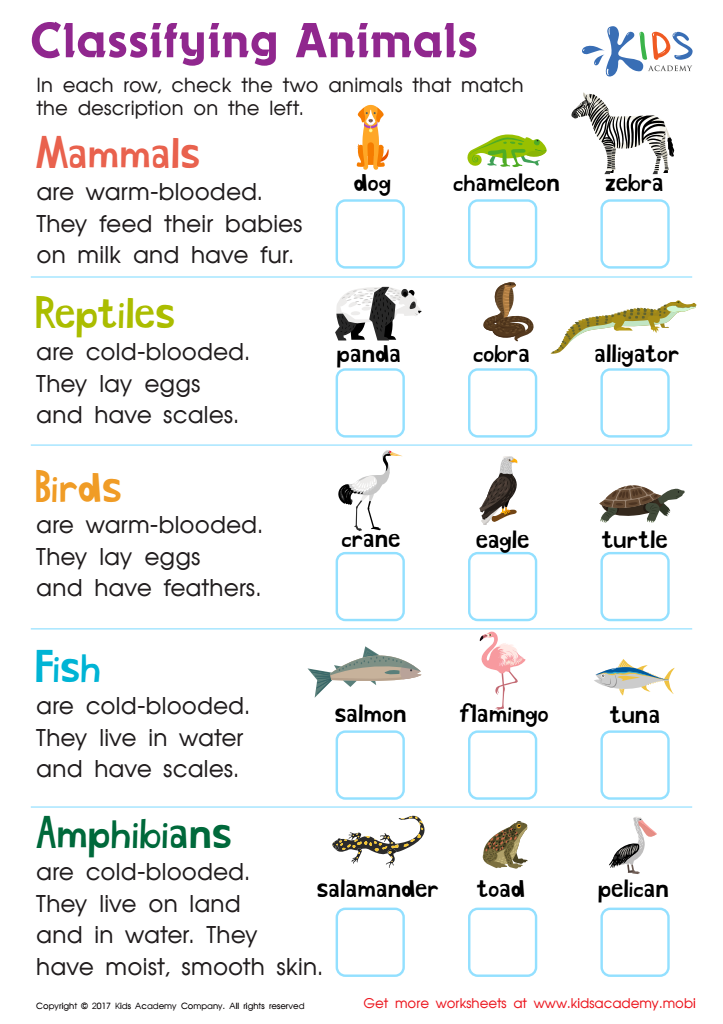
Classifying Animals Worksheet








Animal classification and understanding normal plants and animals hold significant importance for young children aged 5-7, as it fosters a foundational appreciation and curiosity for the natural world. Early exposure to these concepts can cultivate a sense of wonder and responsibility towards the environment. By learning how animals and plants are categorized, children develop critical thinking skills and the ability to observe similarities and differences in the world around them.
Comprehending the basic groups of living things helps kids recognize the diversity of life and their roles in ecosystems. For instance, knowing that mammals give birth to live young while birds lay eggs introduces the concept of reproductive differences and the myriad of strategies nature employs for survival. Similarly, understanding that different plants have unique structures and functions empowers children to recognize plant parts like roots, stems, and leaves, which lays the groundwork for more complex botanical education later on.
Moreover, incorporating animal classification and normal plant education into early learning encourages interactive, hands-on learning opportunities. Activities like sorting animals into categories or growing simple plants can enhance fine motor skills and experiential learning. This holistic approach nurtures an inclusive worldview where children learn to respect nature, fostering lifelong environmental stewardship and scientific curiosity.