
Understanding life cycles Normal Plants and Animals Worksheets for Ages 5-7
3 filtered results
Difficulty Level
Grade
Age
-
From - To
Subject
Activity
Standards
Discover the fascinating world of life cycles with our engaging worksheets designed for children ages 5-7. Our "Understanding Life Cycles: Normal Plants and Animals Worksheets" provide young learners with fun, interactive exercises to explore the stages of development in both plants and animals. Through colorful illustrations and simple activities, kids will enjoy learning about seed germination, the metamorphosis of insects, and more. These worksheets not only build foundational science skills but also spark curiosity and an appreciation for nature. Perfect for classrooms and homeschooling, our resources support early scientific understanding and literacy. Start the adventure of learning today!
Favorites
With answer key
Interactive
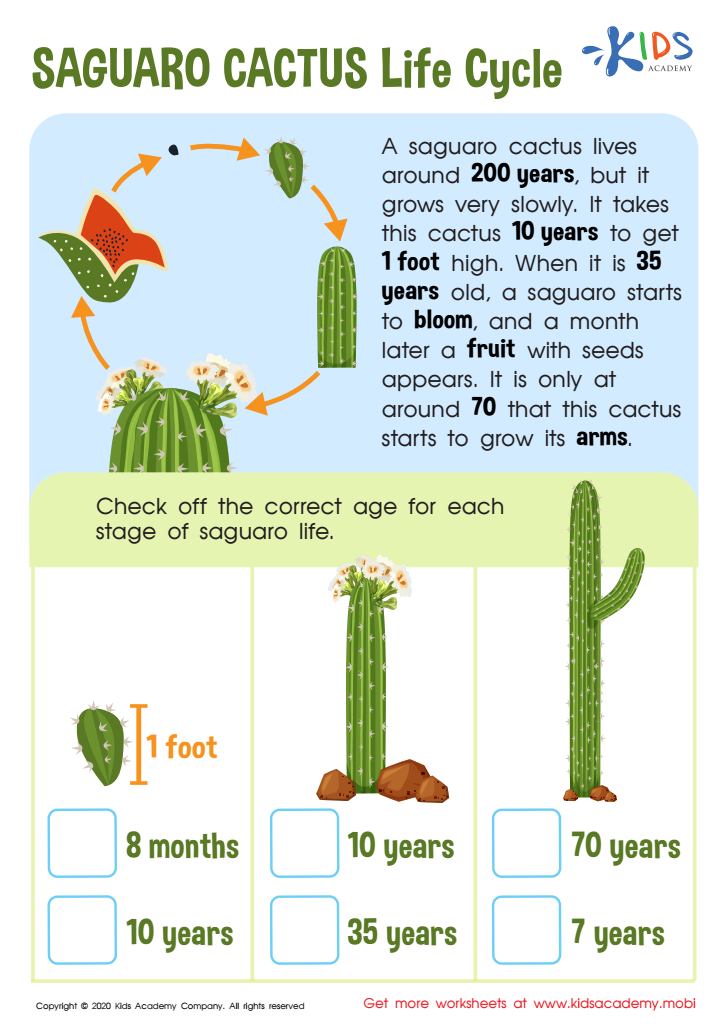
Saguaro Cactus Life Cycle Worksheet
Teach your child about the saguaro cactus, which takes 35 years to bloom and can live up to twice the lifespan of a human! Print this free PDF worksheet to engage learners with an interesting passage. Check off the correct answers to reflect their learning!
 Assign to My Students
Saguaro Cactus Life Cycle Worksheet
Worksheet


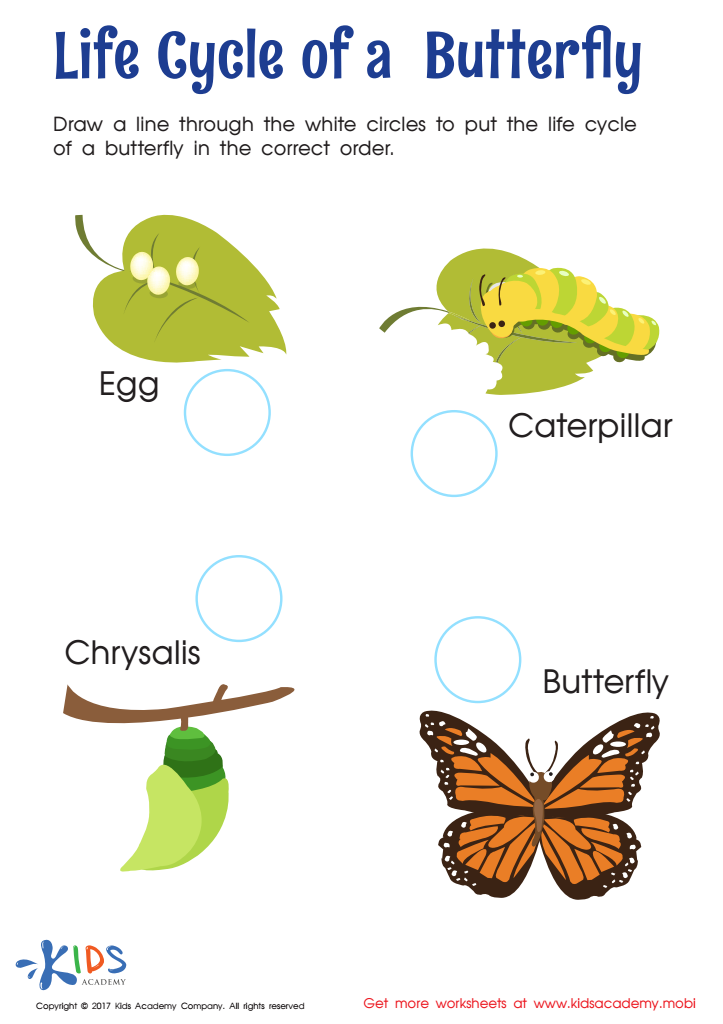
Life Cycle of Butterfly Worksheet
Kids Academy offers an exciting activity – a Life Cycle of a Butterfly Worksheet PDF. It shows four stages in the lifecycle of a butterfly with vivid pictures. Kids put the stages in the correct order to study the lifecycle.
Life Cycle of Butterfly Worksheet
Worksheet
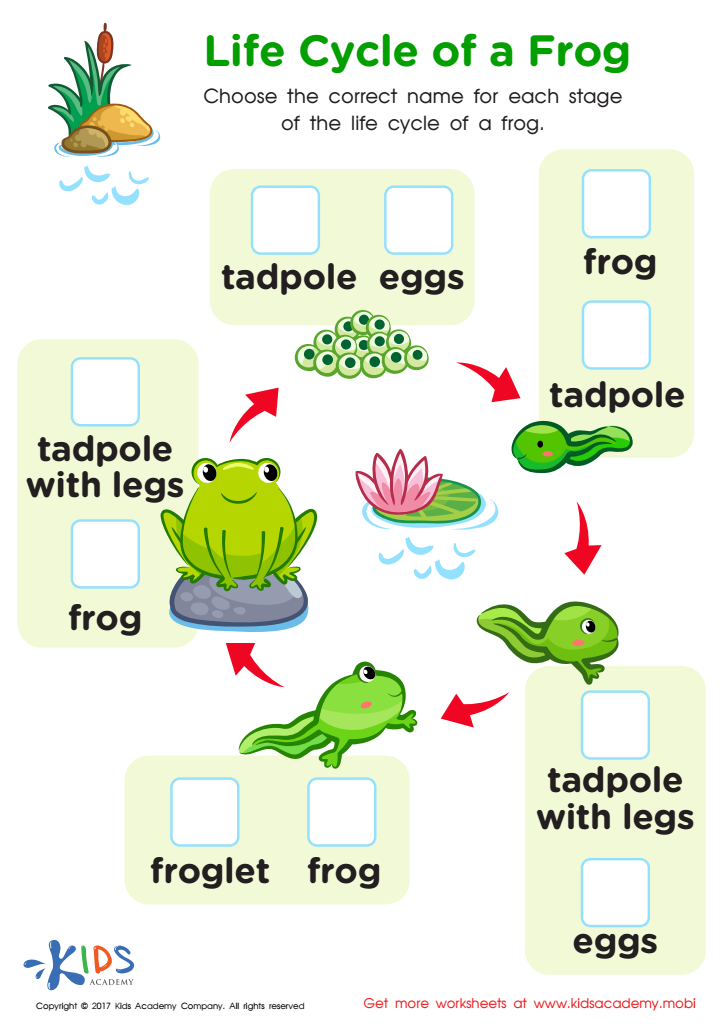
Life Cycle Frog Printable
Kids can explore the life cycle of frog with this fun worksheet! Draw lines from one stage to the next to follow the transformation from tadpole to frog and learn about the cycle of life.
Life Cycle Frog Printable
Worksheet
Join Kids Academy for Free
Who is primarily going to use this learning content?



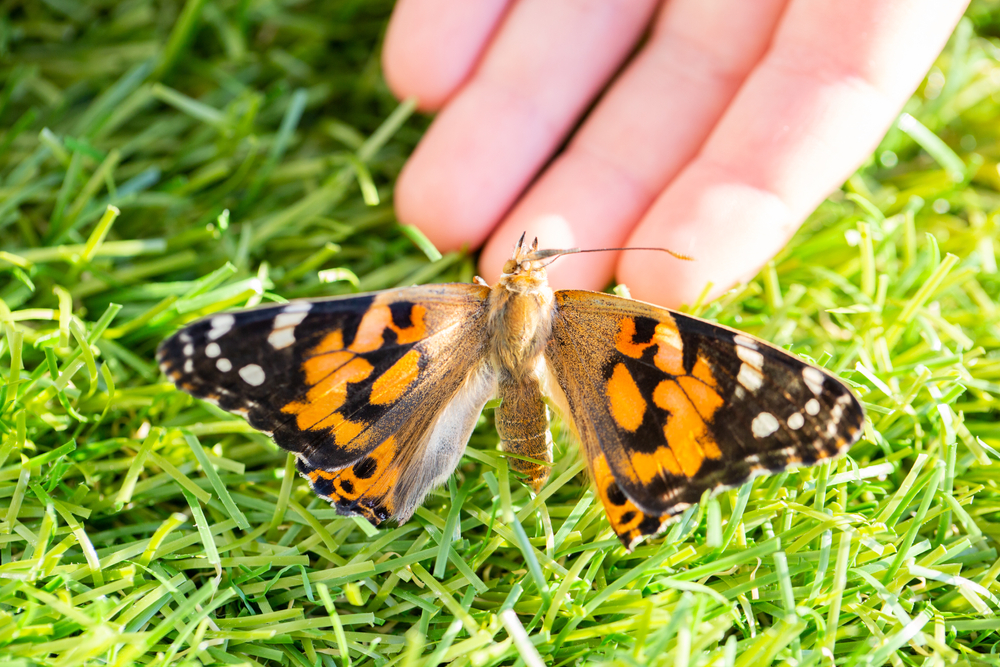




Understanding the life cycles of plants and animals is crucial for children aged 5-7 to foster a foundational appreciation for nature and the environment. This knowledge encourages a sense of wonder and curiosity about the natural world, which can inspire lifelong learning. By observing life cycles, children grasp fundamental concepts of growth, change, and sustainability, which are essential for their cognitive development.
For parents and teachers, introducing these concepts early helps children make sense of the world around them. Learning about how a caterpillar transforms into a butterfly or how a seed grows into a tree enables kids to understand broader themes such as adaptation, survival, and the interconnectedness of ecosystems.
Additionally, this knowledge promotes a sense of responsibility and respect for living organisms. Understanding that all life forms reproduce and grow in particular ways can lead to greater empathy and awareness about environmental conservation. Children are more likely to develop into adults who value and protect nature if they learn early on how essential it is to every aspect of life.
Parents and teachers who prioritize these lessons are equipping children not only with scientific understanding but also with the emotional and ethical insights necessary for being informed and conscientious members of society.







