Vocabulary Building Normal Social Studies Worksheets for Ages 5-7
7 filtered results
Difficulty Level
Grade
Age
-
From - To
Subject
Activity
Standards
Our "Vocabulary Building Normal Social Studies Worksheets" for ages 5-7 are designed to enhance young learners' language skills while introducing them to essential social studies concepts. These engaging, age-appropriate worksheets help children build a strong vocabulary foundation through interactive activities and exercises tailored to their developmental stage. By exploring topics like community roles, daily routines, and simple geography, kids can expand their word knowledge in a meaningful context. Perfect for classroom use or at-home practice, our worksheets make learning both fun and effective, setting the stage for successful communication and academic achievement.
Favorites
With answer key
Interactive
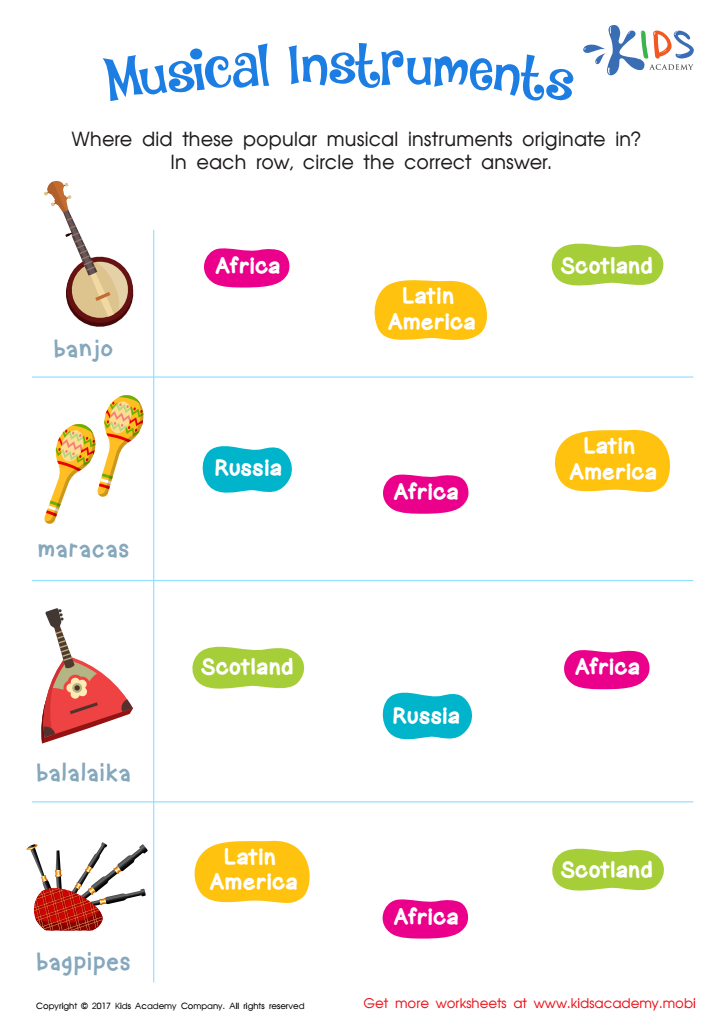
Musical Instruments Printable
Love for music is universal! Help your child explore this with this musical instruments worksheet PDF. From learning about different cultures to discovering new sounds, your child will gain a deeper appreciation for music and culture.
 Assign to My Students
Musical Instruments Printable
Worksheet
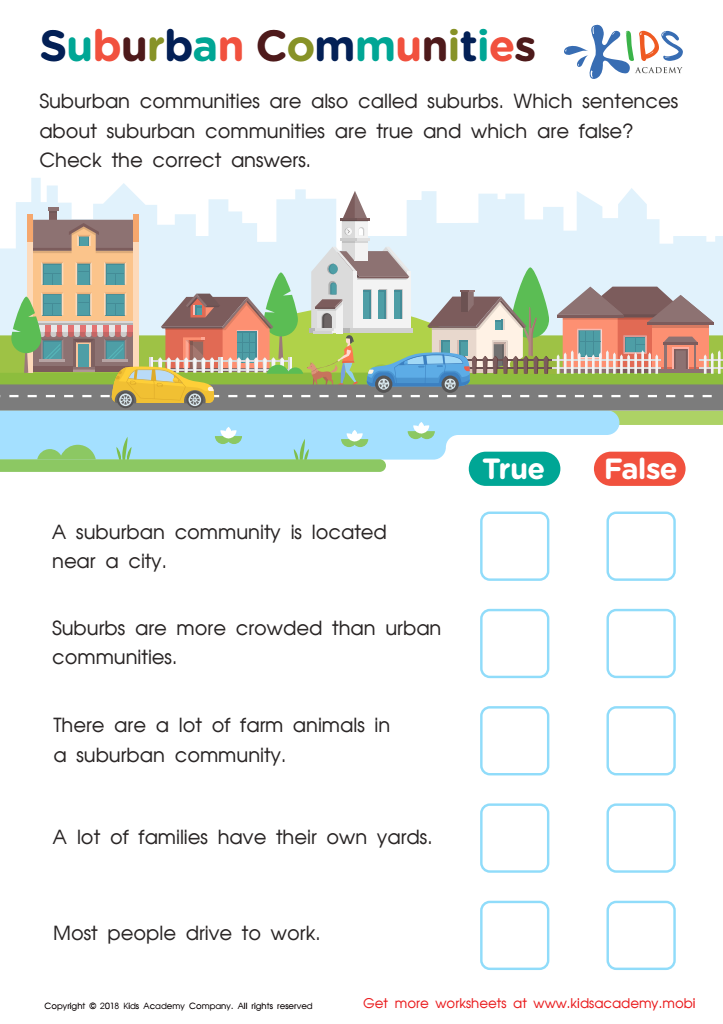
Suburban Communities Worksheet
This worksheet helps your students/children understand suburban communities. Have them read the sentences and check the true or false box for each. They will gain a better knowledge of the suburbs after this exercise.
Suburban Communities Worksheet
Worksheet
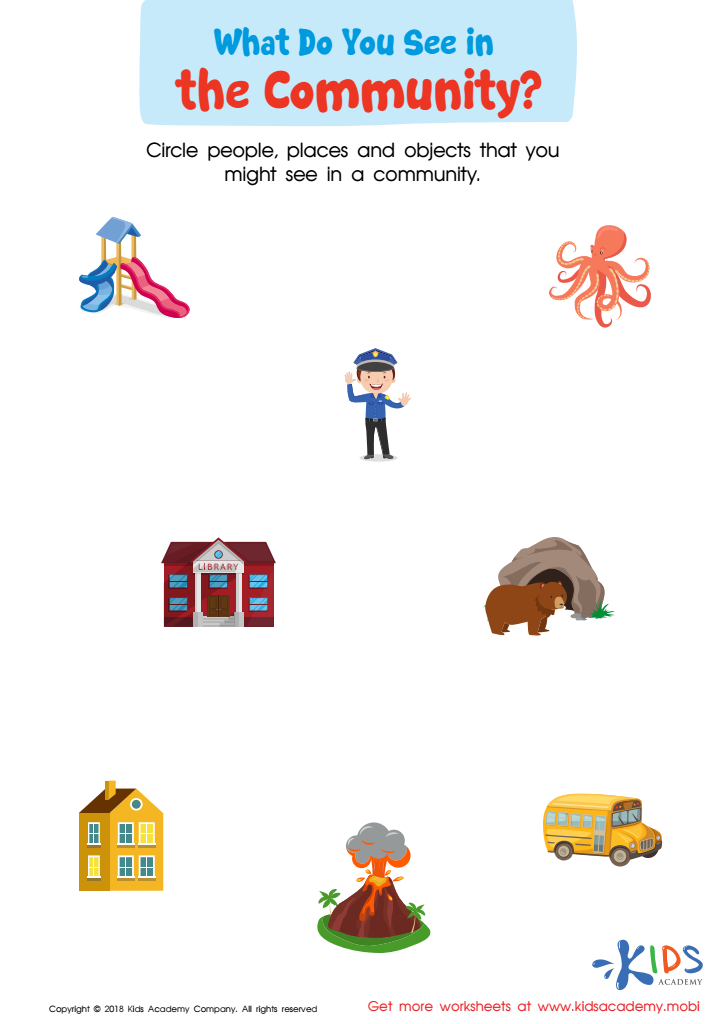
What Do You See in the Community Worksheet
This free social studies PDF can help your children learn about their local community. They'll identify its members, places and objects using engaging and recognizable pictures. As they trace circles around them, they'll also practice fine motor skills. It's a great way to introduce social science concepts and help them understand the importance of community.
What Do You See in the Community Worksheet
Worksheet
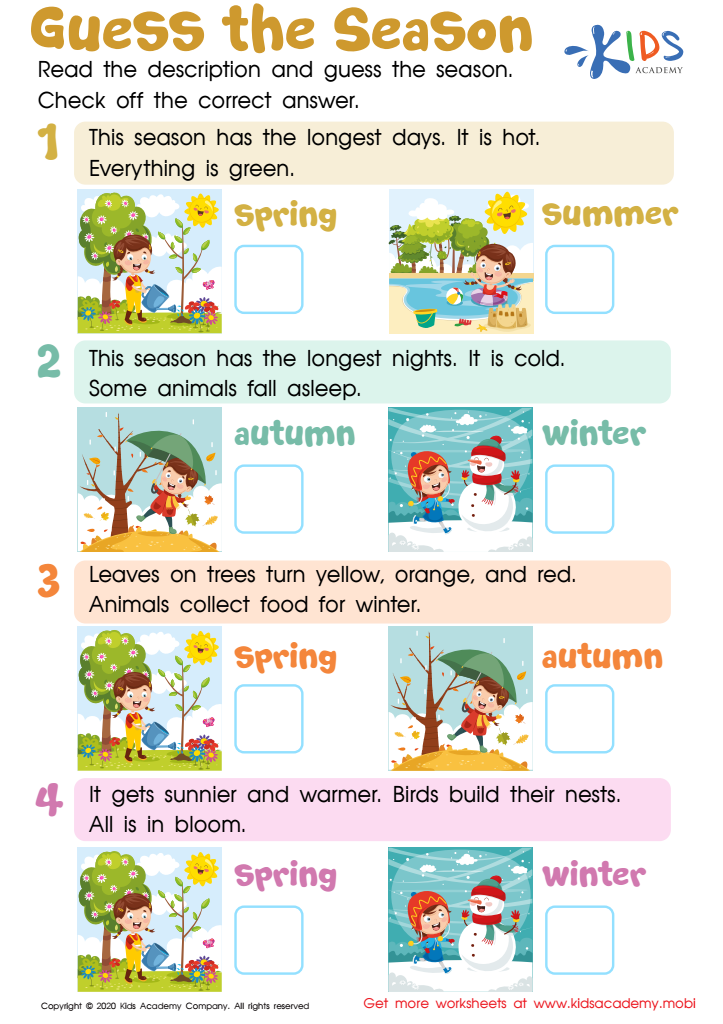
Guess the Season Worksheet
Winter and summer bring different weather! Help kids recognize the changes with this free Kids Academy PDF worksheet. Students read each description, look at the pictures, and check the box next to the season depicted. Make learning fun and easy with interactive activities.
Guess the Season Worksheet
Worksheet
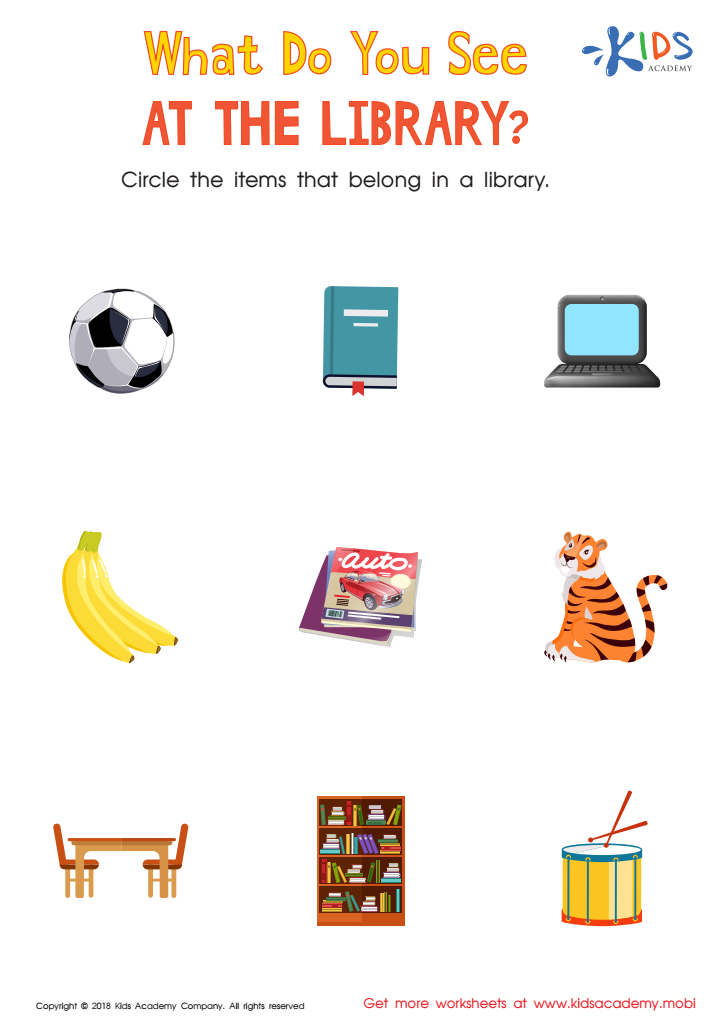
What Do you See at the Library? Worksheet
Let your kids look at the worksheet with pictures of objects found in libraries and those that don't. Ask them to list some, then circle the ones that belong in a library. Can they identify them? See if you can spot any they miss!
What Do you See at the Library? Worksheet
Worksheet
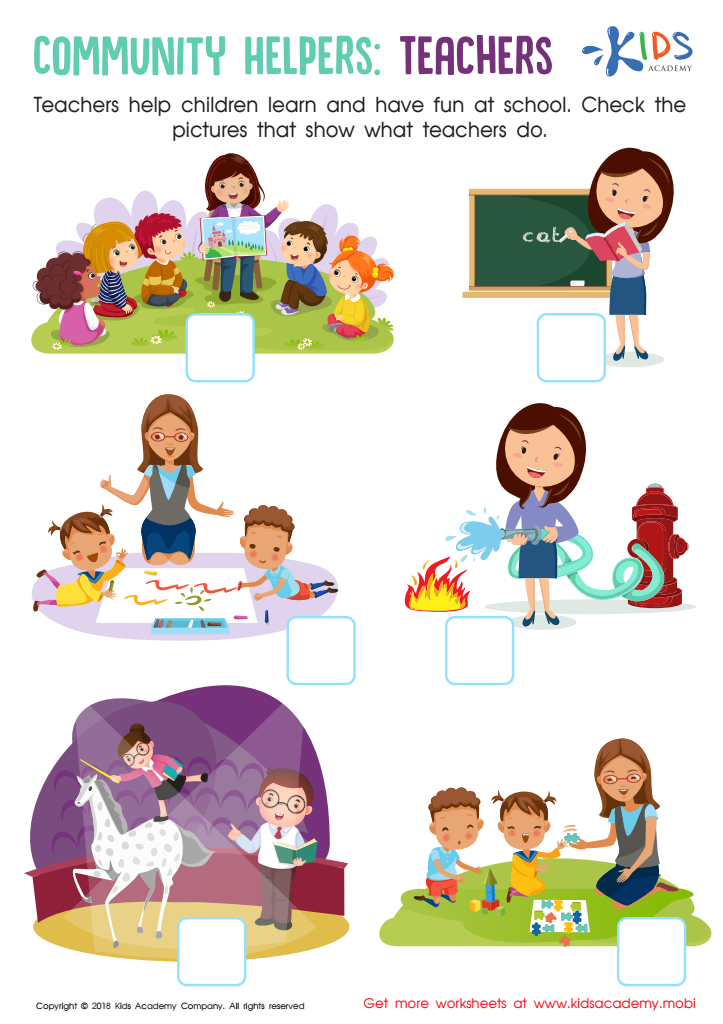
Teachers Community Helpers Worksheet
Ask your students to name some of the ways a teacher helps. Then, use this worksheet to show the right ways teachers can help. Have them check the boxes of the pictures that accurately depict what a teacher does. This is a great exercise to show your students how you help them learn and contribute to their community.
Teachers Community Helpers Worksheet
Worksheet
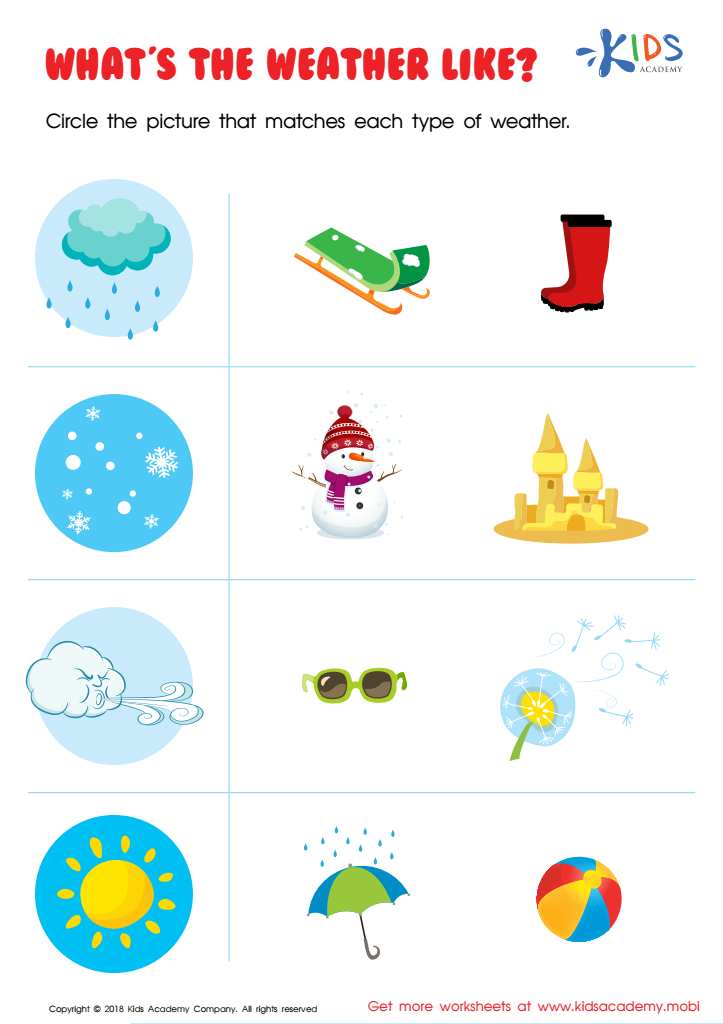
What's the Weather Like? Worksheet
Help budding meteorologists practice matching weather to seasons with this PDF worksheet. Picture clues help identify seasons and fine motor skills are practiced circling the correct weather patterns. Bright and engaging characters make learning fun and reinforce weather knowledge.
What's the Weather Like? Worksheet
Worksheet
Join Kids Academy for Free
Who is primarily going to use this learning content?


.jpg)




.jpg)
Vocabulary building in early social studies for ages 5-7 is essential for several developmental and educational reasons. At this age, children are rapidly expanding their language skills, and introducing them to the rich vocabulary of social studies enhances both their comprehension and communication abilities. Social studies vocabulary helps children understand and articulate concepts related to their community, environment, history, and social relationships, which are fundamental aspects of their everyday lives.
Introducing specific terms like "community," "citizen," "map," "continent," or "timeline" enables young learners to grasp complex ideas in manageable ways. This foundation facilitates critical thinking and inquiry skills later on, fostering a deeper understanding of how people, places, and systems interconnect.
Moreover, a robust vocabulary allows children to engage more fully in discussions, ask insightful questions, and better retain the information presented to them. Interactive and engaging activities centered around social studies vocabulary can make learning feel more like play, keeping the children motivated and curious.
For parents and teachers, actively focusing on vocabulary building also helps to identify and support children who may need additional assistance in language development. It creates inclusive learning environments where all children can succeed academically and socially, laying a strong groundwork for future educational success.