Improving vocabulary Normal Writing Worksheets for Ages 5-7
3 filtered results
-
From - To
Unlock the power of words for young learners with our "Improving Vocabulary Normal Writing Worksheets" designed specifically for ages 5-7! These engaging worksheets help children broaden their vocabulary through fun and interactive exercises. By focusing on age-appropriate topics, kids can learn new words in a meaningful context and develop their writing skills. Perfect for classroom use or at-home practice, these worksheets make learning enjoyable and effective. Visit Kids Academy to give your child a head start in communication and comprehension. Cultivate a love for language and watch their confidence soar with our expertly crafted resources!
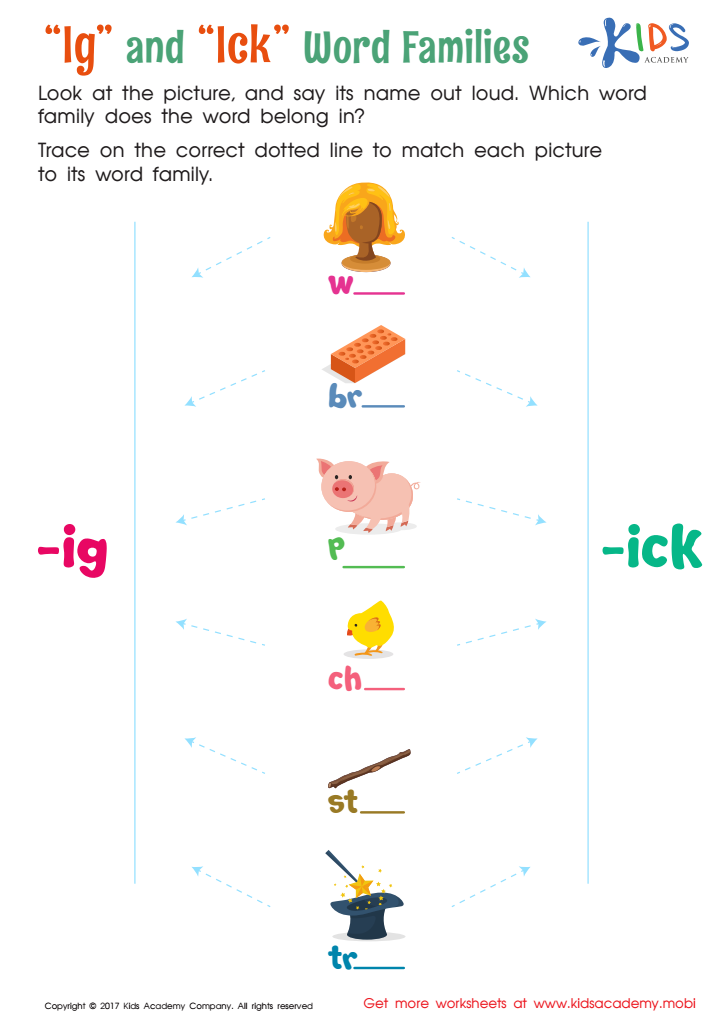
Words Families "ig" and "ick" Spelling Worksheet
 Assign to My Students
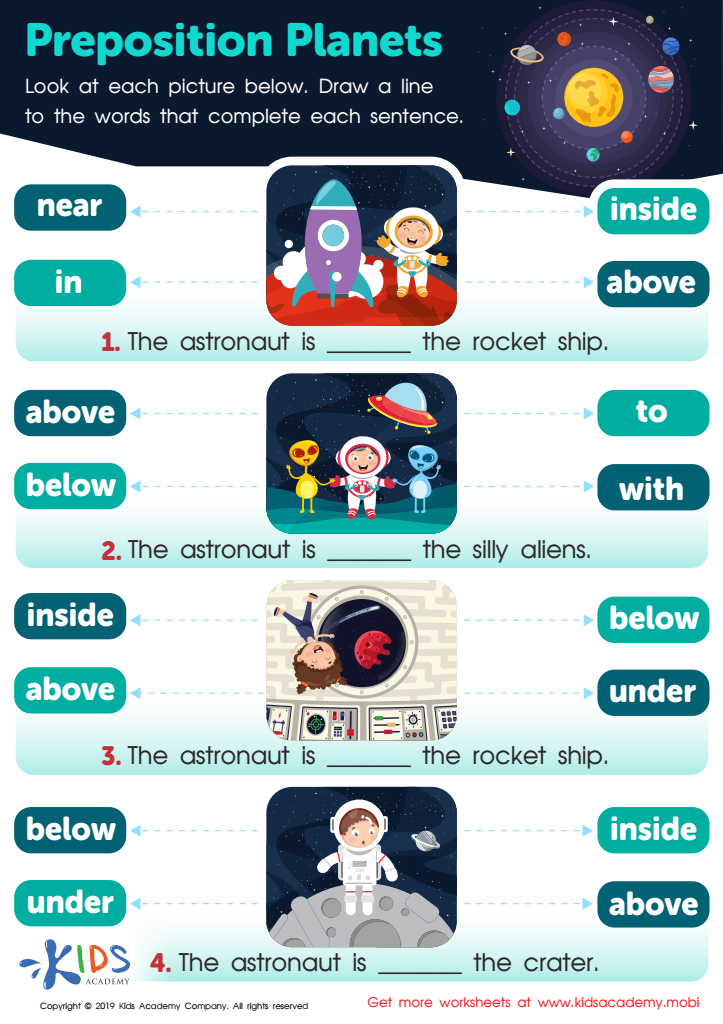
Preposition Planets Worksheet
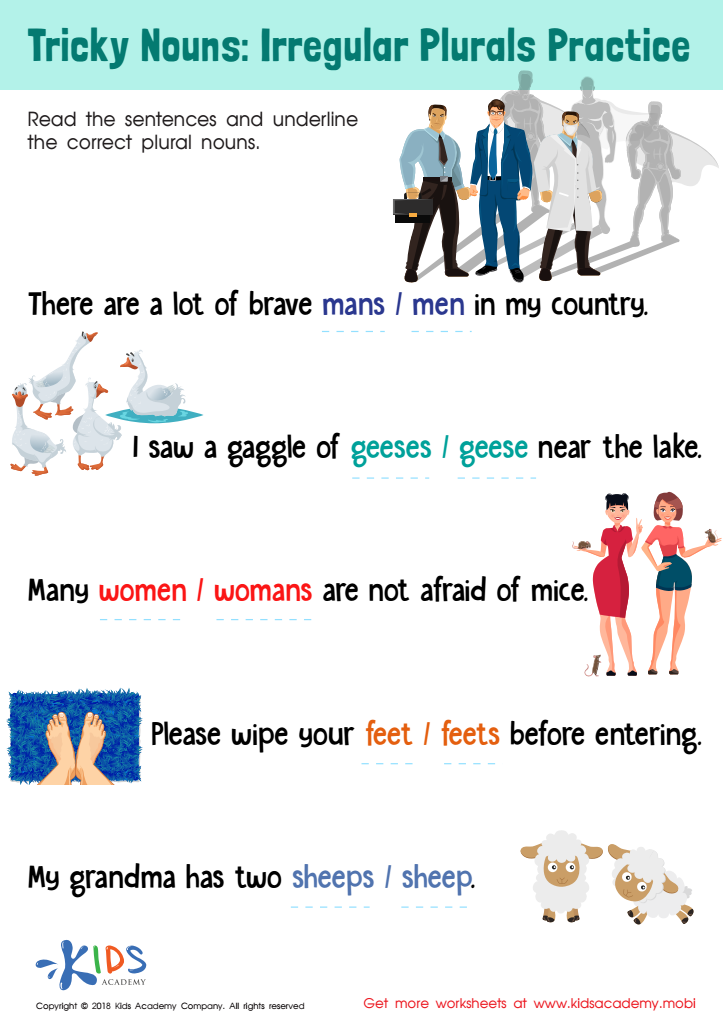
Tricky Nouns: Irregular Plurals Practice Worksheet








Improving vocabulary for children aged 5-7 is crucial as it lays the foundation for their overall academic success and personal development. At this age, kids are at a pivotal stage where their brains are highly receptive to new information. A rich vocabulary enhances their comprehension skills, enabling them to understand instructions, stories, and conversations better. This comprehension is essential not just for reading, but for success in all subjects, including math and science.
Additionally, a strong vocabulary helps improve children's communication skills. It allows them to express themselves more clearly and confidently, reducing frustration when they can't find the right words. This self-expression is important for their social interactions, helping them build and maintain friendships.
Moreover, vocabulary development is linked to critical thinking. When children learn new words, they also learn about new concepts and ideas, which broadens their understanding of the world. This cognitive development is essential for problem-solving and logical thinking.
Parents and teachers should therefore engage in activities that promote vocabulary growth, such as reading regularly, playing word games, and encouraging conversation. By doing so, they are not just teaching words; they are equipping children with the tools they need for lifelong learning and social interaction.