
Letter Tracing Normal Alphabet Coloring Pages Worksheets for Ages 5-8
4 filtered results
Difficulty Level
Grade
Age
-
From - To
Subject
Activity
Standards
Explore our engaging Letter Tracing Normal Alphabet Coloring Pages Worksheets, designed specifically for kids ages 5-8! These interactive resources encourage letter recognition and enhance fine motor skills while fostering creativity. Each worksheet features bold, outlined letters for children to trace and color, making learning fun and enjoyable. Kids will not only master their ABCs but also develop essential early writing skills. Perfect for home or classroom use, these worksheets provide a balanced approach to learning, combining art and education. Download and print our exciting alphabet tracing pages today, and watch your child's confidence grow as they embark on their literacy journey!
Favorites
With answer key
Interactive
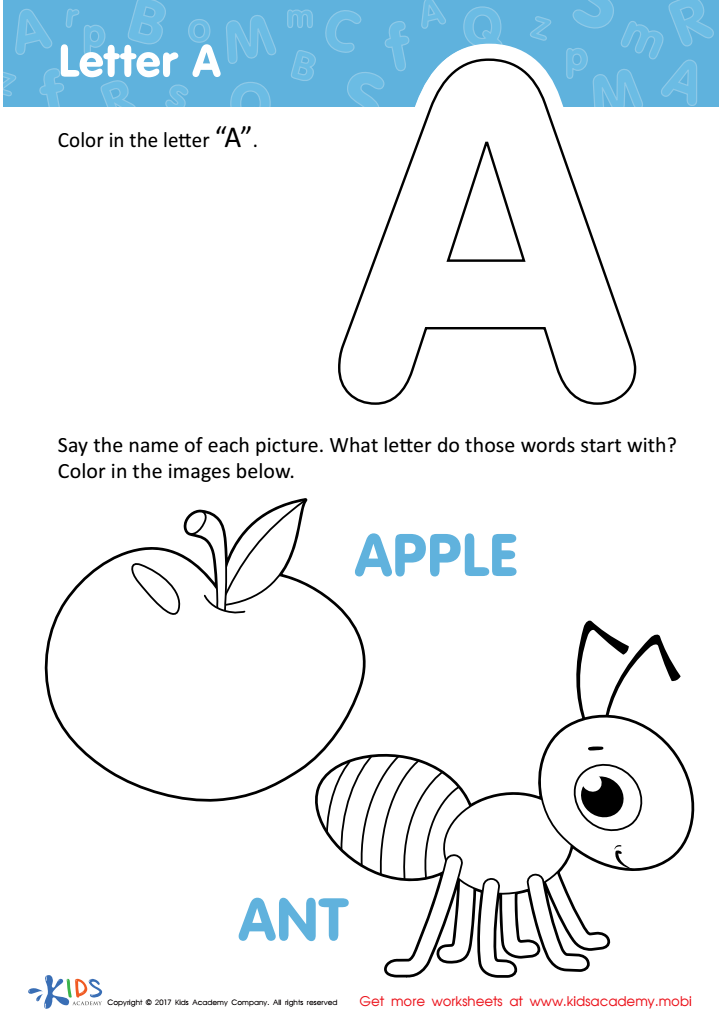
Letter A Coloring Sheet
This letter "A" coloring page is great for introducing kids to the alphabet! Let them exercise their creativity while they learn to recognize letters and sounds - it's a fun and easy way to help them get started.
Download (PDF)
 Assign to My Students
Assign to My Students
Letter A Coloring Sheet
Worksheet
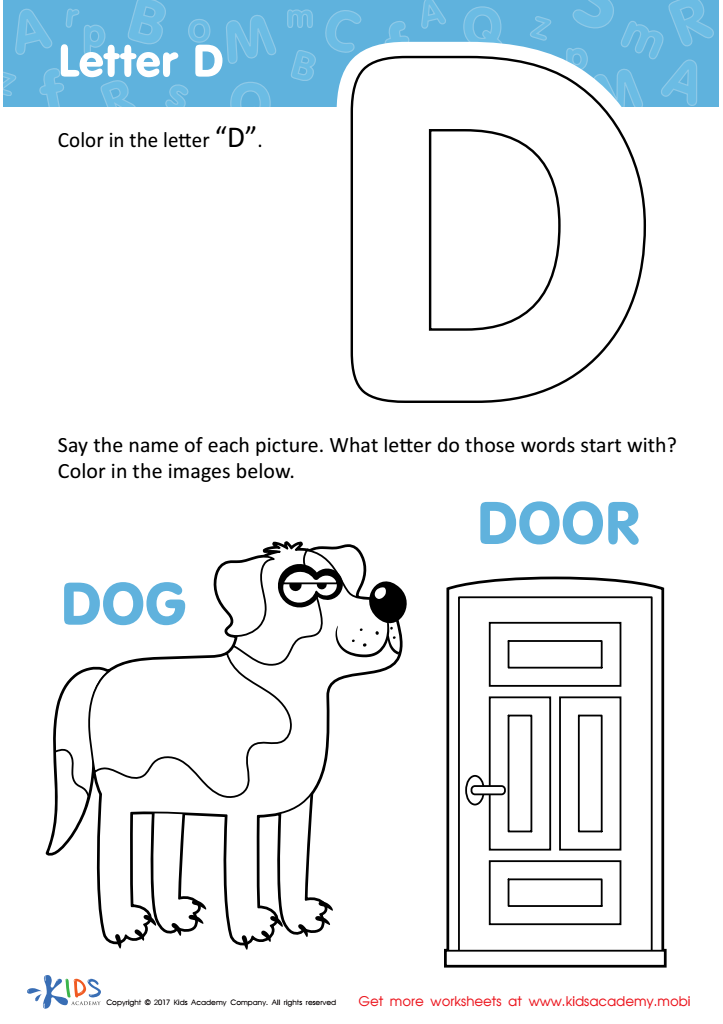
Letter D Coloring Sheet
Coloring with this letter "D" page is a great way to encourage your child's creativity while they learn the letter "D" and its sound. It's a fun activity to stimulate their imagination!
Download (PDF)
Assign to My Students
Assign to My Students
Letter D Coloring Sheet
Worksheet
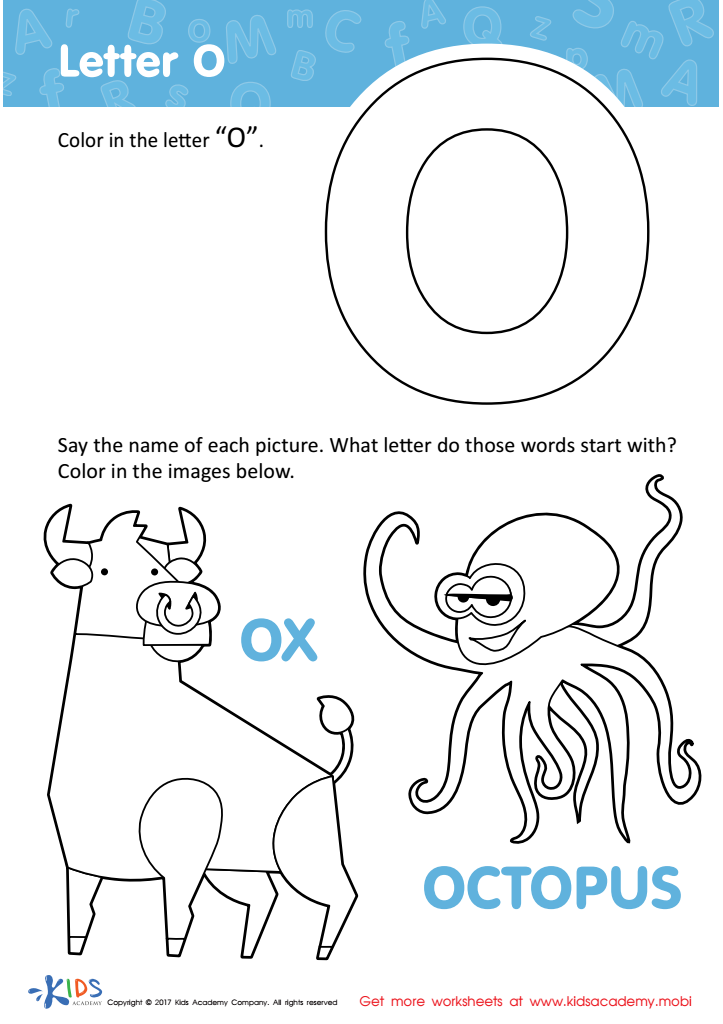
Letter O Coloring Sheet
Oh my! The letter "O" is so much fun. Coloring in the octopus and ox on this delightful letter "O" coloring page can help your child have fun while strengthening their recognition of the letter and sound.
Download (PDF)
Assign to My Students
Assign to My Students
Letter O Coloring Sheet
Worksheet
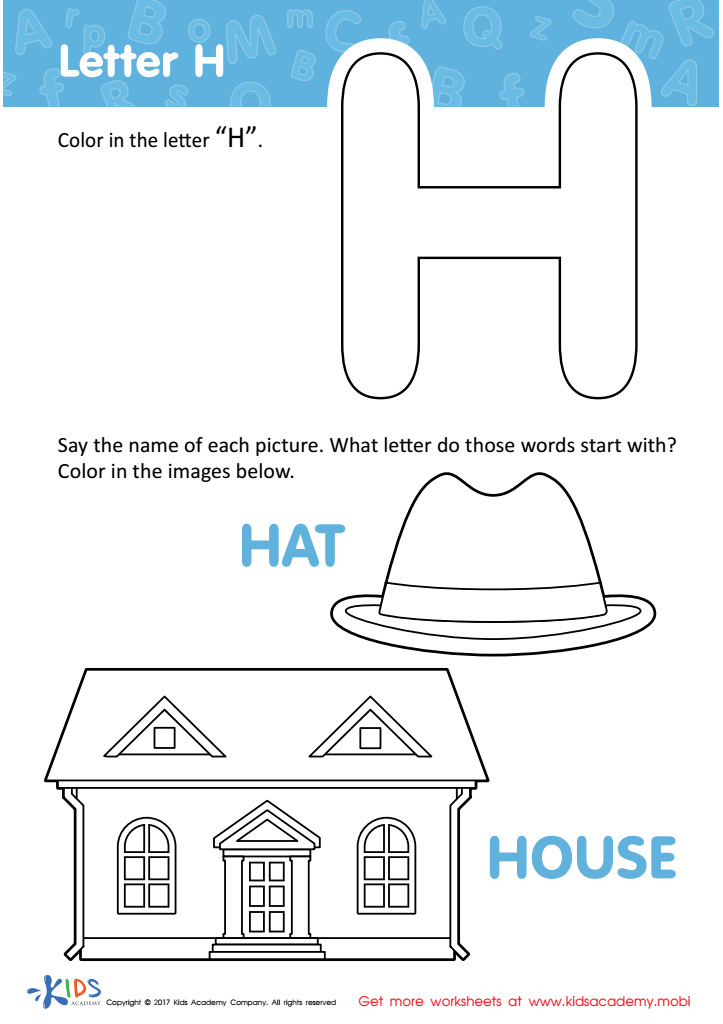
Letter H Coloring Sheet
This fun "H" coloring page will help your child recognize the letter and sound of "H"! With a hat and house to color, your little learner will have a blast picking colors and creating designs, all while learning about the letter "H"!
Download (PDF)
Assign to My Students
Assign to My Students
Letter H Coloring Sheet
Worksheet
Join Kids Academy for Free
Who is primarily going to use this learning content?





Letter tracing normal alphabet coloring pages for children aged 5-8 serve as a valuable educational tool for parents and teachers. Engaging in such activities fosters foundational literacy skills, as children learn to recognize and write letters while simultaneously refining their fine motor skills. Tracing letters helps children develop the muscle memory necessary for handwriting, promoting better coordination and control.
Moreover, incorporating coloring into the tearing and tracing process enhances creativity and keeps children motivated. Colorful pages that feature fun characters or themes make learning enjoyable, encouraging children to practice consistently. This dual approach—tracing and coloring—captures the attention of young learners, making it easier for them to absorb vital information.
Additionally, these activities can facilitate parent-child bonding as caregivers participate in the learning process, transforming it into a memorable experience that enhances familial connections. Teachers can effectively incorporate these activities into the classroom, making learning interactive and supporting diverse learning styles. Ultimately, letter tracing and coloring pages not only provide educational benefits but also instill a love for learning, laying the groundwork for a successful academic journey. As such, both parents and teachers should prioritize these resources in early education.







