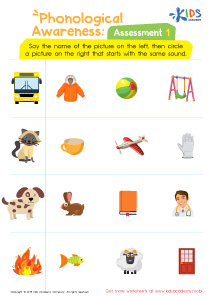
Letter recognition Normal Beginning Sounds Worksheets for Ages 5-8
3 filtered results
-
From - To
Discover our "Letter Recognition Normal Beginning Sounds Worksheets" designed for children ages 5-8! These engaging worksheets help young learners identify letters and associate them with familiar beginning sounds. Each activity encourages students to practice letter recognition in a fun and interactive way, reinforcing essential phonemic awareness skills. With vibrant illustrations and clear instructions, kids will enjoy discovering letters while developing their reading foundations. Ideal for classroom use or at-home learning, these worksheets support early literacy development through enjoyable and meaningful practice. Enhance your child's understanding of phonics and pave the way for successful reading with our effective resource collection!
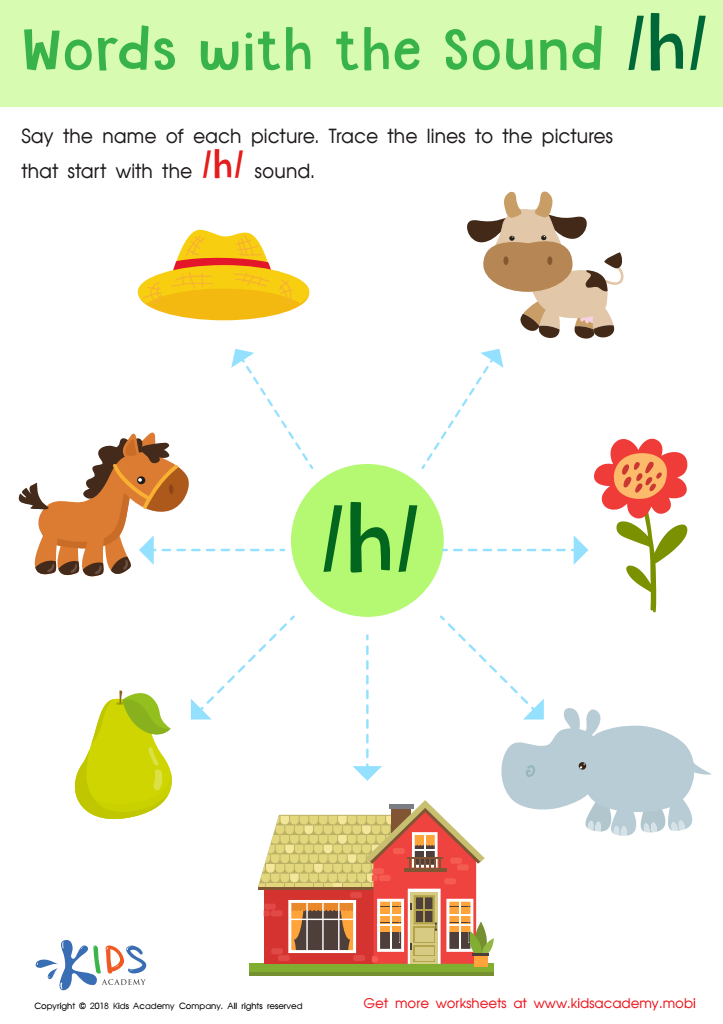
Words with sound h Reading Worksheet
 Assign to My Students
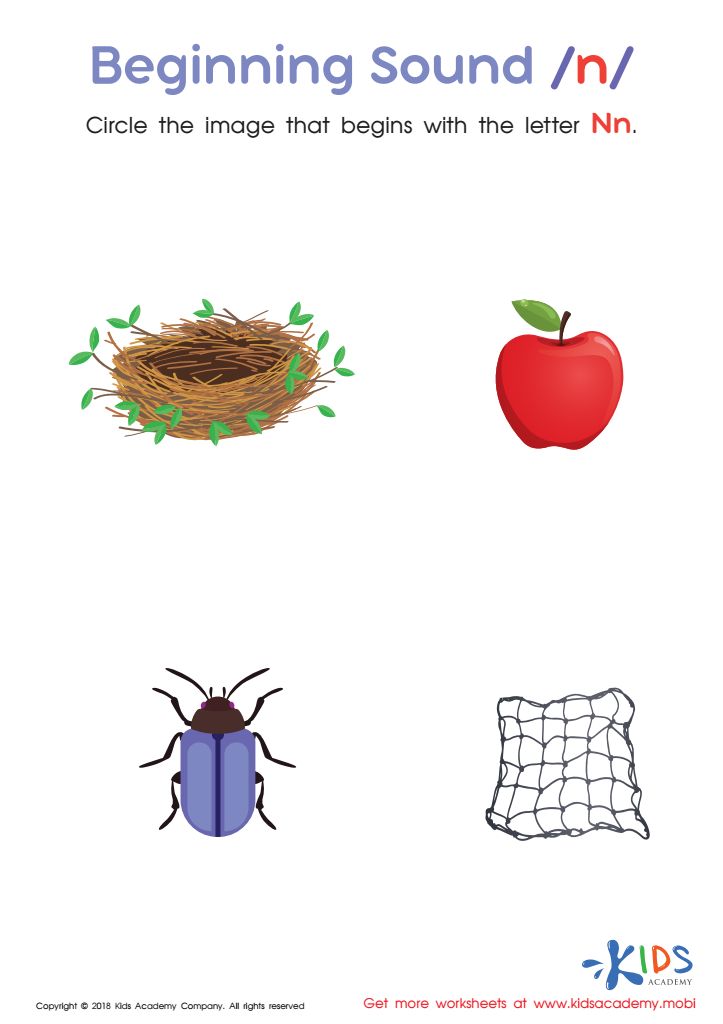
Beginning Sound «n» Worksheet
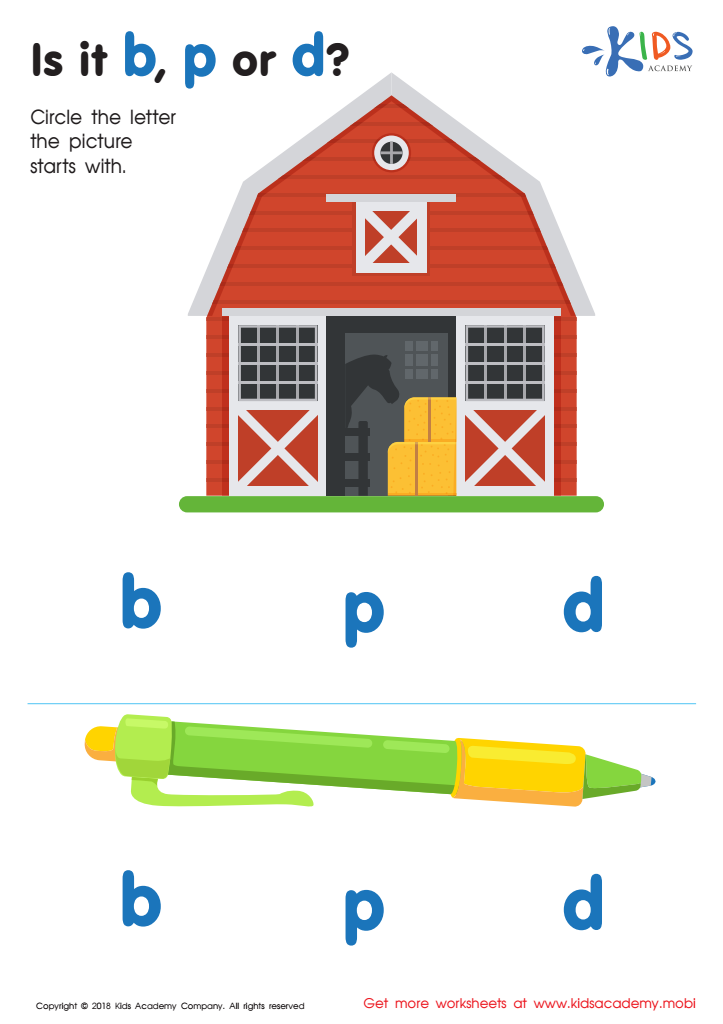
Is it b, p or d? Worksheet








Letter recognition and the understanding of normal beginning sounds are crucial for children aged 5-8 as they form the foundation of literacy development. Parents and teachers should prioritize these skills because they directly influence a child's reading and writing abilities.
At this age, children are typically learning to connect sounds with letters, which is essential for decoding words. Recognizing letters allows them to identify and articulate the sounds they produce, fostering phonemic awareness. This foundational skill helps children break down words into their component sounds, making it easier to sound out unfamiliar words, enhancing their reading fluency.
Moreover, beginning sounds are pivotal in building vocabulary and comprehension. When children can identify the first sounds in words, they develop better spelling patterns and can categorize words, leading to improved understanding of language and sentence structure. Scaffolding these skills at an early age promotes confidence and motivation in learning.
Ultimately, fostering letter recognition and normal beginning sounds nurtures a lifelong passion for reading and a solid educational foundation. Parents and teachers who emphasize these skills equip children to thrive academically and set them on a path for successful communication and literacy in the future.