Phonics improvement Normal Alphabet Worksheets for Ages 5-8
3 filtered results
-
From - To
Enhance your child's reading skills with our Phonics Improvement Normal Alphabet Worksheets, designed specifically for ages 5-8. These worksheets provide engaging activities that strengthen phonetic awareness by focusing on letter recognition, sound association, and early vocabulary building. With a variety of fun exercises, your little ones will enjoy practicing their phonics in an interactive way, making learning seamless and enjoyable. Perfect for homeschoolers, classrooms, or extra practice at home, these resources ensure that children lay a strong foundation for reading success. Start their phonics journey today and watch them become confident readers!
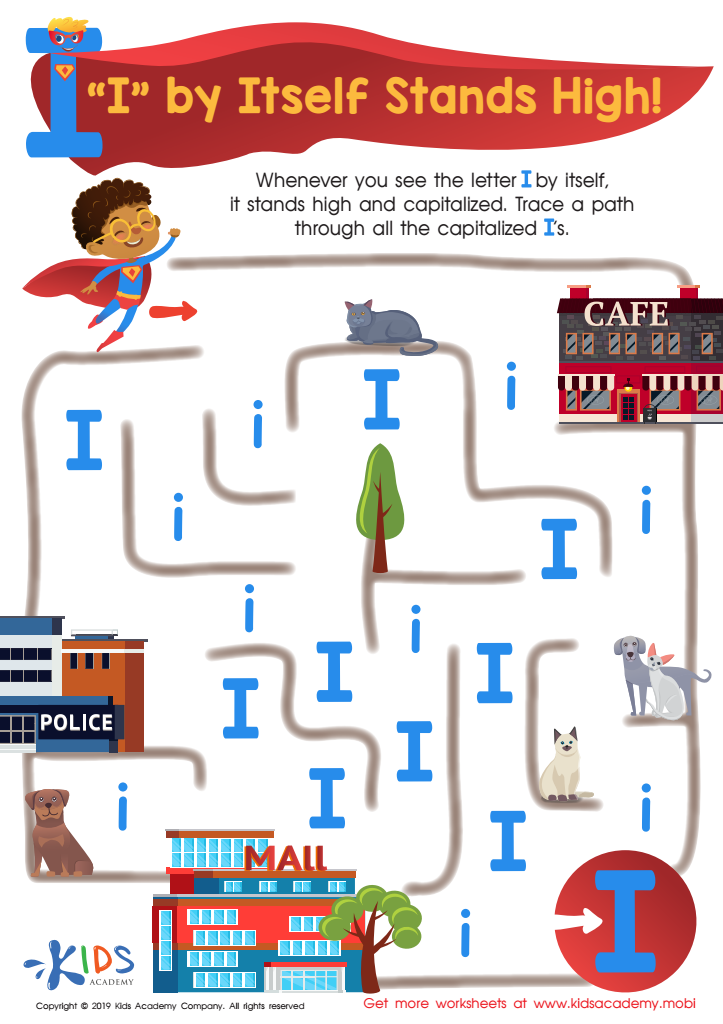
I Stands High Worksheet
 Assign to My Students
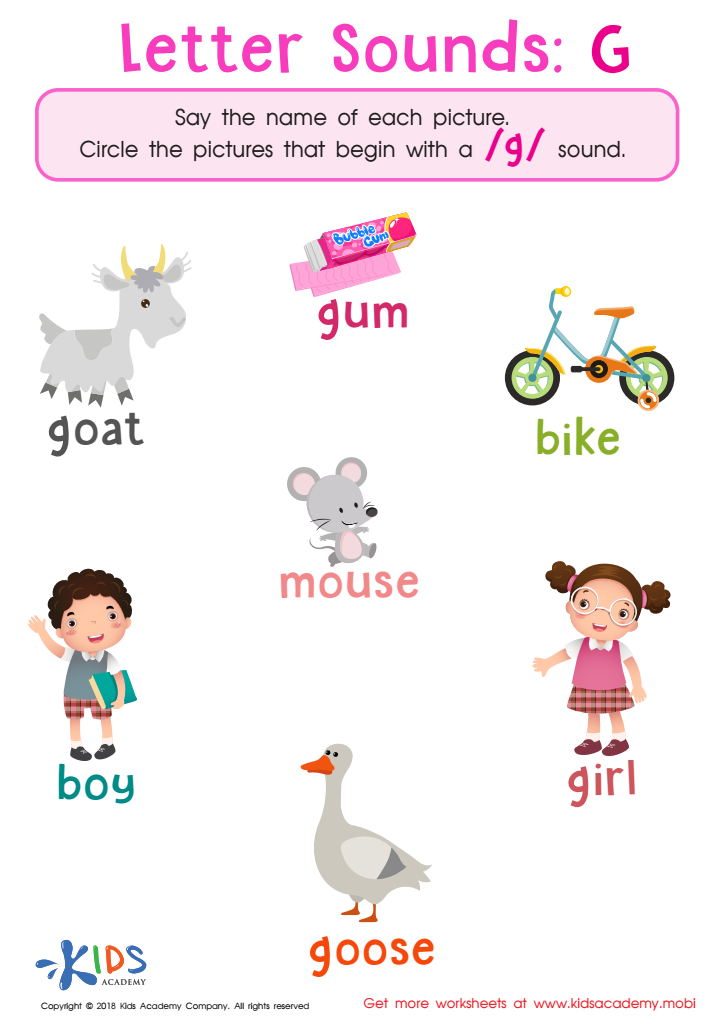
Letter G Sounds Worksheet







Phonics is a crucial component of early literacy development, especially for children aged 5-8. It involves understanding the relationship between letters and their sounds, which lays the foundation for proficient reading and writing skills. Parents and teachers should prioritize phonics improvement during these formative years because it directly influences a child's ability to decode written language.
By mastering phonics, children gain confidence in their reading abilities, making the transition from being emergent readers to independent ones. This confidence not only enhances their academic performance but also encourages a lifelong love for reading, critical for success in all subjects.
Moreover, a strong phonics base supports comprehension skills. As children learn to decode words efficiently, they are better able to focus on understanding the content rather than struggling with the mechanics of reading. This holistic grasp of language fosters stronger communication skills and a wider vocabulary.
Additionally, supporting phonics improvement can help identify children who may need extra assistance early on, addressing potential learning challenges before they escalate. Ultimately, by investing in phonics, parents and teachers are empowering children with essential skills that will serve them throughout their educational journey and beyond.







