Uppercase identification Normal Alphabet Worksheets for Ages 5-8
5 filtered results
-
From - To
Unlock your child's potential with our Uppercase Identification Normal Alphabet Worksheets designed for ages 5-8. These engaging printable activities help young learners recognize and master uppercase letters through fun and interactive exercises. Perfect for early elementary students, our worksheets provide a solid foundation in alphabet knowledge, crucial for reading and writing success. Tailored to enhance learning skills, these resources ensure children grasp each letter with confidence. Visit our page for a variety of colorful, age-appropriate worksheets that make learning enjoyable and effective. Start supporting your child's educational journey today!
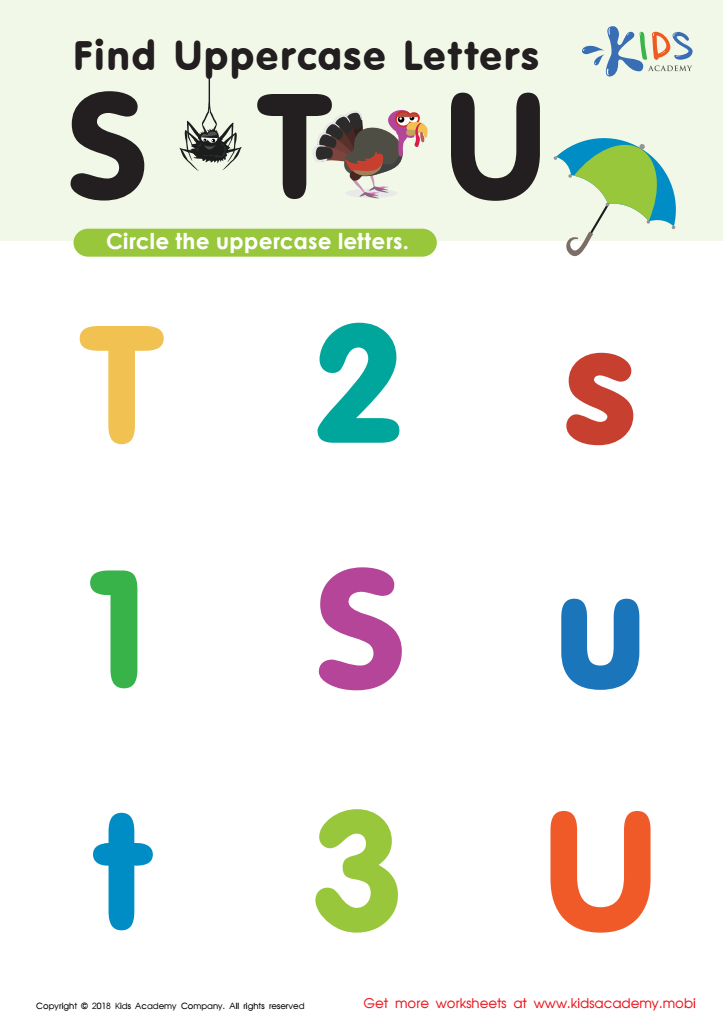
Find Uppercase Letters Worksheet
 Assign to My Students
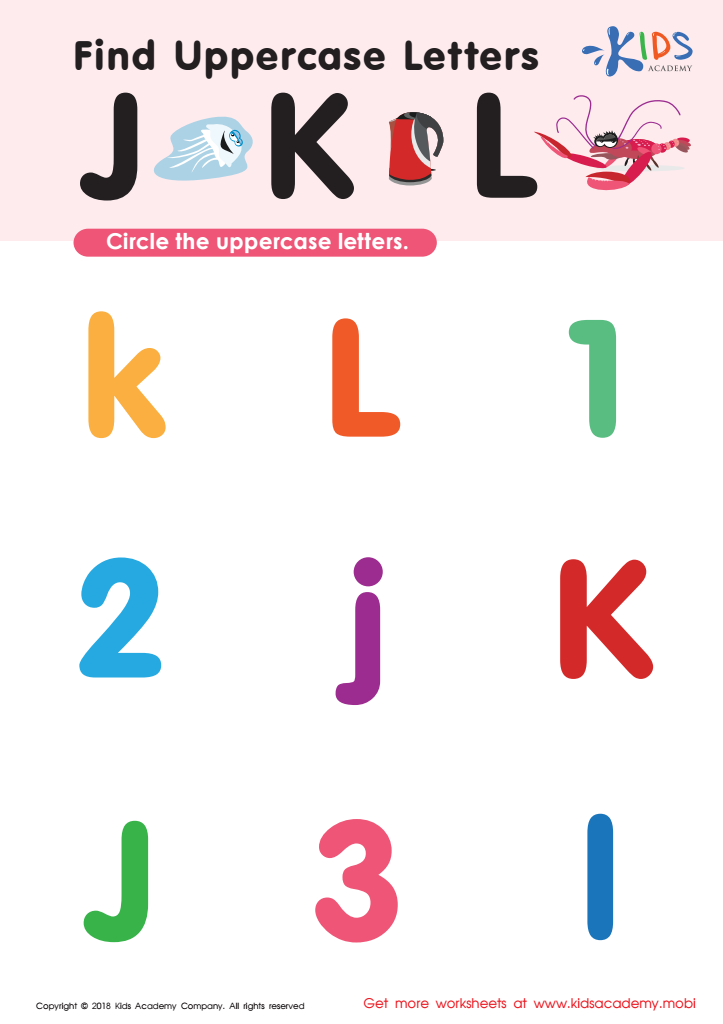
Find Uppercase Letters J, K, and L Worksheet

Find Uppercase Letters A, B, and C Worksheet
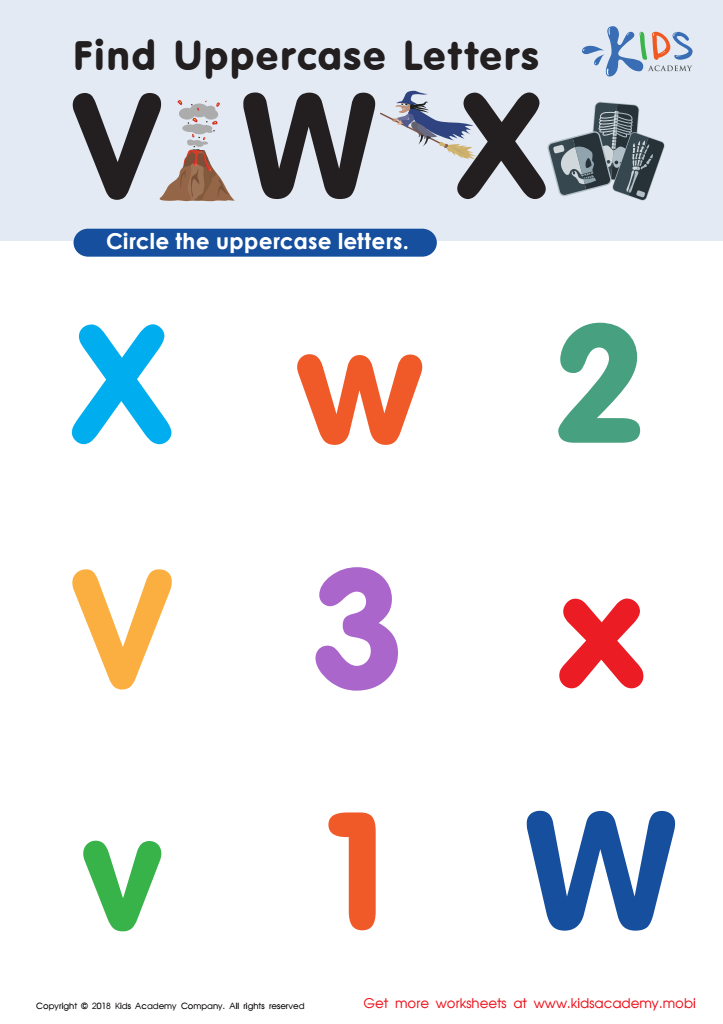
Find Uppercase Letters V, W, X Worksheet
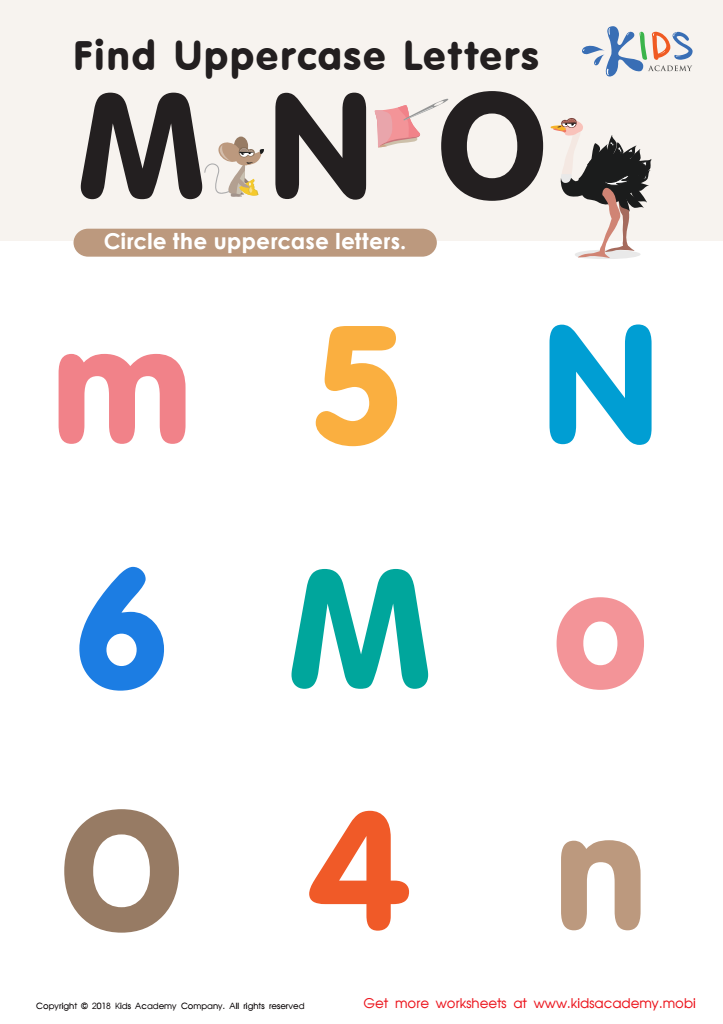
Find Uppercase Letters M, N, and O Worksheet






Understanding and being able to identify uppercase letters in the normal alphabet is crucial for children ages 5-8. Firstly, these formative years are when foundational literacy skills are developed, which include recognizing and understanding the letters of the alphabet. Uppercase letters often serve as the introduction to alphabet learning because they are distinctive and visually simpler, thus easier for young minds to grasp.
From a practical perspective, uppercase letters are used at the beginning of sentences and for proper nouns, crucial for understanding written communication in English. Proficiency in letter identification supports early reading skills. Children who can easily recognize uppercase letters generally find it easier to advance to lower-case identification, resultant reading, and writing tasks.
Moreover, developing this skill enhances fine motor coordination through writing practice and bolsters cognitive development concerning visual discrimination—the ability to distinguish between shapes, letters, and symbols. This processes also fosters independence as children suffer less frustration when trying to read their names, titles, or basic instructions, boosting their confidence and willingness to learn.
Lastly, kids familiar with uppercase identification tend to exhibit better phonemic awareness, a critical component for decoding words while reading. Hence, as lifelong literacy begins, attention to uppercase letter identification offers structured learning opportunities towards fluent reading and writing capabilities.







