Vocabulary enhancement Normal Alphabet Worksheets for Ages 5-8 - Page 3
50 filtered results
-
From - To
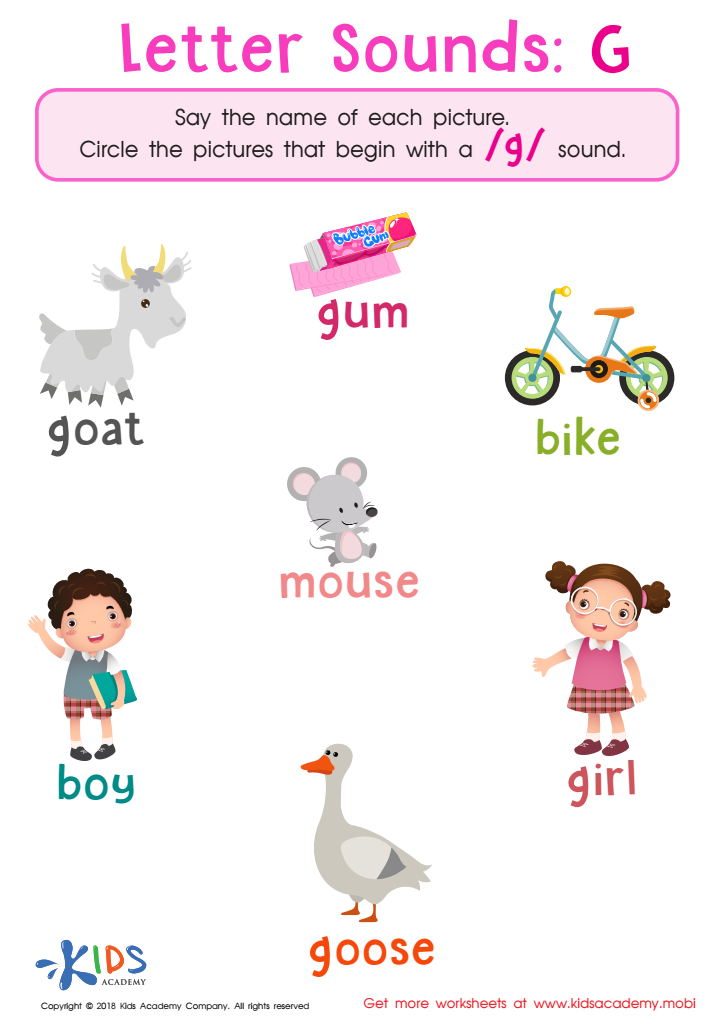
Letter G Sounds Worksheet
 Assign to My Students
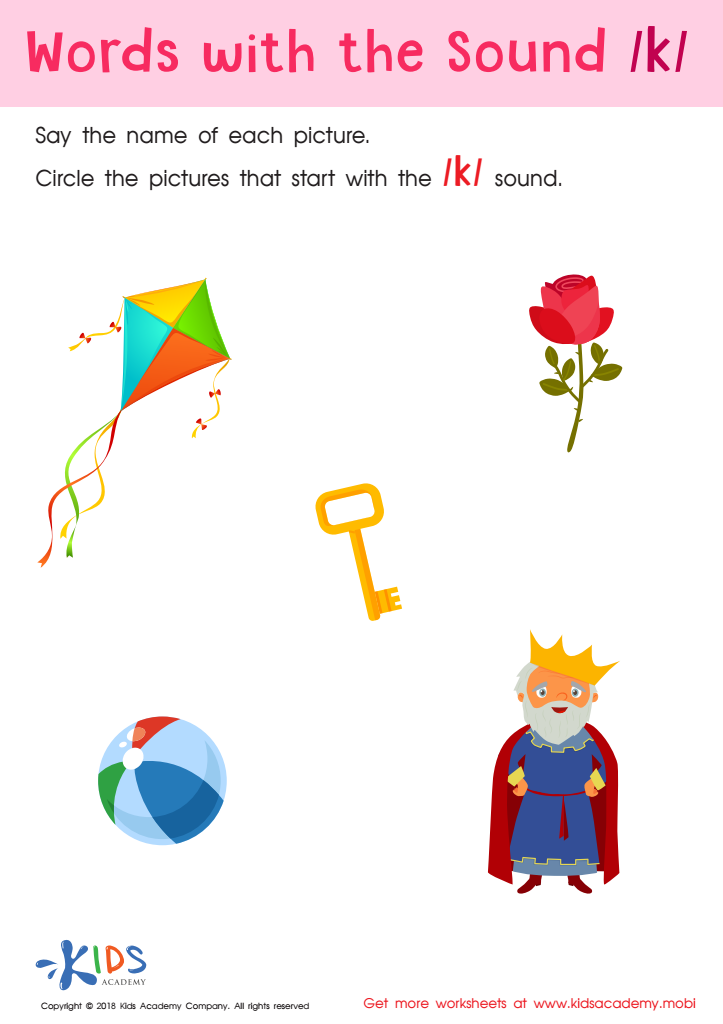
Words with sound k Reading Worksheet






.jpg)

Vocabulary enhancement for children aged 5-8 is crucial for their overall development in language, literacy, and academic success. At this young age, children are rapidly absorbing new words and forming the building blocks of communication. A rich vocabulary empowers them to express their thoughts, feelings, and ideas effectively, reducing frustration and enhancing self-esteem.
Teachers and parents play a vital role in this enhancement process. Exposure to diverse vocabulary through reading, engaging conversations, and interactive activities can significantly improve children's language comprehension. By incorporating vocabulary-building strategies—like storytelling, word games, and songs—teachers can create a stimulating learning environment that captures children's interest and encourages exploration.
Moreover, a strong vocabulary has been linked to better reading comprehension, writing skills, and overall academic performance. Children with a robust vocabulary tend to perform better in standardized tests and have more opportunities for success later in life.
Additionally, language acquisition at this stage lays the foundation for critical thinking and problem-solving skills, which are essential as they progress in their education. For these reasons, prioritizing vocabulary enhancement is a valuable investment in children's future success and confidence in communication.







