
Alphabet understanding Normal Letter Recognition Worksheets for Ages 5-8
5 filtered results
Difficulty Level
Grade
Age
-
From - To
Subject
Activity
Standards
Boost your child's letter recognition skills with our "Alphabet Understanding Normal Letter Recognition Worksheets" designed for ages 5-8. These engaging worksheets help young learners identify and differentiate between letters while fostering a strong foundation in literacy. With colorful illustrations and various interactive activities, kids will enjoy tracing, matching, and coloring letters, making learning fun and effective. Perfect for homeschooling or classroom use, these worksheets are tailored to enhance cognitive skills, promote letter fluency, and build confidence in reading. Equip your child with essential alphabet knowledge and watch them thrive in their educational journey! Access the worksheets today and inspire a love for learning.
Favorites
With answer key
Interactive
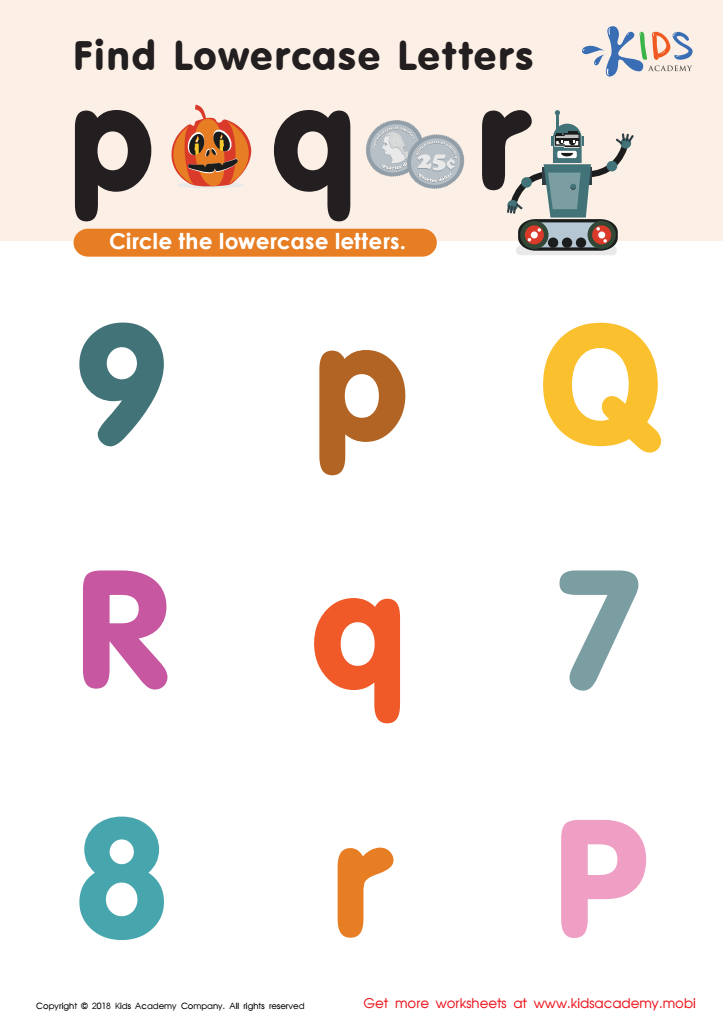
Find lowercase Letters p q r Worksheet
Help your child spot the lowercase letters among the numbers and uppercase letters in this worksheet. It's a great way to teach them to identify and write the lowercase and uppercase letters. Assist them in completing the exercise to give them a better understanding of the alphabets.
 Assign to My Students
Find lowercase Letters p q r Worksheet
Worksheet
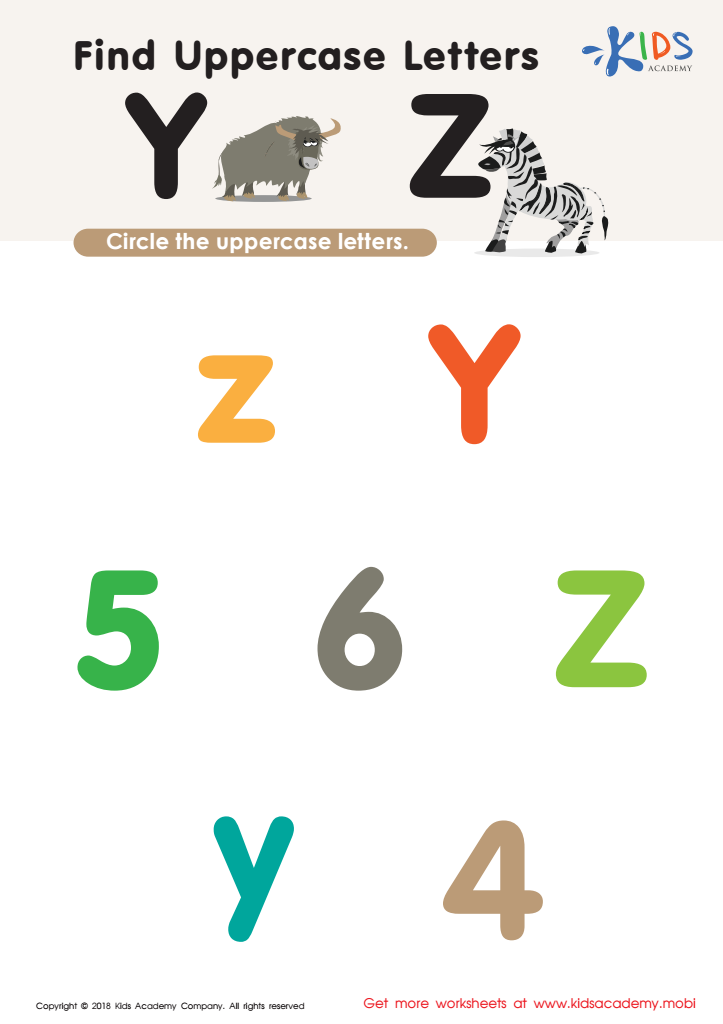
Find Uppercase Letters Y Z Worksheet
Download the worksheet! Help your youngster to learn the alphabet and distinguish uppercase from lowercase letters by having them circle the uppercase ones. It's an important first step towards reading and writing success!
Find Uppercase Letters Y Z Worksheet
Worksheet
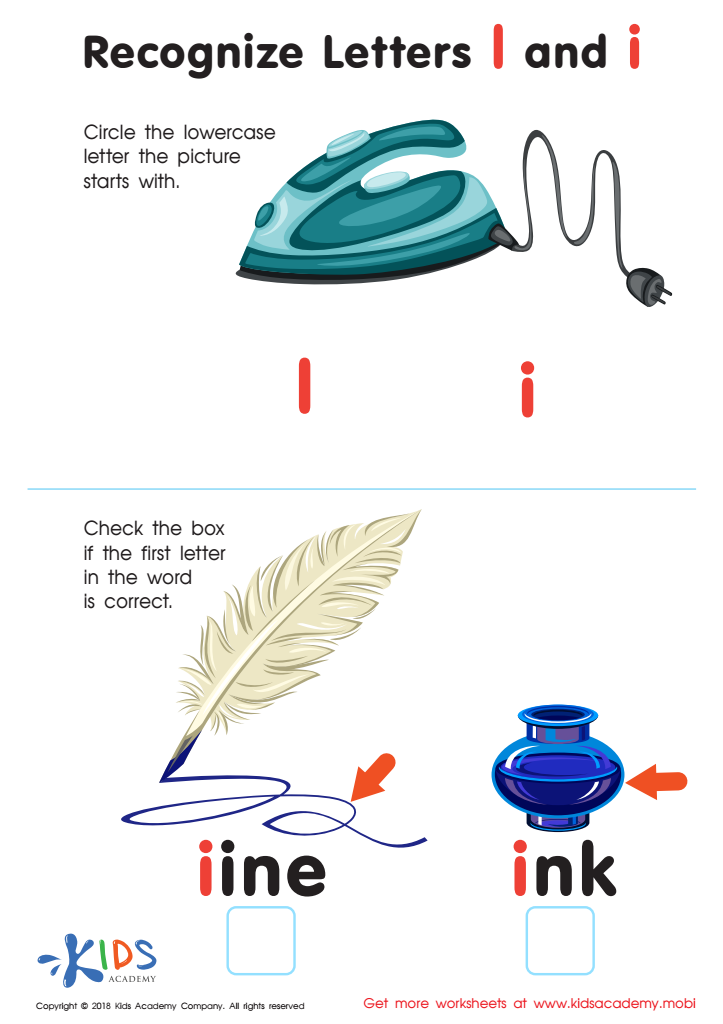
Recognize Letters l and i Worksheet
Help your child become familiar with uppercase and lowercase letters. Have them look at the pictures in the worksheet and circle the lowercase letter the picture starts with. For example: which one is the lowercase "i", the capital "I" or the small "i"?
Recognize Letters l and i Worksheet
Worksheet
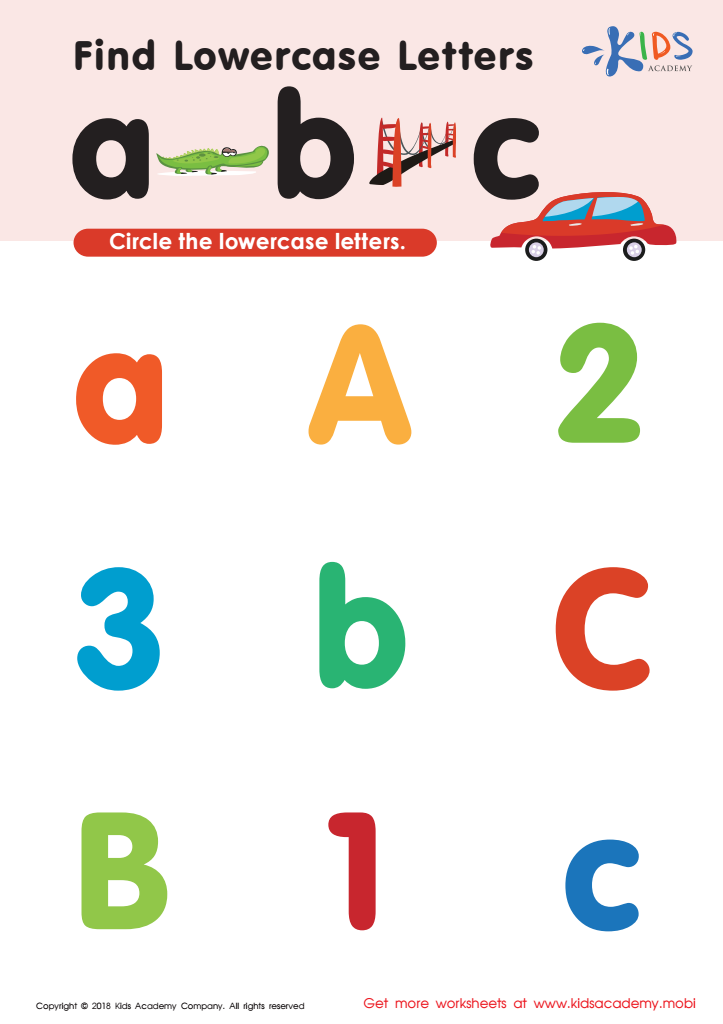
Find lowercase letters a b c Worksheet
Help your child identify lowercase letters with this worksheet. Carefully look at each letter and have your child circle the lowercase ones. This exercise is vital in helping them understand the alphabet and the difference between lower and uppercase letters.
Find lowercase letters a b c Worksheet
Worksheet
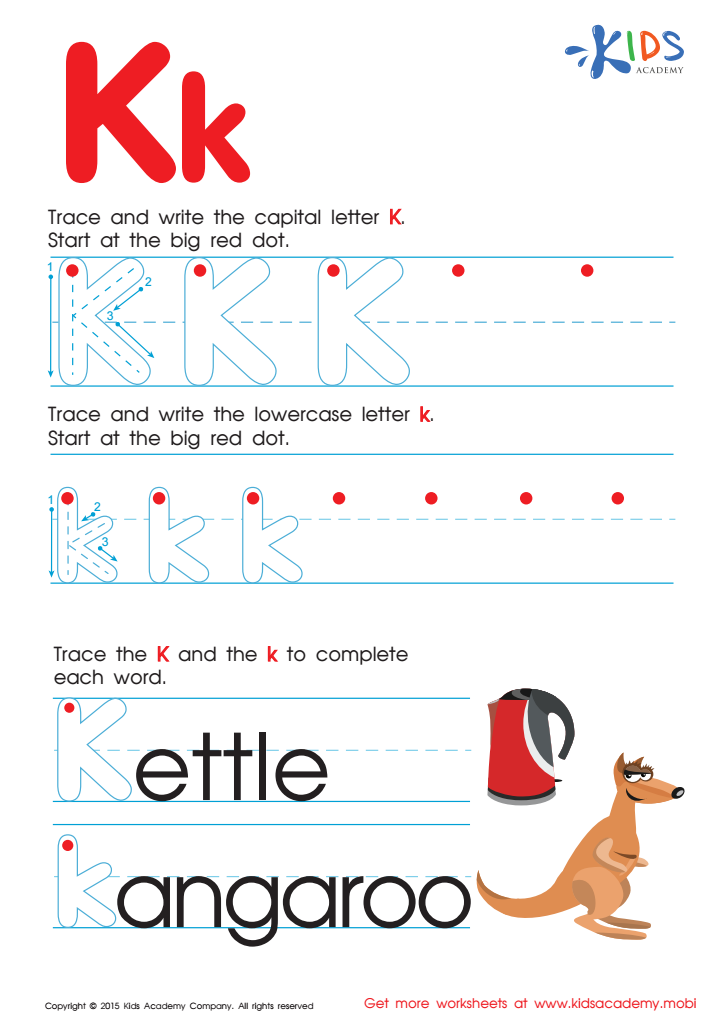
Letter K Tracing Page
Trace and write the letter K; start at the big red dot. Use it to complete words like "Kettle" and "Kangaroo". Visit Kids Academy for more free alphabet worksheets for kindergarten.
Letter K Tracing Page
Worksheet
Join Kids Academy for Free
Who is primarily going to use this learning content?








Understanding of the alphabet and normal letter recognition is crucial for children aged 5-8 as it serves as the foundation for reading and writing skills. Proficient letter recognition enables children to decode words, which is vital for their literacy development. The ability to identify both uppercase and lowercase letters helps young learners make connections between letters and sounds, facilitating phonetic awareness.
Furthermore, early mastery of letters supports vocabulary growth and overall communication skills. When children recognize letters, they can start to spell simple words and create sentences, fostering confidence and creativity in their expression. For parents and teachers, promoting letter recognition also creates opportunities for engaging activities, such as reading together, which strengthens the parent-child bond and enhances the learning experience.
Additionally, understanding the alphabet contributes to a child’s cognitive development, helping them learn organization and classification, skills that are useful across various subjects. Emphasizing letter recognition provides children with essential tools needed for successful academic progression and encourages a lifelong love for learning. By nurturing these skills early, parents and teachers lay a strong foundation for future success in literacy and beyond.








