Fine motor skills development Normal Letter Recognition Worksheets for Ages 5-8
3 filtered results
-
From - To
Enhance your child’s fine motor skills and letter recognition with our engaging worksheets designed for ages 5-8. These printable activities intuitively blend learning and play, allowing kids to practice letter identification while developing essential hand-eye coordination and dexterity. Each worksheet provides a variety of fun exercises, from tracing and coloring letters to completing interactive tasks that reinforce letter recognition in an enjoyable manner. Perfect for both classroom and home learning environments, these resources help young learners foster key early literacy skills while refining their fine motor capabilities. Explore our collection today to spark a love for learning in your child!
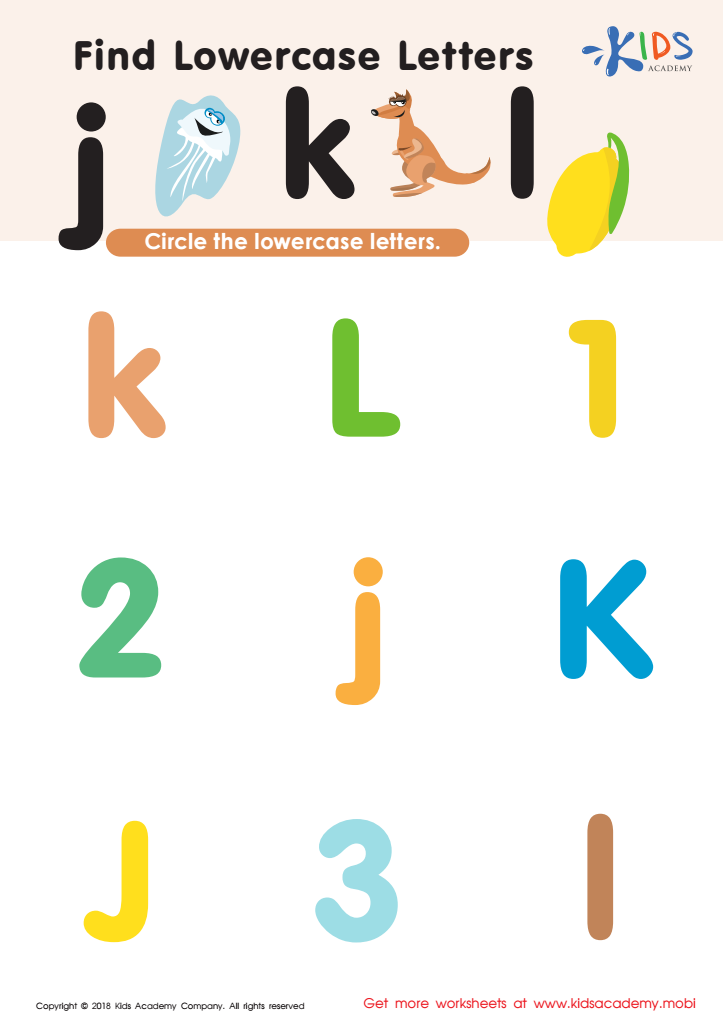
Find Lowercase Letters j k l Worksheet
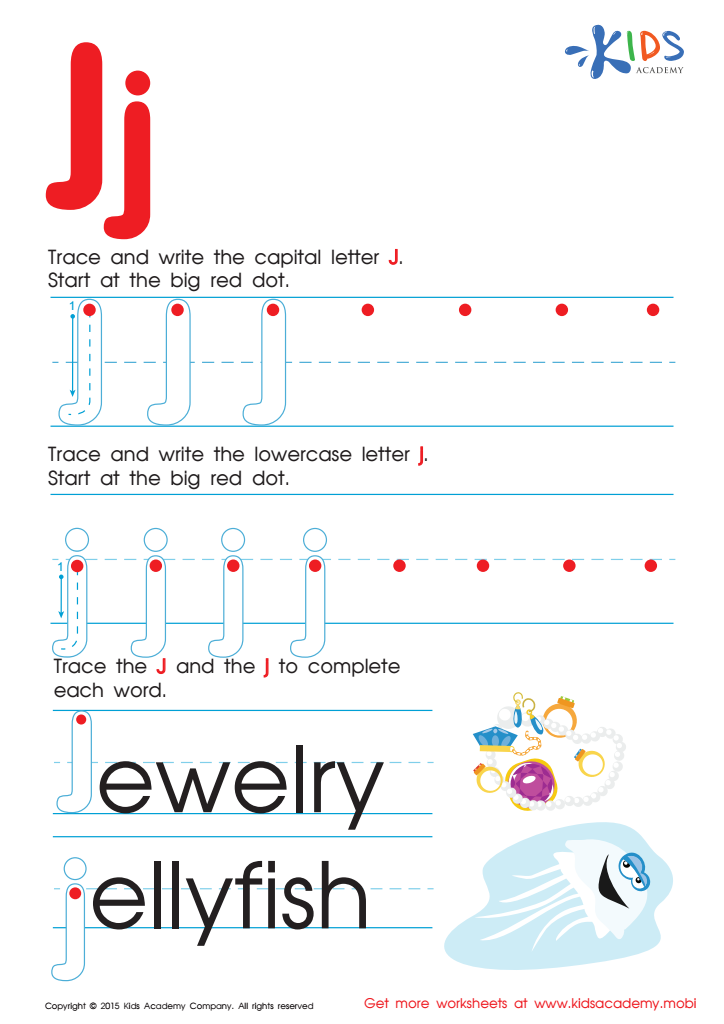
Letter J Tracing Page
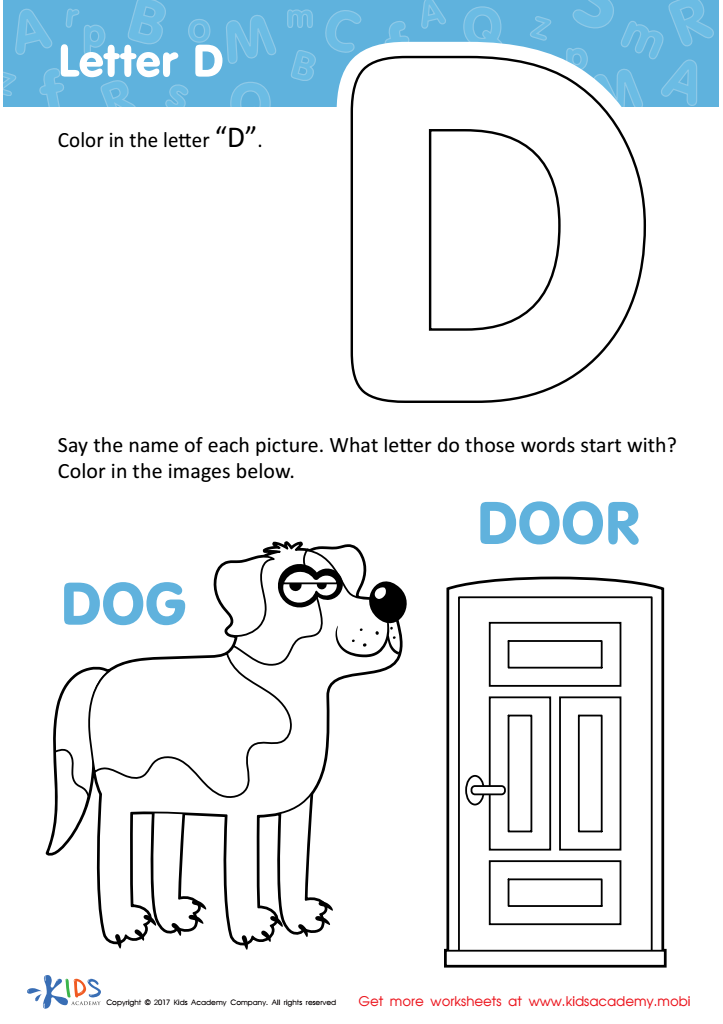
Letter D Coloring Sheet
 Assign to My Students








Fine motor skills development is crucial for children ages 5-8 as these skills are foundational for various tasks in both academic and everyday life. Fine motor skills refer to the ability to use small muscles in the hands and fingers to perform tasks such as writing, drawing, and manipulating small objects. As children practice these skills, they also develop hand-eye coordination, dexterity, and spatial awareness.
Normal letter recognition at this age is equally important, as it serves as a key component in early literacy. Recognizing letters enables children to build the foundational skills needed for reading and writing. Parents and teachers should care about these aspects of development, as they significantly impact a child's confidence and ability to engage in learning activities.
When fine motor skills and letter recognition develop concurrently, children become more proficient with tools like pencils and scissors, allowing them to express their creativity through writing and drawing. Additionally, strong fine motor skills aid in tasks like buttoning shirts and tying shoelaces, promoting independence. Ensuring these skills are nurtured during this developmental stage sets the foundation for future educational success and overall well-being.








