Lowercase letter writing Normal Letter Recognition Worksheets for Ages 5-8
3 filtered results
-
From - To
Boost your child's literacy with our "Lowercase Letter Writing Normal Letter Recognition Worksheets for Ages 5-8." Designed to develop foundational handwriting skills, these engaging and educational worksheets help children practice writing lowercase letters with precision and confidence. Each sheet focuses on the correct letter formation, offering traceable letters and ample space for independent practice. Ideal for kids ages 5 to 8, these printables nurture letter recognition, improve fine motor skills, and prepare young learners for future writing success. Perfect for classroom use or extra practice at home, our worksheets make learning fun and effective. Download today and watch your child's skills soar!
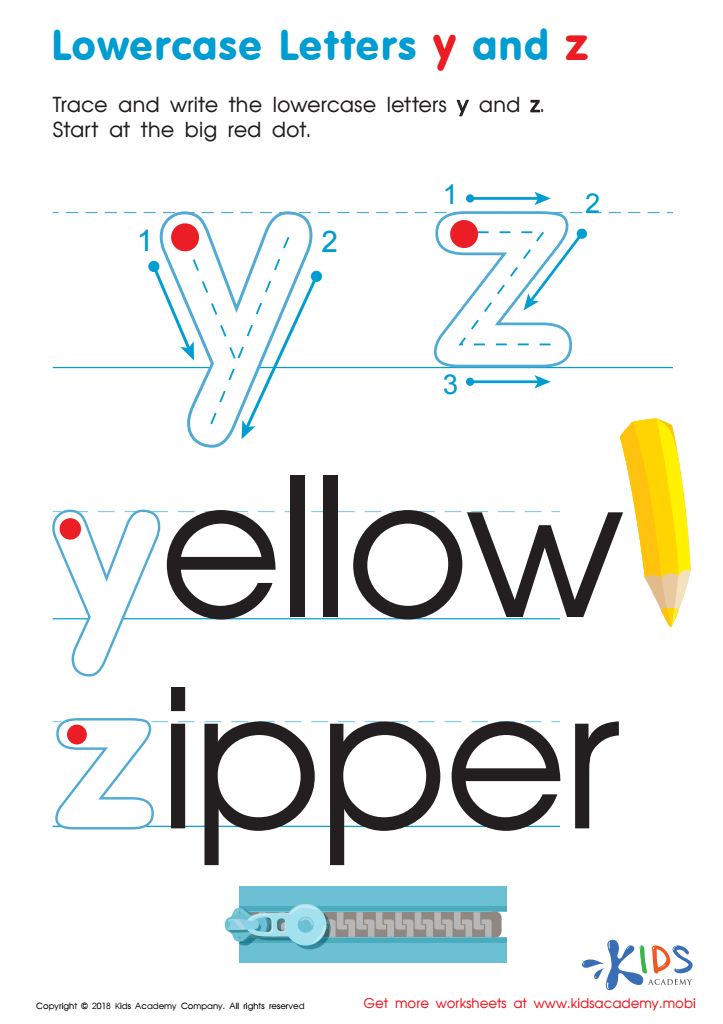
Lowercase Letters y z Worksheet
 Assign to My Students
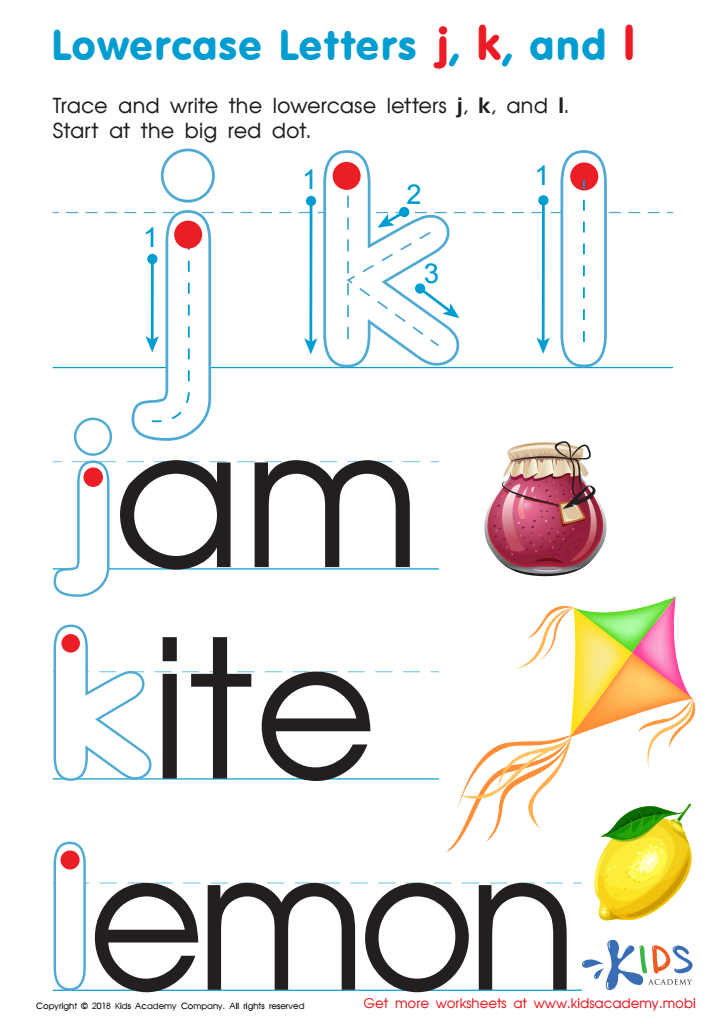
Lowercase Letters j k l Worksheet

Lowercase Letters m n o Worksheet








Parents or teachers should care about lowercase letter writing and normal letter recognition for children aged 5-8 because these skills form foundational aspects of literacy and education. At this age, children are in a critical developmental window where they are rapidly learning and absorbing new information. Proficiency in recognizing and writing both uppercase and lowercase letters is essential for reading fluency, comprehension, and effective written communication.
Lowercase letters are used more frequently in text, making up the majority of written language. When children can effortlessly recognize and write lowercase letters, they can more easily decode words and sentences, which enhances their reading skills. Reading fluency, in turn, supports better understanding of content across all subjects, setting the stage for academic success.
Moreover, writing lowercase letters helps children develop fine motor skills and hand-eye coordination. This practice sharpens their ability to control a pencil and enhances overall handwriting skills, which are crucial for completing academic assignments and everyday tasks.
For teachers, ensuring that students achieve these competencies by ages 5-8 means creating a strong educational foundation that supports all future learning. For parents, reinforcing these skills at home can boost their child's confidence and enthusiasm for learning. Investing time and effort in mastering these basic literacy skills paves the way for a lifetime of educational achievement and effective communication.








